
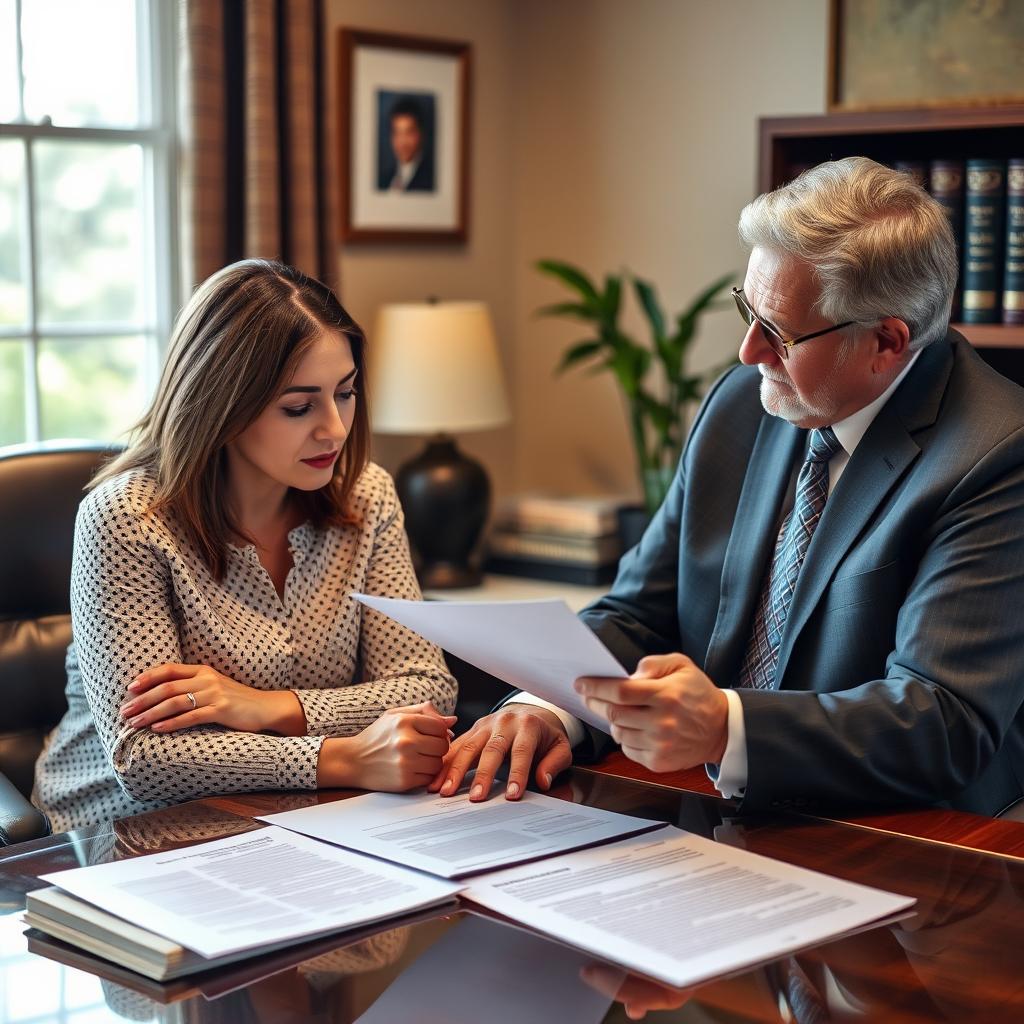
Separation Agreement Lawyer Goochland County, VA
You and your spouse have decided to separate. Perhaps you live in Goochland or one of its small communities, and you want to handle the transition with as little conflict as possible. You are not looking for a courtroom fight—you want a clear, written agreement that settles the key issues so you can both move forward. That is where a separation agreement comes in. In Virginia, a properly drafted separation agreement resolves property division, spousal support, and, when minor children are involved, custody and visitation. It can also serve as the basis for a no‑fault divorce after six months of living separate and apart, if you have no minor children, or one year if you do. Our firm can help you prepare an agreement that meets the legal requirements and protects your interests. For a consultation about drafting or reviewing a separation agreement in Goochland County, call (888) 437‑7747. Law Offices Of SRIS, P.C. — Advocacy Without Borders.
What a Separation Agreement Means in Goochland County
A separation agreement—often called a property settlement agreement—is a written contract between spouses that settles all matters arising from the separation. It can address the division of real estate, bank accounts, retirement assets, and debts; spousal support; and, if the couple has children, custody, visitation, and child support. Once signed by both parties, the agreement becomes a binding contract. In many cases, it is later presented to the Goochland County Circuit Court when the parties seek an uncontested divorce. The court can incorporate the agreement into the final divorce decree, making its terms enforceable by the court.
Goochland County, part of the Sixteenth Judicial District, lies just west of Richmond. The Goochland County Circuit Court, located at 2938 River Road West, hears all divorce and equitable distribution cases, while the Goochland County Juvenile and Domestic Relations District Court handles standalone custody, support, and protective‑order proceedings. Because a separation agreement touches on issues that fall within both courts’ authority, it is important that the agreement is carefully drafted to account for the standards each court applies. Virginia law, including the equitable distribution factors under Va. Code § 20‑107.3 and the statutory child‑support guidelines under Va. Code § 20‑108.1, provides the framework within which such agreements are evaluated. An experienced family‑law attorney can ensure the document accurately reflects those legal standards and the couple’s wishes.
How Mr. Sris and His Of Counsel Handle Separation Agreement Cases
When a client reaches us about a separation agreement, we begin by learning the couple’s circumstances: the length of the marriage, the nature of the assets and debts, each spouse’s income, and whether children are involved. We then explain how the Virginia equitable‑distribution scheme, spousal‑support factors, and child‑support guidelines apply to their situation. From there, we work to translate the couple’s understanding into a written agreement that is clear, complete, and enforceable. When both spouses have their own attorneys, we coordinate with the other side to negotiate terms. When only one spouse is our client, we prepare an agreement that can be presented to the other spouse for consideration.
Throughout the process, we focus on drafting language that will withstand later scrutiny. A separation agreement is a contract, and it is subject to contract defenses—fraud, duress, unconscionability—if challenged. To reduce those risks, we ensure the document contains proper acknowledgments, recitations of voluntary execution, and financial disclosures. If the parties later seek to have the agreement incorporated into a divorce decree, we guide the case through the Goochland County Circuit Court. Because the agreement will be filed in a document‑heavy legal proceeding, attention to detail at the drafting stage helps avoid delays and disputes later. The approach is always tailored to the specific facts; no two separations are exactly alike, so the agreement must reflect the real lives of the people involved.
About Mr. Sris and His Of Counsel Team
Mr. Sris, Owner and Founder of Law Offices Of SRIS, P.C., has been practicing law since 1997. He is admitted in Virginia, Maryland, the District of Columbia, New Jersey, and New York, and he has concentrated on family‑law matters, including separation agreements, for decades. Mr. Sris’s background includes service as a former prosecutor, giving him firsthand insight into how legal documents are examined in court. His legislative experience includes testifying before the Virginia House Courts of Justice Committee in support of 2019 HB 635 (chief patron Del. David Bulova), which addressed certain procedural aspects of equitable‑distribution orders under Va. Code § 20‑107.3(g).
Mr. Sris works with a team of experienced Of Counsel—none of whom is an associate or partner, because the firm has no employees. Each Of Counsel brings years of focused practice to the table. When you engage the firm, Mr. Sris and his Of Counsel collectively bring over 120 years of combined legal experience and 4,739+ documented firm-wide results to your matter. Results may vary. Together, they review your separation agreement from both a drafting and a litigation perspective, helping you weigh the immediate benefits of a negotiated resolution against the risks and costs of contested proceedings.
Frequently Asked Questions
What is a separation agreement in Virginia?
A separation agreement is a written contract between spouses that resolves issues related to their separation, such as property division, support, and custody. Once signed, it becomes a binding agreement. Under Va. Code § 20‑109, a property settlement agreement may be enforced by the court. The agreement can later be incorporated into a divorce decree by the Goochland County Circuit Court, making its terms enforceable as a court order. Spouses can use a separation agreement to settle all matters without a trial, provided the agreement is voluntarily and fairly entered into. If you have questions about how a separation agreement might work in your situation, you can reach the firm at (888) 437‑7747.
Do I need a lawyer to draft a separation agreement in Goochland County?
You are not legally required to have a lawyer to draft a separation agreement, but working with an attorney helps ensure the agreement is complete and enforceable. A poorly drafted agreement can create problems later if it is ambiguous, omits a key asset, or fails to comply with Virginia statutory requirements. An experienced family‑law attorney can identify potential issues, such as tax consequences, the need for a Qualified Domestic Relations Order for retirement accounts, or the enforceability of spousal‑support waivers. Because a separation agreement affects long‑term rights, many people choose to have legal review even when they are on amicable terms.
How does a separation agreement affect a no‑fault divorce in Virginia?
A separation agreement can satisfy the requirements for a no‑fault divorce in Virginia by establishing that the parties have been living separate and apart and have resolved all issues. Under Va. Code § 20‑91(9)(b), when there are no minor children and the parties have entered into a written separation agreement, the six‑month separation period applies. If there are minor children, a one‑year separation applies, but the agreement still serves as the blueprint for resolving custody, support, and property matters. The agreement is presented to the Goochland County Circuit Court at the divorce hearing, and if the court finds it fair and voluntary, it is incorporated into the final decree.
Can a separation agreement be changed after it is signed?
A separation agreement can be modified only if both parties agree in writing or if the agreement itself contains a provision allowing modification. Once signed, the agreement is a contract. A court will enforce its terms as written unless there is evidence of fraud, duress, or unconscionability. Some agreements include provisions for periodic review or for automatic adjustment of support obligations based on changes in income, but absent such language, the terms are fixed. For child‑support amounts, however, a court always retains the authority to modify support to meet the child’s needs, regardless of the agreement’s terms, if a substantial change in circumstances is shown.
What should I do if my spouse refuses to sign a separation agreement?
If your spouse refuses to sign a separation agreement, you cannot force a settlement, but you can still file for divorce and ask the court to decide the disputed issues. In that situation, the divorce becomes contested. The Goochland County Circuit Court will then determine property division, spousal support, and, through the Juvenile and Domestic Relations District Court, custody and support. Although the process is more time‑consuming and expensive than an agreed resolution, the court’s authority ensures that all issues will eventually be decided. An attorney can help you evaluate whether continued negotiation might still produce an agreement or whether litigation is the better path.
Related Practice Areas: Fairfax County Family Law · Prince William County Family Law · Manassas Family Law · Fairfax City Family Law · Falls Church Family Law
Official Virginia Legal Resources: Virginia Code Title 20 (Domestic Relations) · Virginia Courts · SCC Business Entity Filings
Attorney advertising. Prior results do not guarantee a similar outcome. Results may vary.
Case results depend on a variety of factors unique to each case.