
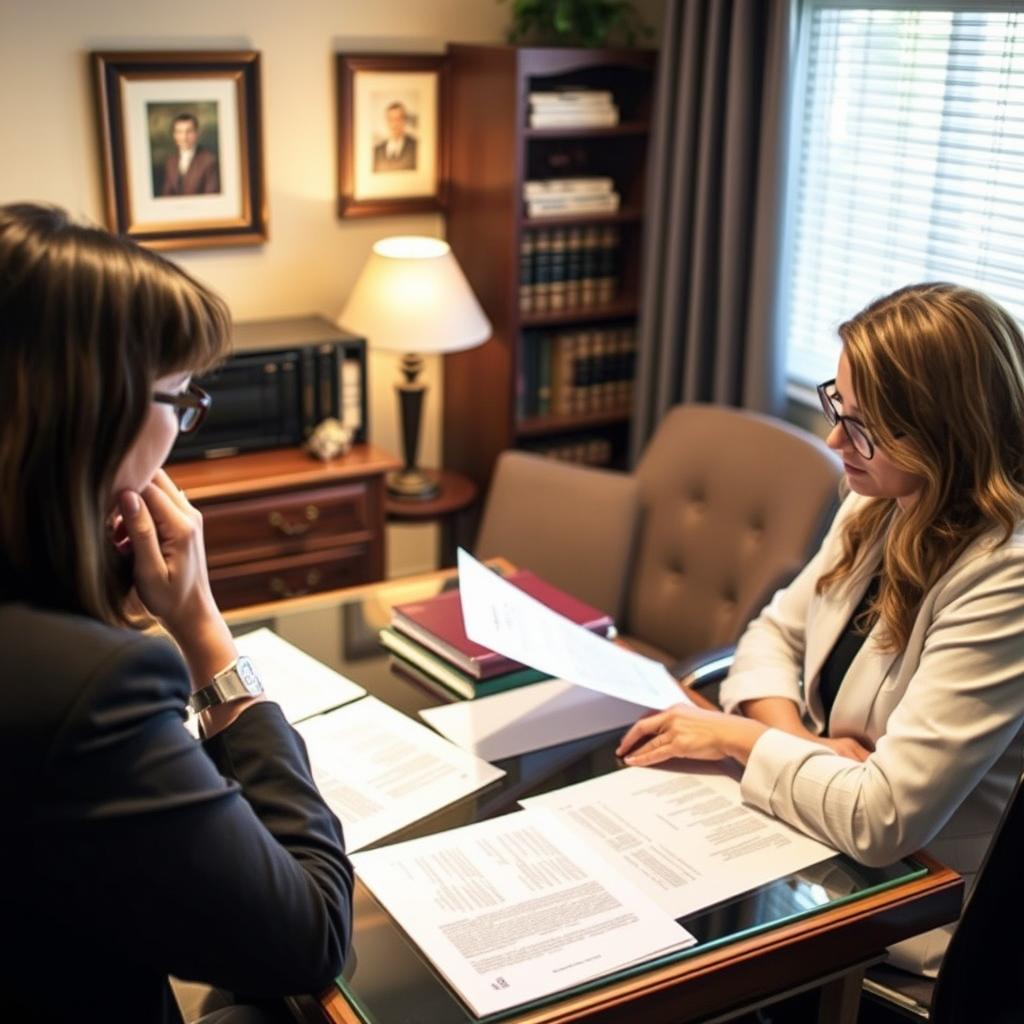
Marital Settlement Agreement Lawyer New Kent County, VA
Reaching a comprehensive Marital Settlement Agreement is one of the most consequential steps in a New Kent County divorce. A well‑drafted agreement resolves property division, spousal support, child custody, and visitation outside of court, giving you control over the outcome. Mr. Sris and his Of Counsel at Law Offices Of SRIS, P.C. represent clients throughout New Kent County — including New Kent, Providence Forge, and Quinton — in drafting, reviewing, and negotiating marital settlement agreements that hold up under Virginia law. Our Richmond location serves families whose cases are heard at the New Kent County Circuit Court, where divorce and equitable distribution matters are decided. If you need counsel who understands how Virginia’s equitable distribution statute intersects with local court practice, call (888) 437‑7747 to request a consultation. Law Offices Of SRIS, P.C. — Advocacy Without Borders.
What a Marital Settlement Agreement Means in New Kent County
A marital settlement agreement — often called a property settlement agreement or separation agreement — is a written contract between spouses that resolves all issues arising from the marriage. In Virginia, a valid agreement can serve as the basis for a no‑fault divorce under Va. Code § 20‑91(9)(b) when the parties have separated for at least six months, have no minor children, and have signed the agreement. Even when children are involved, a comprehensive settlement that addresses custody, visitation, and child support can streamline the divorce process.
In New Kent County, the Circuit Court at 12001 Courthouse Circle reviews marital settlement agreements as part of the divorce proceeding. The court will enforce the agreement if it was entered into voluntarily, without coercion, and fairly divides the marital estate. Virginia is an equitable distribution jurisdiction; under Va. Code § 20‑107.3, the court considers eleven statutory factors when evaluating the terms. While the parties can decide most issues themselves through a marital settlement agreement, the agreement must still conform to Virginia’s legal framework — especially with respect to child support guidelines and the trusted‑interest factors for custody.
New Kent County lies between Richmond and Williamsburg along the I‑64 corridor. Many residents commute to work in the Richmond metropolitan area or serve at nearby military installations, which can add complexity to property and support calculations. Mr. Sris and his Of Counsel handle marital settlement agreements for New Kent County families with an understanding of both the local court’s expectations and the practical realities of the region.
How Mr. Sris and His Of Counsel Handle Marital Settlement Agreement Negotiations
Negotiating a marital settlement agreement involves addressing the core financial and parenting issues the couple faces. Mr. Sris and his Of Counsel begin by identifying all marital assets and debts — real estate, retirement accounts, business interests, and personal property — and classifying them under Virginia’s rules. They then work with the client to determine realistic goals based on the statutory factors, the length of the marriage, and each spouse’s contributions.
When both parties are cooperative, a marital settlement agreement can be drafted through negotiation or mediation, with each side represented by counsel. If disagreements arise, Mr. Sris and his Of Counsel are prepared to advocate for their client’s position in court while continuing to seek a fair settlement. They pay particular attention to provisions that trigger later disputes — such as vague property‑division language or missing enforcement mechanisms — because a durable marital settlement agreement protects the client long after the decree is entered. In every matter, the team emphasizes thorough documentation and clear drafting to reduce future litigation.
About Mr. Sris and His Of Counsel Team
Mr. Sris, Owner and Founder of Law Offices Of SRIS, P.C., has practiced family law across multiple states for more than 28 years. He is a former prosecutor who brings a disciplined, evidence‑based approach to negotiations and, when necessary, litigation. Mr. Sris testified before the Virginia House Courts of Justice Committee in support of 2019 HB 635 (chief patron Del. David Bulova), which revised the equitable distribution statute. His involvement at the legislative level gives him a distinctive perspective on the policy behind Virginia’s family‑law framework.
Mr. Sris is supported by Of Counsel attorneys who collectively bring extensive legal experience and 4,739+ documented firm-wide results. Results may vary. They include practitioners with backgrounds as a former Virginia State Trooper and a former Maryland Assistant State’s Attorney, as well as litigators with decades of experience in Virginia circuit courts. Together, Mr. Sris and his Of Counsel collaborate on each marital settlement agreement to draw on this breadth of knowledge.
Frequently Asked Questions
How long does a divorce with a marital settlement agreement take in New Kent County?
Once the agreement is signed and the separation period is satisfied, obtaining a final divorce decree typically takes two to four months after filing. The timeline depends on the court’s docket and the responsiveness of the other party. If the marital settlement agreement resolves all issues and the parties are in agreement on the terms, the court can often finalize the divorce without a contested hearing. When custody or complex property issues are involved, the process may take longer as the court reviews the agreement for compliance with Virginia’s best‑interest factors.
How does a Virginia lawyer defend against attempts to set aside a marital settlement agreement?
An attorney challenges attempts to void a marital settlement agreement by demonstrating the agreement was entered voluntarily, without duress, and with full financial disclosure. Under Va. Code § 20‑109 and related case law, the party seeking to overturn the agreement must show fraud, coercion, or material nondisclosure. Mr. Sris and his Of Counsel defend the agreement by presenting evidence that the parties were represented by counsel or knowingly waived representation, that valuations were reasonable, and that the agreement was the product of genuine negotiation.
What should I do if I am facing a dispute over a marital settlement agreement in New Kent County?
If a dispute arises over the terms or enforcement of a marital settlement agreement, contact a family law attorney promptly. Do not ignore a motion to set aside the agreement or claim for breach. Preserve all correspondence, drafts of the agreement, financial statements, and any evidence of the negotiations. Because the New Kent County Circuit Court handles equitable distribution and enforcement matters, your attorney will need to respond within the time allowed by the court’s scheduling order. Early engagement allows counsel to assess whether the dispute can be resolved through negotiation or requires court intervention.
What are the grounds for divorce in Virginia, and how does a marital settlement agreement affect them?
Virginia allows both fault‑based and no‑fault grounds for divorce. A marital settlement agreement is most commonly used to support a no‑fault divorce under Va. Code § 20‑91(9)(b) when the parties have lived separate and apart for six months, no minor children are involved, and a written separation agreement has been executed. It can also be used in a one‑year separation case and can resolve all issues even when fault grounds are asserted. Having a comprehensive agreement often simplifies the proceeding because the court does not need to litigate contested issues.
Is Virginia a community property state for purposes of a marital settlement agreement?
No, Virginia is an equitable distribution state, not a community property state. Marital property is divided fairly but not necessarily equally. The court considers eleven factors listed in Va. Code § 20‑107.3, such as the duration of the marriage, each spouse’s contributions, and the circumstances that led to the divorce. A marital settlement agreement can define your own fair division, and as long as the agreement is not unconscionable, the court will typically honor it. Separate property — assets owned before marriage or received as gift or inheritance — is excluded from equitable distribution.
How does a judge evaluate a marital settlement agreement involving child custody in New Kent County?
The court reviews custody provisions in a marital settlement agreement under the trusted‑interest‑of‑the‑child standard. Under Va. Code § 20‑124.3, the judge examines ten factors, including the child’s relationship with each parent, each parent’s ability to meet the child’s needs, and any history of family abuse. While the parents’ agreement is given weight, the court retains jurisdiction to modify custody if circumstances change or if the agreement is not in the child’s best interest. New Kent County Juvenile and Domestic Relations District Court handles standalone custody matters, but when the marital settlement agreement is part of a divorce proceeding, the Circuit Court reviews the custody terms.
Attorney advertising. Prior results do not guarantee a similar outcome.
Results may vary. Case results depend on a variety of factors unique to each case.
Contact Law Offices Of SRIS, P.C. at (888) 437‑7747 to discuss your marital settlement agreement. Our Richmond location serves New Kent County families.