
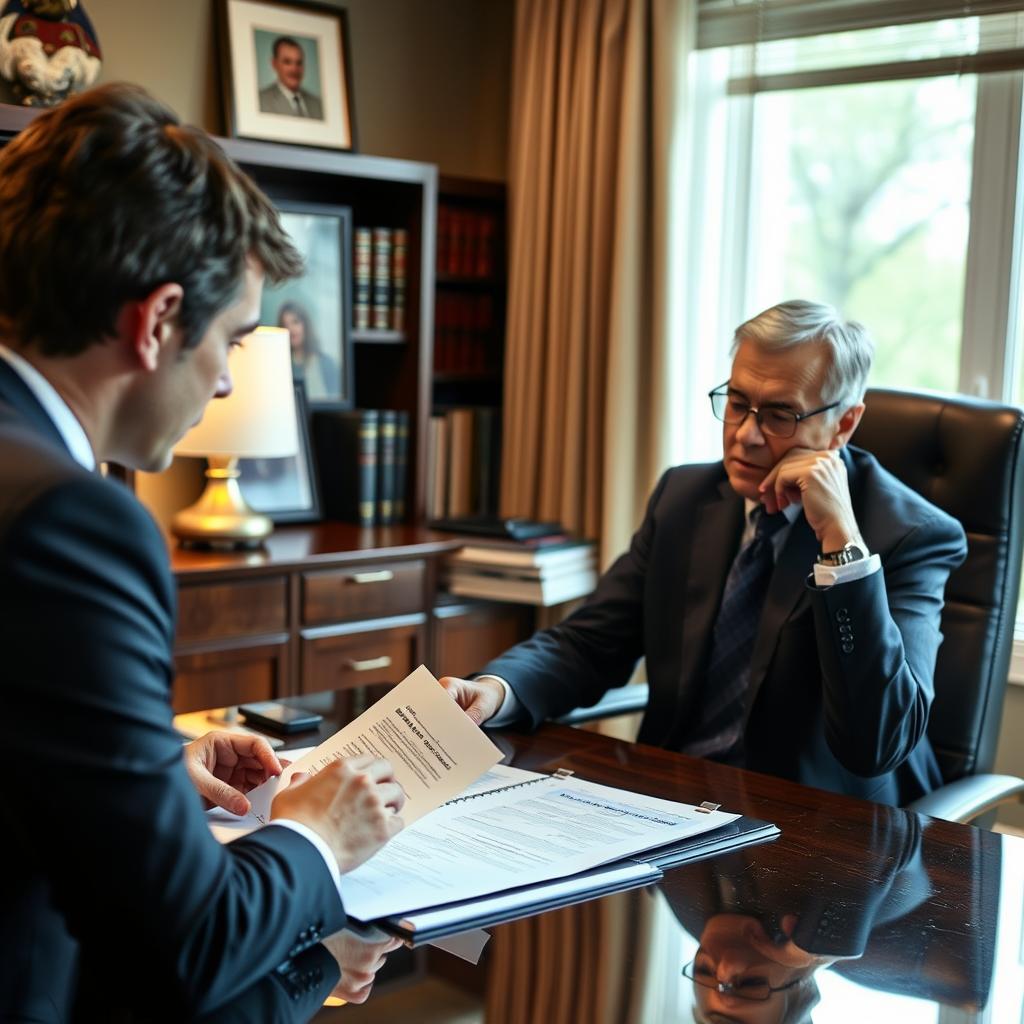
International Assets Divorce Lawyer Fluvanna County, VA
Dividing marital property when a marriage crosses international borders raises complications far beyond a typical divorce. A Fluvanna County resident with a spouse or assets abroad must still navigate Virginia’s equitable distribution statute, Va. Code § 20‑107.3, while contending with foreign banking laws, currency conversion, and discovery hurdles. The Fluvanna County Circuit Court at 72 Main Street, Suite B, Palmyra, Virginia, holds exclusive jurisdiction over divorce and property division matters for county residents. Mr. Sris and his Of Counsel serve clients throughout Fluvanna County—including Palmyra, Fork Union, and Lake Monticello—from our Shenandoah location at 505 N Main St, Suite 103, Woodstock, VA 22664. If you are facing a divorce that involves assets held outside the United States, reach our firm to request a consultation. We help clients identify, value, and advocate for a fair division of international marital property. Call (888) 437‑7747. By appointment only. Law Offices Of SRIS, P.C. – Advocacy Without Borders.
What International Assets Divorce Means in Fluvanna County
Virginia is an equitable distribution state, not a community property state; the court divides marital property fairly but not necessarily equally. When one or both spouses own real estate, bank accounts, businesses, or retirement holdings in a foreign country, those assets are still subject to disclosure and division under Virginia law. The Fluvanna County Circuit Court has the authority to classify foreign‑situs assets as marital or separate, apply the eleven statutory factors in § 20‑107.3, and enter orders dividing the marital portion. However, enforcing a Virginia decree abroad often requires ancillary proceedings in the foreign jurisdiction, which makes early strategic planning essential.
Local practice in Fluvanna County aligns with the procedural framework used throughout the Sixteenth Judicial District. The court expects complete financial disclosures supported by credible documentation. When international assets are involved, parties may need to engage forensic accountants fluent in cross‑border valuation, use letters rogatory or the Hague Evidence Convention to obtain records, and coordinate with foreign counsel to ensure a Virginia order can be domesticated overseas. Because Fluvanna County is a smaller jurisdiction, the court’s calendar and the availability of interpreters or remote testimony can influence the pace of litigation. Mr. Sris and his Of Counsel are experienced in managing these practical dimensions so that foreign assets are not overlooked in the settlement or trial process.
How Mr. Sris and His Of Counsel Handle International Assets Divorce Cases
Every international‑asset divorce begins with a thorough inventory of all property wherever located. Mr. Sris and his Of Counsel work with financial professionals to trace the source and classification of funds, determine whether foreign real estate was acquired during the marriage, and assess the tax implications of transferring interests across borders. They then develop a strategy for presenting the asset picture to the Fluvanna County Circuit Court in a manner that is clear and substantiated, whether through stipulation, mediation, or trial.
The team also addresses the procedural challenges unique to cross‑border discovery. If a spouse is uncooperative or assets are concealed abroad, Virginia courts can issue orders compelling disclosure, and the availability of the Hague Service Convention or alternative service mechanisms ensures that the proceeding moves forward even when one party resides overseas. Throughout the matter, Mr. Sris and his Of Counsel coordinate with foreign attorneys to protect the client’s interests both in Virginia and in the country where the property is located. The goal is a final decree that can be effectively enforced. Results vary; past results do not guarantee a similar outcome.
About Mr. Sris and His Of Counsel Team
Mr. Sris, Owner and Founder of Law Offices Of SRIS, P.C., has practiced family law since 1997 and is admitted in Virginia, Maryland, the District of Columbia, New Jersey, and New York. He is a former prosecutor whose experience in trial work and negotiation informs his approach to complex divorce litigation. Mr. Sris testified before the Virginia House Courts of Justice Committee in support of 2019 HB 635 (chief patron Del. David Bulova), which revised the equitable distribution statute. His Of Counsel bring over 120 years of combined legal experience. Results may vary. Together, they have documented 4,739+ case results across all practice areas since 1997.
Frequently Asked Questions
How does international property get divided in a Fluvanna County divorce?
Virginia treats all marital property as divisible regardless of where it is located, but enforcement abroad typically requires separate legal action in the foreign country. The Fluvanna County Circuit Court applies Va. Code § 20‑107.3 to classify assets as marital or separate and then divides the marital portion equitably. If real estate or a bank account is outside the United States, the Virginia decree establishes the parties’ rights, but the owner of the foreign property may need to seek recognition and enforcement through the courts of that country. Coordination with local foreign counsel is often necessary.
Do I need a lawyer for a divorce involving assets in multiple countries?
Yes, retaining an attorney experienced in cross‑border divorce is strongly advisable because of the complex legal, financial, and procedural issues that arise. Identifying, valuing, and dividing foreign assets requires compliance with both Virginia discovery rules and the laws of the other nation. An attorney can help you gather necessary documents, engage forensic experts, and navigate international service of process. Without legal guidance, a party risks an incomplete property division or a decree that cannot be enforced. Mr. Sris and his Of Counsel guide clients through each step from disclosure to final judgment.
What if my spouse is hiding assets overseas?
A Virginia court may enter orders compelling disclosure and can impose sanctions if a party intentionally conceals marital property, but locating hidden assets abroad often requires forensic investigation. Your attorney can request formal discovery, including interrogatories and requests for production, and may work with forensic accountants who practices in tracking international transfers. If the non‑disclosure is deliberate, the court may consider it when apportioning property or awarding attorney fees. The process can be time‑intensive and depends heavily on the specific facts of the case.
How does the court handle retirement accounts held in other countries?
Foreign retirement accounts are marital property subject to division, but a Virginia qualified domestic relations order (QDRO) generally does not bind a foreign plan administrator. Instead, the court may assign the account to one spouse and offset the value with other assets, or it may require the account holder to make a lump‑sum payment. Valuation often requires experienced attorney analysis to account for currency fluctuations and foreign tax consequences. Mr. Sris and his Of Counsel work with financial professionals to present a fair valuation to the Fluvanna County Circuit Court.
What about service of process if my spouse lives abroad?
When a spouse resides outside the United States, the Hague Service Convention may provide a formal channel for delivering divorce papers, but alternative methods such as service by publication may also be available under Virginia law. The appropriate method depends on the foreign country’s treaty status and the circumstances of the case. An attorney can determine the most efficient and defensible approach to ensure the court acquires personal jurisdiction. Proper service is critical to avoid later challenges to the validity of the divorce decree.
Learn more about Virginia family law from official sources: Virginia Code Title 20; Virginia Judicial System; Virginia State Bar.
Attorney advertising. Prior results do not guarantee a similar outcome. Results may vary.
Case results depend on a variety of factors unique to each case.