
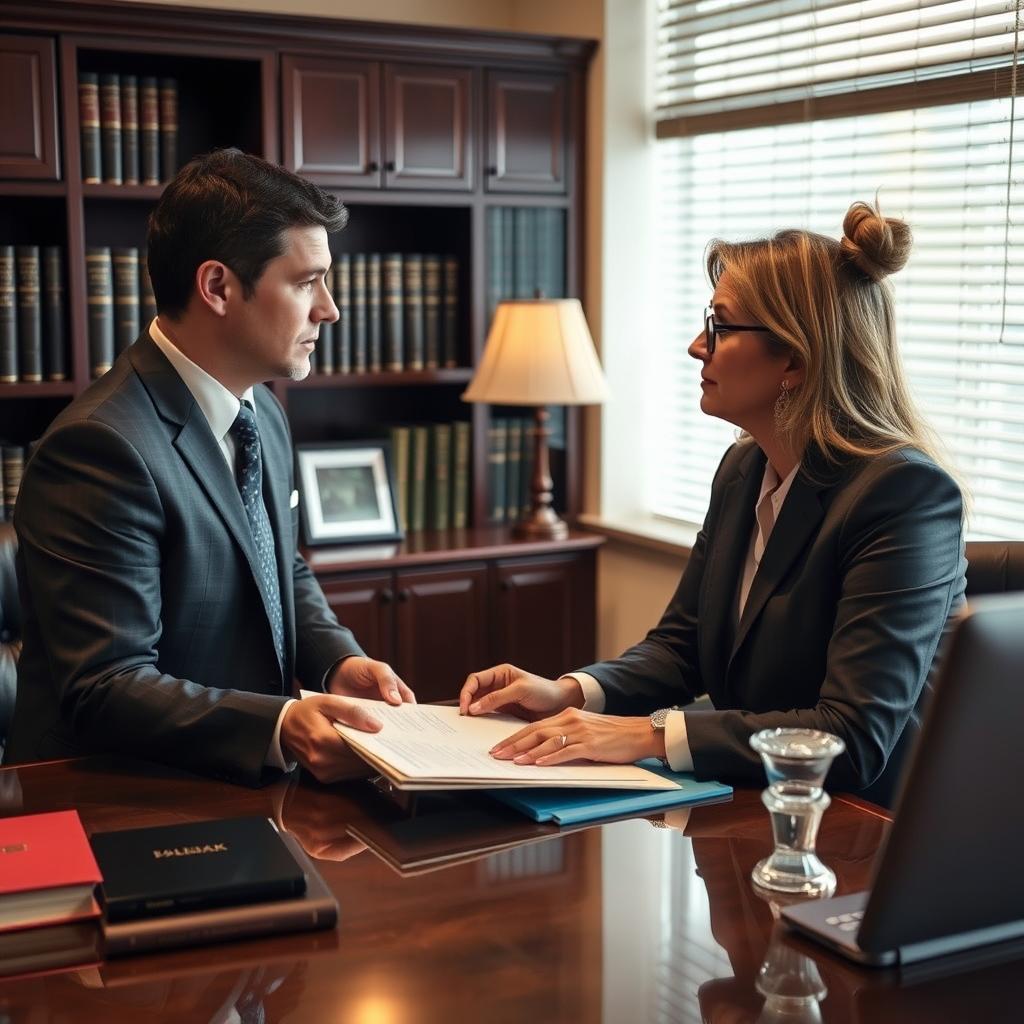
International Assets Divorce Lawyer Colonial Heights, VA
When a marriage involves property, accounts, or business interests located outside the United States, a Colonial Heights divorce requires more than a standard property‑division analysis. International holdings can include real estate in another country, offshore bank accounts, foreign retirement plans, or shares in a family enterprise abroad. Those assets are real financial interests, and Virginia’s equitable‑distribution process must account for them accurately. At Law Offices Of SRIS, P.C., Mr. Sris and his Of Counsel help clients in Colonial Heights identify, value, and seek an equitable division of international marital assets while the case proceeds through the Colonial Heights Circuit Court. The firm, founded in 1997, draws on over 120 years of combined legal experience between Mr. Sris and his Of Counsel to address the cross‑border discovery, foreign‑law considerations, and enforcement challenges that international‑asset cases present. Results may vary. Reach our location at (888) 437‑7747 to schedule a consultation and discuss how Virginia’s equitable‑distribution framework applies to your international property.
Law Offices Of SRIS, P.C. – Advocacy Without Borders.
What International Assets Divorce Means in Colonial Heights
An international‑assets divorce is a dissolution of marriage in which one or both spouses hold financial resources or titled property beyond the borders of the United States. When the divorce is filed in Virginia—and specifically in the Colonial Heights Circuit Court, located at 550 Boulevard, Colonial Heights, VA 23834—Virginia law governs the classification, valuation, and distribution of all marital property, wherever it is located. Virginia is an equitable‑distribution state. Under Va. Code § 20‑107.3, the court considers 11 statutory factors to divide marital assets fairly, though not necessarily equally. Separate property (assets owned before the marriage or received as a gift or inheritance) is generally excluded.
What makes an international‑assets case different in Colonial Heights is the additional layer of identification, valuation, and proof. A husband or wife may hold a condominium in Mumbai, a bank account in London, securities in a Hong Kong brokerage, or an ownership stake in a family business registered in Mexico. Before those assets can be fairly divided, they must be disclosed, confirmed, and valued under a process that often requires cooperation with foreign institutions, translation of documents, and the advice of forensic accountants and foreign‑law consultants. The Colonial Heights Circuit Court has jurisdiction to divide all marital property as part of the divorce decree, but enforcing a Virginia division order in a foreign country depends on that country’s recognition laws—a reality that requires strategic planning from the start.
Virginia also requires at least one corroborating witness for an uncontested divorce hearing, and a property settlement agreement signed by both parties can resolve all issues without trial. Mediation is available but not mandatory. Colonial Heights Juvenile and Domestic Relations District Court handles standalone custody, visitation, and support matters, while the Circuit Court handles the divorce and equitable distribution. When international assets are involved, the financial disclosure phase becomes the most critical stage, and an attorney who understands cross‑border discovery can help prevent hidden assets from being overlooked.
How Mr. Sris and His Of Counsel Handle International Assets Divorce Cases
At Law Offices Of SRIS, P.C., international‑asset matters are treated as complex property‑division cases requiring thorough preparation. Mr. Sris and his Of Counsel start by identifying every category of property that may be subject to division, using Virginia’s broad discovery tools—interrogatories, requests for production of documents, depositions, and subpoenas to third parties. When assets are located abroad, the team coordinates with forensic accountants, business valuation attorneys, and foreign‑law professionals to trace and value those holdings, convert non‑U.S.‑dollar amounts, and evaluate tax consequences. The goal is to build a complete financial picture so the court can make an informed equitable‑distribution decision.
Many international‑asset cases resolve through a marital settlement agreement that the parties negotiate with the help of counsel. A well‑drafted separation agreement can address the transfer of foreign real estate, the division of offshore accounts, and the payment of any equalizing monetary award—often in a way that respects both Virginia law and the relevant foreign legal system. If a trial becomes necessary, Mr. Sris and his Of Counsel present the valuation evidence and advocate for a division that reflects the 11 factors under § 20‑107.3, including the duration of the marriage, the contributions of each spouse to the acquisition of the assets, and the liquidity of the international holdings. The team’s extensive experience with high‑net‑worth and cross‑border family law matters helps ensure that foreign assets are not treated as an afterthought.
About Mr. Sris and His Of Counsel Team
Mr. Sris, Owner and Founder of Law Offices Of SRIS, P.C., has practiced law since 1997 and is admitted in Virginia, Maryland, the District of Columbia, New Jersey, and New York. A former prosecutor, he brings an analytical, evidence‑focused mindset to complex property‑division cases. Mr. Sris testified before the Virginia House Courts of Justice Committee in support of 2019 HB 635 (chief patron Del. David Bulova), a bill that amended Va. Code § 20‑107.3(g) regarding the direct payment of marital shares of retirement plans—an issue that frequently arises when dividing international retirement assets. His firsthand knowledge of the equitable‑distribution statute informs the firm’s approach to every Colonial Heights divorce that involves foreign property.
Mr. Sris is supported by a team of Of Counsel attorneys who collectively bring extensive experience in family law, criminal defense, civil litigation, and cross‑border matters. All attorneys are engaged through Excella. Together, Mr. Sris and his Of Counsel have documented 4,739+ case results across all practice areas since 1997. Results may vary. In Colonial Heights, the firm has documented favorable case results across all practice areas. Over 120 years of combined legal experience between Mr. Sris and his Of Counsel.
Frequently Asked Questions
What qualifies as an international asset in a Virginia divorce?
Any marital property with a situs outside the United States—including foreign real estate, offshore bank or brokerage accounts, ownership in non‑U.S. Businesses, trusts, pensions, or other financial instruments—qualifies as an international asset in a Virginia divorce. The court’s classification and equitable‑distribution analysis under Va. Code § 20‑107.3 applies regardless of the asset’s location. Disclosure, valuation, and proof of these holdings require careful documentation and, often, cooperation from foreign institutions.
How does Virginia law divide international assets?
Virginia courts treat international marital assets the same as domestic marital assets: the court classifies the property as marital, separate, or hybrid, and then distributes the marital portion equitably after weighing the eleven statutory factors in Va. Code § 20‑107.3. The practical difficulty lies in identifying and valuing foreign‑situs holdings, converting foreign currency, and determining whether a foreign asset is truly marital or was acquired with separate funds. The court can order a monetary award or require the transfer of title to domestic accounts, but enforcing an order concerning foreign‑titled property may require separate proceedings in the foreign jurisdiction.
Will a Virginia court order the transfer of foreign property?
A Virginia Circuit Court can order a spouse to convey foreign real estate or to take steps necessary to transfer ownership, but the court cannot directly change the title record of another sovereign nation. The divorce decree may require the titled spouse to execute a deed or power of attorney, and if the spouse fails to comply, the court can enforce its order through contempt sanctions or adjust the property division to compensate the other spouse. Enforcement of a Virginia judgment abroad depends on the foreign country’s domestic law and any applicable treaties.
How does the discovery process work for assets located abroad?
Discovery in a Colonial Heights international‑assets case uses standard Virginia discovery tools—interrogatories, requests for production, and depositions—supplemented by international cooperation mechanisms when necessary. Financial affidavits require full disclosure of all worldwide assets. If a party refuses to disclose foreign accounts, counsel may seek subpoenas, hire forensic experts to trace funds, or use registries and foreign‑law consultants to identify hidden holdings. International evidence‑gathering may also involve the Hague Evidence Convention, but most cases rely on thorough domestic discovery and the assistance of professionals experienced in cross‑border finance.
Can I get a divorce in Colonial Heights if my spouse lives overseas?
Yes, if at least one party meets Virginia’s six‑month domiciliary‑residency requirement under Va. Code § 20‑97, a divorce action may be filed in Colonial Heights even if the other spouse resides in a foreign country. Service of process on an overseas spouse may be accomplished through the Hague Service Convention (if the country is a signatory and has not objected to the method used) or, if service is not practicable through that route, by alternative means permitted by the court, such as service by publication. The case can proceed to equitable distribution and entry of a final decree after service is complete, though the absent spouse’s participation may affect the timeline.
What role does a forensic accountant play in international asset division?
A forensic accountant helps trace, value, and analyze international financial holdings that are not readily transparent, such as offshore accounts, foreign business interests, or complex investment structures. The accountant may reconstruct a couple’s financial history, identify transfers to foreign accounts, calculate currency‑conversion values, and offer expert testimony about the marital portion of an international asset. In Colonial Heights Circuit Court, forensic evidence is often central to proving the existence and value of disputed foreign property, particularly when one spouse controls the overseas accounts.
How does the 2019 amendment to Va. Code § 20‑107.3(g) affect retirement accounts held abroad?
The 2019 revision to subsection (g) clarified the court’s authority to direct the direct payment of a marital share of retirement and pension plans, which can include foreign plans if the plan’s administrator is subject to the court’s jurisdiction or the decree. Mr. Sris testified in support of this amendment, which is especially relevant for international‑asset cases involving foreign pension schemes or retirement trusts. The revision helps facilitate the division of such plans through qualified domestic‑relations‑order‑like mechanisms, though the practical availability of a direct payment from a foreign plan depends on the plan’s governing documents and the law of the country where the plan is administered.
What if my spouse is hiding assets in another country?
Virginia law requires full financial disclosure, and a spouse who conceals international assets risks serious consequences, including contempt findings, monetary sanctions, and an unequal property division in favor of the disadvantaged spouse. An experienced attorney can employ forensic accountants, deposition discovery of the spouse and third parties, and international asset‑tracing databases to uncover hidden accounts or property. If concealment is proved, the court may allocate a larger share of the known marital estate to the innocent spouse and may also award attorney fees. Prompt action is important, as some foreign financial records may be time‑sensitive.
How long does a divorce involving international assets take in Colonial Heights?
The overall timeline depends on the mandatory separation period under Virginia law, the complexity of asset identification and valuation, and the extent of cooperation between the parties and foreign institutions. An uncontested divorce where a comprehensive separation agreement is signed may resolve within a few months after the required separation period. A contested case with substantial international discovery can take considerably longer, particularly if foreign legal proceedings are needed to confirm or enforce orders. The court’s calendar and the progression of discovery will shape the schedule; there is no fixed timeframe.
Do I need a lawyer familiar with both Virginia and international property issues?
Given the interplay between Virginia equitable‑distribution law and foreign property systems, working with a lawyer who regularly handles cross‑border asset cases can help ensure that no property is overlooked and that the division is enforceable. Mr. Sris and his Of Counsel have extensive experience with family law matters that involve foreign assets, and the firm’s multi‑state practice and network of professional consultants support the tracing and valuation work that international cases demand. Call (888) 437‑7747 to speak with a member of the firm about your situation.
Related pages:
Fairfax County Family Law Lawyer ·
Fairfax City Family Law Lawyer ·
Prince William County Family Law Lawyer ·
Manassas Family Law Lawyer
Virginia primary sources:
Virginia Code Title 20 — Domestic Relations ·
Colonial Heights Circuit Court ·
Virginia Judicial System
Attorney advertising. Prior results do not guarantee a similar outcome. Results may vary.
Case results depend on a variety of factors unique to each case.