
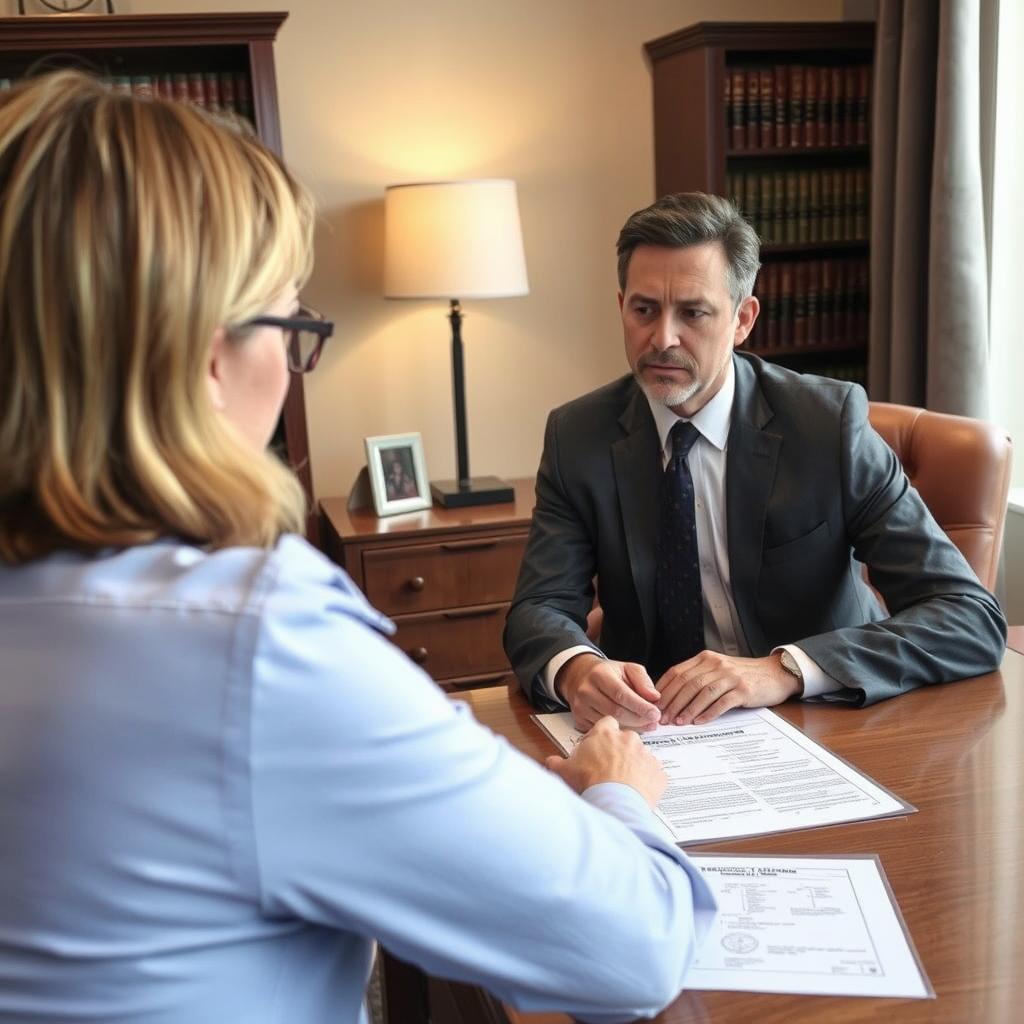
Norfolk Military Divorce Lawyer York County, VA
Military divorce in the Norfolk–Hampton Roads region requires an understanding of both Virginia family law and the federal statutes that protect service members and govern the division of military benefits. When a marriage involves a service member stationed at Naval Station Norfolk, Joint Base Langley‑Eustis, Naval Weapons Station Yorktown, or one of the area’s many other installations, the legal process must address deployment schedules, jurisdiction, and the treatment of military retirement under the Uniformed Services Former Spouses’ Protection Act (USFSPA). Law Offices Of SRIS, P.C. Concentrates its practice on family law matters including complex military divorces and represents clients in York County and throughout southeastern Virginia. Reach our location at (888) 437‑7747 to schedule a consultation. Law Offices Of SRIS, P.C. – Advocacy Without Borders.
What Military Divorce Means in York County and the Norfolk–Hampton Roads Region
For couples living in the York County communities of Yorktown, Grafton, Tabb, and Seaford, a divorce with military ties proceeds under the same Virginia statutes that govern civilian divorces, but with additional layers unique to the armed forces. The Servicemembers Civil Relief Act (SCRA) can pause proceedings while a service member is deployed, and the 20‑year/20‑year/20‑year rule under the USFSPA determines whether a former spouse may receive direct payment of a share of military retired pay from the Defense Finance and Accounting Service. Mr. Sris and his Of Counsel team have experience navigating these overlapping frameworks for clients throughout the region.
The York County Circuit Court at 300 Ballard Street, Yorktown, Virginia, is the proper venue for divorce, equitable distribution, and spousal support matters under Va. Code § 20‑96. The Circuit Court filing fee for a divorce complaint is approximately with additional costs for service of process and, when necessary, a Guardian ad litem for custody disputes. The York County Juvenile & Domestic Relations District Court handles standalone custody, visitation, and child support matters and also addresses protective orders. Because Virginia is an equitable distribution state rather than a community property state, the court considers eleven statutory factors under Va. Code § 20‑107.3 when dividing marital property, including military retirement accounts. All property classified as marital—whether a Thrift Savings Plan, a defined‑benefit pension, or a service member’s SGLI—is subject to a fair, but not necessarily equal, division.
How Mr. Sris and His Of Counsel Handle Military Divorce Cases
A military divorce begins with the same threshold issues as any Virginia divorce: confirming that one party meets the six‑month domiciliary residency requirement under Va. Code § 20‑97, establishing grounds under Va. Code § 20‑91, and determining whether the separation period has been met. Where service members are concerned, the firm also evaluates whether the SCRA’s stay provisions apply, whether the matter can proceed while the service member is overseas, and how to serve process on a deployed spouse in compliance with the Hague Service Convention or state‑court alternative means when necessary. Mr. Sris and his Of Counsel develop a strategy tailored to the specific facts of each case, working to preserve the client’s rights in retirement accounts, survivor benefit plans, and other military‑specific assets.
The timeline for a military divorce in York County varies with the complexity of the issues. An uncontested divorce with a signed separation agreement can be completed in approximately 2–4 months from filing, assuming the mandatory separation period has already run and no minor children are involved, while a contested divorce that requires a trial on equitable distribution or custody can take longer. When military pensions must be valued and divided, the firm coordinates with qualified attorneys to calculate the marital portion of the retirement and, when appropriate, prepares the necessary orders for the court and for DFAS review. Throughout the process, Law Offices Of SRIS, P.C. remains available by phone at (888) 437‑7747 to answer client questions. Results may vary.
About Mr. Sris and His Of Counsel Team
Mr. Sris, Owner and Founder of Law Offices Of SRIS, P.C., has practiced law since 1997 and is admitted in Virginia, Maryland, the District of Columbia, New Jersey, and New York. A former prosecutor, he brings trial‑tested insight to every family law matter. Mr. Sris testified before the Virginia House Courts of Justice Committee in support of 2019 HB 635 (chief patron Del. David Bulova). His legislative engagement and courtroom experience inform the firm’s approach to complex property division, including the treatment of military benefits under Virginia’s equitable distribution statute.
Mr. Sris is joined by a dedicated Of Counsel team. Each Of Counsel attorney is a non‑employee member of the firm who contributes extensive experience in family law, criminal defense, and civil litigation. Together, Mr. Sris and his Of Counsel bring over 120 years of combined legal experience, providing clients with a depth of knowledge that spans the full range of issues arising in a military divorce—from child custody and visitation to the division of real property and retirement accounts. Results may vary.
Frequently Asked Questions
How does military divorce differ from civilian divorce in Virginia?
Military divorce in Virginia follows the same statutory framework but adds federal protections under the Servicemembers Civil Relief Act and rules for dividing military retired pay under the USFSPA. The SCRA allows a service member to request a stay of proceedings if military duty materially affects the ability to participate, and the USFSPA governs whether a state court can treat military disposable retired pay as marital property. In York County, the Circuit Court applies Virginia equitable distribution law, but certain military benefits, such as disability pay, remain the service member’s separate property.
What are the grounds for divorce under Virginia law, and do they apply to military members?
Virginia Code § 20‑91 provides both no‑fault and fault grounds, all of which apply equally to military members and their spouses. The no‑fault route requires either a six‑month separation with a signed separation agreement and no minor children, or a one‑year separation otherwise. Fault grounds, including adultery and cruelty, are available and do not require a separation period, though proving fault can introduce additional procedural steps. In a military divorce, frequent deployments may affect whether the separation requirement has been met, and the firm evaluates the facts under the controlling statute.
How is military retirement divided in a Virginia divorce?
Under Virginia’s equitable distribution statute, the marital portion of a military pension is classified as marital property and may be divided by the court, but the division is subject to the federal USFSPA. The “10‑year rule” under the USFSPA determines whether the former spouse may receive direct payment from DFAS; if the overlap between marriage and creditable military service is less than ten years, the division can still be ordered but payment must come from the service member. The court considers all statutory factors under Va. Code § 20‑107.3 when deciding the percentage and method of distribution, and a Qualified Domestic Relations Order‑type document is generally used to effectuate the award.
What effect does deployment have on divorce and custody proceedings in York County?
Deployment can pause divorce and custody proceedings under the SCRA while the service member is unable to participate, and it can complicate the making of temporary custody arrangements. The court may stay the case for 90 days—or longer at its discretion—if military duty materially interferes with the service member’s ability to defend the action. For custody, the York County Juvenile & Domestic Relations District Court considers the child’s best interests under Va. Code § 20‑124.3, including the effect of a parent’s call to active duty and the feasibility of a parenting plan that accommodates deployment cycles. An experienced attorney can help present a workable custody framework that protects parental rights during periods of overseas duty.
How does the Servicemembers Civil Relief Act affect a military divorce?
The SCRA can stay court proceedings, delay default judgments, and require heightened procedural safeguards when a party is on active duty. If the service member cannot appear because of military orders, the court must appoint an attorney to represent the absent member before a default can be entered, and the stay can last for the duration of active duty plus 90 days thereafter. The Act also restricts the enforcement of certain obligations and can affect the timeline for resolution. Mr. Sris and his Of Counsel are familiar with invoking the SCRA where appropriate and with moving matters forward when the protections are not triggered.
Why should I consult a lawyer for a military divorce in York County?
Because military divorce involves overlapping state and federal laws that can change the outcome of property division and custody, consulting an attorney helps ensure your rights are preserved. Issues such as pension division, the 20‑year/20‑year/20‑year rule, Survivor Benefit Plan coverage, and the effect of deployment on parenting time require an understanding of both Virginia family law and military‑specific statutes. Mr. Sris and his Of Counsel have documented 4,739+ case results since 1997 across multiple practice areas and are available to discuss the details of your matter. For a consultation, reach Law Offices Of SRIS, P.C. at (888) 437‑7747. Results may vary.
Related practice areas in the region: James City County family law lawyer · Williamsburg family law attorney · Fairfax County family law lawyer · Falls Church family law attorney
Primary legal sources: Virginia Code Title 20 (Domestic Relations) · DFAS Military Divorce Information · York County Circuit Court
Attorney advertising. Prior results do not guarantee a similar outcome. Results may vary.
Case results depend on a variety of factors unique to each case.