
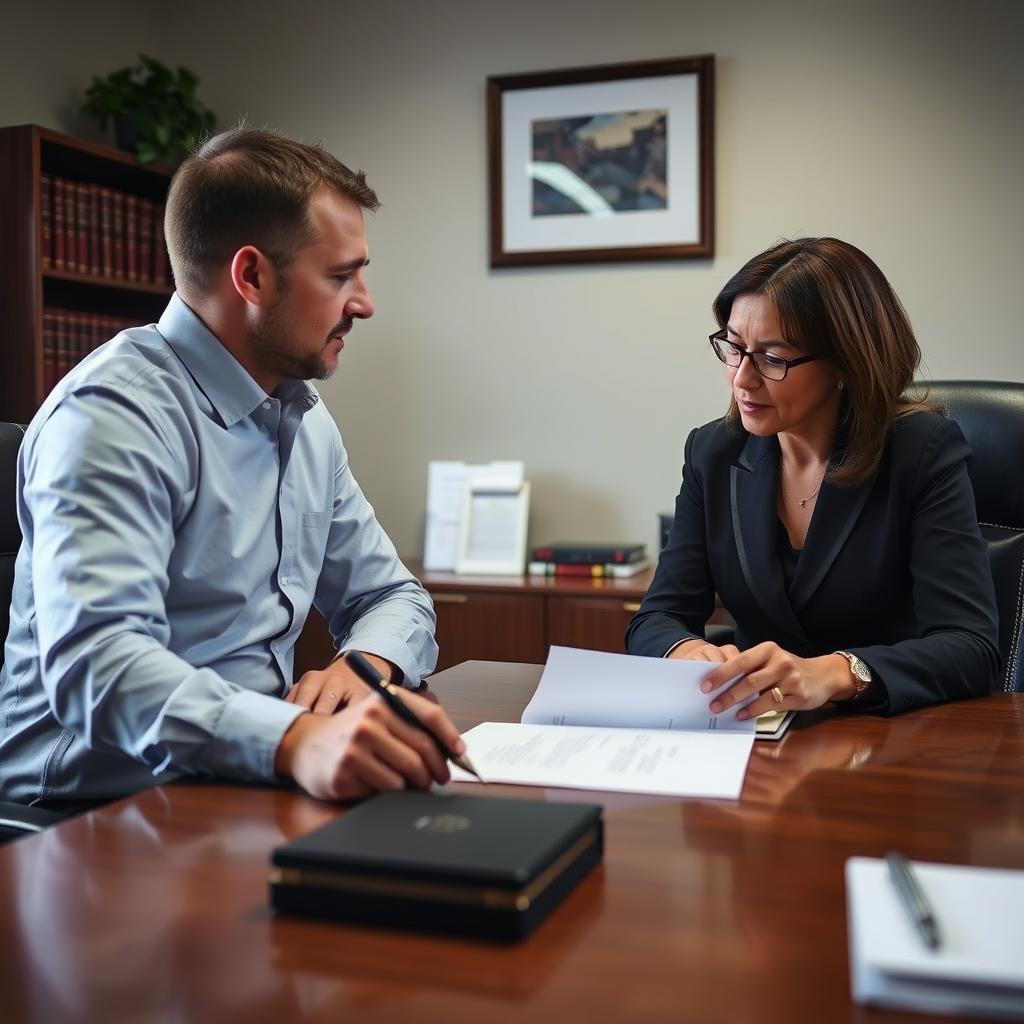
Felony Conviction Divorce Lawyer Isle of Wight County, VA
When a spouse is convicted of a felony and sentenced to confinement for more than one year, Virginia law recognizes that conviction as a specific fault ground for divorce under Va. Code § 20-91. In Isle of Wight County, a resident whose spouse is incarcerated in a state or federal facility may file a Complaint for divorce in the Isle of Wight County Circuit Court without having to wait through a mandatory separation period. This ground allows the non-incarcerated spouse to move forward with the dissolution of the marriage while the other spouse is serving the sentence, addressing critical issues such as child custody, child support, spousal support, and the equitable distribution of marital property. Mr. Sris and his Of Counsel at Law Offices Of SRIS, P.C. represent clients in divorce proceedings based on a spouse’s felony conviction, guiding families in Smithfield, Windsor, Carrollton, and across Isle of Wight County through the statutory requirements and the local court process. Mr. Sris and his Of Counsel bring over 120 years of combined legal experience backed by 4,739+ documented firm-wide results. Results may vary. To request a consultation, call (888) 437-7747. Law Offices Of SRIS, P.C. – Advocacy Without Borders.
What Felony Conviction Divorce Means in Isle of Wight County
Virginia is an equitable distribution state, and Va. Code § 20-91 lists several fault grounds that permit a party to seek an absolute divorce without a required separation period. Among those grounds is the sentencing of a spouse to confinement of more than one year following a felony conviction. Unlike a no‑fault divorce, which typically requires six months or one year of separation depending on whether there are minor children and a signed separation agreement, a divorce based on felony conviction may be pursued immediately after the conviction and sentence. This ground does not require proof of marital misconduct beyond the fact of the felony conviction and the resulting period of incarceration.
In Isle of Wight County, divorce actions are filed in the Isle of Wight County Circuit Court, located at 17122 Monument Circle, Suite A, Isle of Wight, VA 23397. The Circuit Court has exclusive original jurisdiction over divorce, equitable distribution, and spousal support matters. Standalone custody, visitation, and child support issues may also be heard in the Isle of Wight County Juvenile and Domestic Relations District Court. Mr. Sris and his Of Counsel appear in both courts on behalf of clients throughout the county, including the communities of Smithfield, Windsor, and Carrollton. Because the incarcerated spouse’s participation in the proceeding can raise procedural challenges—such as the need for proper service in a correctional facility, the appointment of a guardian ad litem for a spouse under a disability, and the presentation of evidence regarding the felony conviction—working with a law firm familiar with the local courts and the statute helps ensure the case proceeds efficiently.
How Mr. Sris and His Of Counsel Handle Felony Conviction Divorce Cases
Mr. Sris and his Of Counsel approach a felony conviction divorce by first confirming that the statutory elements are met: the spouse has been convicted of a felony and sentenced to confinement for more than one year. They then prepare and file a Complaint in the Isle of Wight County Circuit Court, citing the appropriate grounds and addressing all ancillary matters such as custody, support, and property division. Because the incarcerated spouse may be unable to participate meaningfully, the firm takes steps to ensure that service of process is properly completed and that the court has all the information it needs to make findings on the non-incarcerated spouse’s requests. If a pendente lite order is needed to establish temporary custody or support while the divorce is pending, that motion is presented without delay.
Beyond the procedural steps, Mr. Sris and his Of Counsel work to identify and value marital assets, debts, and retirement accounts, applying the eleven statutory factors under Va. Code § 20‑107.3 to advocate for an equitable distribution. If the couple has children, the firm addresses custody and visitation consistent with the trusted‑interests factors in Va. Code § 20‑124.3. Throughout the process, the team coordinates with correctional facility staff, court clerks, and, when appropriate, a guardian ad litem, to move the matter forward while the felony conviction remains a current, verifiable fact. The timeline of a divorce based on felony conviction will depend on the court’s calendar and the complexity of the financial and custodial issues, and Mr. Sris and his Of Counsel keep clients informed at each stage.
About Mr. Sris and His Of Counsel Team
Mr. Sris, Owner and Founder of Law Offices Of SRIS, P.C., founded the firm in 1997. He is a former prosecutor whose background brings a thorough understanding of how evidence of a felony conviction is proved in court and how the state’s sentencing records can be used to meet the statutory requirements for a fault‑based divorce. Mr. Sris testified before the Virginia House Courts of Justice Committee in support of 2019 HB 635 (chief patron Del. David Bulova). He is admitted to practice in Virginia, Maryland, the District of Columbia, New Jersey, and New York. His multi‑state admission enables the firm to assist clients whose spouses may be incarcerated in a federal facility or in another jurisdiction while the divorce is filed in Isle of Wight County.
Mr. Sris and his Of Counsel bring over 120 years of combined legal experience backed by 4,739+ documented firm-wide results. Results may vary. The Of Counsel attorneys engaged through Excella contribute extensive practice in family law, criminal defense, and courtroom litigation, and the team works collaboratively to address the full range of issues that arise when a marriage is dissolved because of a spouse’s felony conviction. Every client’s matter receives the collective attention of a group of practitioners who appear regularly in the Isle of Wight County courts and who understand the statutory framework that governs divorce, custody, support, and property division in Virginia.
Frequently Asked Questions
What is a felony conviction divorce under Virginia law?
A felony conviction divorce is a fault‑based divorce ground in Virginia that allows a spouse to file for divorce if the other spouse has been convicted of a felony and sentenced to confinement for more than one year. No separation period is required, and the non‑incarcerated spouse may proceed with the Complaint immediately after the conviction and sentence. The court will still address child custody, child support, spousal support, and the equitable distribution of marital property, and the fact of the felony conviction can be an important factor in some of those determinations. For help with a felony conviction divorce in Isle of Wight County, call (888) 437-7747.
Do I need a lawyer for a felony conviction divorce in Isle of Wight County?
While you are not legally required to hire a lawyer, a felony conviction divorce presents procedural hurdles—such as serving an incarcerated spouse and proving the conviction to the court—that are easier to navigate with experienced legal guidance. A lawyer familiar with the Isle of Wight County Circuit Court can prepare the necessary pleadings, ensure service is properly effected under the applicable rules, and present the evidence of the felony conviction clearly. To discuss the details of your matter, contact Law Offices Of SRIS, P.C. at (888) 437-7747.
How does child custody work when one parent is incarcerated in Virginia?
Custody decisions are always based on the best interests of the child, and the court will consider a parent’s incarceration as part of the ten statutory factors. A parent who is serving a felony sentence of more than one year cannot provide day‑to‑day care, so the non‑incarcerated spouse typically seeks sole or primary physical custody. The court may still order visitation or communication if it serves the child’s welfare. For guidance on your specific situation, reach Law Offices Of SRIS, P.C. at (888) 437-7747.
What if my spouse is incarcerated in another state?
You can still file for divorce in Isle of Wight County as long as you meet the Virginia residency requirement, even if the incarcerated spouse is held in a facility outside Virginia. The firm ensures that service of process is completed in compliance with the rules of the jurisdiction where the spouse is confined, and Mr. Sris’s multi‑state admission can be an advantage when coordinating with authorities in other states. For a consultation, reach Mr. Sris and his Of Counsel at (888) 437-7747.
How do I prove the felony conviction in a divorce case?
The court typically accepts certified copies of the judgment of conviction and sentencing order from the jurisdiction where the felony was prosecuted. Mr. Sris and his Of Counsel obtain and present these documents as part of the divorce filing, ensuring the court has a complete record to support the fault ground. If the conviction occurred in a different state or a federal court, the firm obtains properly authenticated copies. To discuss the requirements for your case, contact Law Offices Of SRIS, P.C. at (888) 437-7747.
Related family law services: family law attorney in Fairfax County — divorce attorney in Prince William County — family law lawyer in Manassas
Virginia primary legal sources: Virginia Code Title 20 (Domestic Relations) — Isle of Wight County Circuit Court
Attorney advertising. Prior results do not guarantee a similar outcome. Results may vary.
Case results depend on a variety of factors unique to each case.