
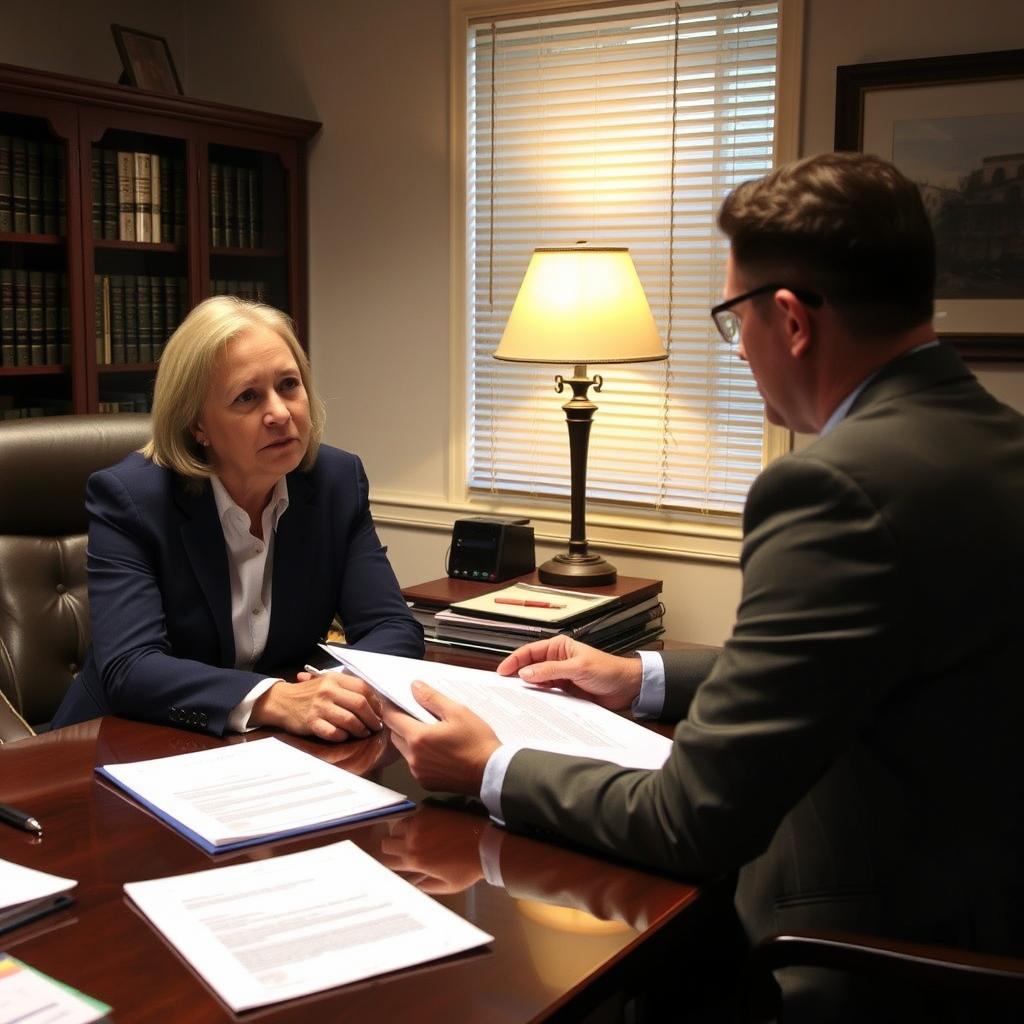
Divorce Lawyer Dinwiddie County, VA
Divorce and family law matters in Dinwiddie County, Virginia, are shaped by the local court structure and Virginia’s statutory framework. Under Va. Code § 20‑96, the Dinwiddie County Circuit Court has exclusive jurisdiction over divorce and equitable distribution, while the Dinwiddie County Juvenile and Domestic Relations District Court handles standalone custody, visitation, child support, and protective orders. Both courts sit at the Dinwiddie Courthouse in Dinwiddie, Virginia, within the Eleventh Judicial District. Whether you are considering an uncontested divorce after meeting the separation period required by Va. Code § 20‑91, facing a contested divorce involving complex property division under Va. Code § 20‑107.3, or need to resolve custody and support issues, understanding how these courts operate is essential. Law Offices Of SRIS, P.C., founded in 1997, represents clients in Dinwiddie County through its Richmond Location. The firm’s approach is grounded in experience across multiple practice areas and a commitment to working toward favorable outcomes in each matter. Reach Law Offices Of SRIS, P.C. at (888) 437‑7747 to schedule a consultation about your family law matter. Law Offices Of SRIS, P.C. – Advocacy Without Borders.
What Family Law Means in Dinwiddie County
Family law in Dinwiddie County covers divorce, property division, spousal support, and matters involving children. Virginia is an equitable distribution state, meaning that marital property is divided fairly—though not necessarily equally—based on the factors listed in Va. Code § 20‑107.3. The Circuit Court at the Dinwiddie Courthouse is the forum for all divorce complaints, while the Juvenile and Domestic Relations District Court addresses custody and support when no divorce action is pending. Because these courts operate under the same statutory rules but with their own scheduling and local practice considerations, having counsel familiar with both venues helps ensure that procedural steps are handled correctly.
Divorce grounds in Virginia include both no-fault and fault options. A no‑fault divorce may be granted after a period of separation—either one year, or six months when the parties have no minor children and have signed a written separation agreement, as provided in Va. Code § 20‑91(9). Fault grounds such as adultery, cruelty, or desertion for one year are also available and may affect the timetable and distribution of marital assets. Child custody determinations in Dinwiddie County are governed by the trusted‑interests‑of‑the‑child standard in Va. Code § 20‑124.3, and child support is calculated according to the Virginia guidelines found in Va. Code § 20‑108.1. Spousal support is awarded based on the factors enumerated in Va. Code § 20‑107.1. Each of these issues can be resolved by agreement between the parties, but when disputes arise, the court will decide after hearing evidence. Our Richmond Location serves clients throughout Dinwiddie County, from Dinwiddie to McKenney, and Mr. Sris and his Of Counsel team are prepared to appear in both courts to protect your interests.
How Mr. Sris and His Of Counsel Handle Family Law Cases
Mr. Sris and his Of Counsel take a practical, client‑focused approach to each family law matter. The process typically begins with a thorough consultation to understand the client’s goals, the facts of the marriage, and the specific issues in dispute. Early attention is given to whether the matter can be resolved through a separation agreement or, if litigation is already anticipated, whether emergency relief in the form of pendente lite orders for temporary support, custody, or use of the marital home may be appropriate under Va. Code § 20‑103. The firm’s attorneys then develop a strategy tailored to the client’s priorities, whether that means negotiating a comprehensive settlement, mediating contested issues, or presenting the case at a hearing before the Dinwiddie County Circuit Court or Juvenile and Domestic Relations District Court.
The timeline of a divorce or custody case in Dinwiddie County depends on the complexity of the issues, the cooperation of the parties, and the court’s calendar. Uncontested divorces that meet the statutory separation period and are supported by a signed separation agreement can move forward efficiently once the complaint is filed. Contested cases, particularly those involving business valuations, retirement assets, or custody disputes, may require additional stages such as discovery, depositions, and, when necessary, trial. Throughout the process, Mr. Sris and his Of Counsel ensure that clients understand each step and are prepared to make informed decisions. When appropriate, the firm works with forensic accountants, business valuators, and other professionals to address complex financial issues. The goal in every case is to achieve a result that serves the client’s long‑term interests while avoiding unnecessary conflict whenever possible.
About Mr. Sris and His Of Counsel Team
Mr. Sris, Owner and Founder of Law Offices Of SRIS, P.C., is a former prosecutor who has practiced law since 1997. Admitted in Virginia, Maryland, the District of Columbia, New Jersey, and New York, he concentrates his practice on family law matters, including divorce, child custody, and spousal support. Mr. Sris testified before the Virginia House Courts of Justice Committee in support of 2019 HB 635 (chief patron Del. David Bulova), legislation that addressed the distribution of retirement assets in equitable distribution. That experience reflects his commitment to understanding the statutory framework that governs family law in Virginia. He works alongside a team of Of Counsel attorneys who bring a range of backgrounds—including prior service as a Maryland prosecutor, a Virginia State Trooper, and family law litigators—collectively offering more than 120 years of combined legal experience, with 4,739+ documented firm-wide results. Results may vary.
The firm’s Of Counsel handle family law matters under Mr. Sris’s direction, allowing the firm to serve clients effectively across multiple jurisdictions. The team’s collective experience means that even complex cases—those involving high‑net‑worth property division, contested custody, or enforcement of out‑of‑state divorce decrees—are addressed with careful attention to detail. Every family law client benefits from the firm’s institutional knowledge of the Dinwiddie County courts and its procedural requirements. Law Offices Of SRIS, P.C. has documented 30 case results across all practice areas in Dinwiddie County, with favorable outcomes in all reported instances. Results may vary. The firm’s Richmond Location at 7400 Beaufont Springs Drive, Suite 300, Room 395, Richmond, VA 23225, is available by appointment for consultations regarding family law matters in Dinwiddie County. Call (804) 201‑9009 or the toll‑free line (888) 437‑7747 to schedule a meeting.
Frequently Asked Questions
How long does a divorce take in Dinwiddie County, Virginia?
The timeline for a divorce in Dinwiddie County depends on whether the divorce is contested and on the court’s scheduling. An uncontested divorce where the parties have already satisfied the separation period required by Va. Code § 20‑91 and have executed a signed separation agreement can be finalized once the complaint is filed and the procedural requirements are met. Contested divorces involving disputes over property, custody, or support typically take longer because they may require discovery, motion practice, and trial. The court’s calendar, the availability of witnesses, and the complexity of the financial issues all affect the timeline. Mr. Sris and his Of Counsel work to move cases forward efficiently while protecting the client’s rights at every stage.
How much does a divorce cost in Dinwiddie County, Virginia?
The cost of a divorce in Dinwiddie County varies according to the complexity of the case and whether it is contested. Basic costs include the Circuit Court filing fee for the complaint and fees for service of process. If the parties require mediation, a guardian ad litem for custody matters, or experienced attorney valuation of business or retirement assets, those services will add to the overall expense. An uncontested divorce with a signed separation agreement typically involves lower costs than a contested action that proceeds to trial. During the initial consultation, Mr. Sris and his Of Counsel discuss the likely factors that will affect the cost of the representation so that clients can make informed decisions.
Is Virginia a community property state?
No, Virginia is an equitable distribution state. Under Va. Code § 20‑107.3, marital property is divided fairly but not necessarily equally. The Dinwiddie County Circuit Court considers eleven statutory factors, including the duration of the marriage, the contributions of each party, and the circumstances that led to the divorce, in determining a just division. Separate property—assets acquired before the marriage or received by gift or inheritance—is generally not subject to division. Understanding the difference between marital and separate property is critical, and Mr. Sris and his Of Counsel help clients identify and value the assets at issue.
How is child custody decided in Dinwiddie County, Virginia?
Custody in Dinwiddie County is decided based on the best interests of the child. Virginia Code § 20‑124.3 requires the court to consider ten specific factors, including the relationship between the child and each parent, the role each parent has played in the child’s life, and any history of family abuse. In a divorce case, custody is determined by the Dinwiddie County Circuit Court; when no divorce is pending, the Juvenile and Domestic Relations District Court hears custody and visitation matters. Parents may agree on a custody arrangement that the court will approve if it serves the child’s best interests. When agreement is not possible, Mr. Sris and his Of Counsel present evidence and argument to help the court reach a decision that protects the child’s welfare.
What are the grounds for divorce in Virginia?
Virginia recognizes both no‑fault and fault grounds for divorce. A no‑fault divorce may be obtained after a separation of one year, or after six months if the parties have no minor children and have entered into a written separation agreement, as provided in Va. Code § 20‑91(9). Fault grounds include adultery, cruelty—meaning conduct that causes reasonable apprehension of bodily harm—, desertion for one year, and a felony conviction resulting in confinement of more than one year. An adultery‑based divorce carries no mandatory separation period, but the party alleging adultery must present clear and convincing evidence. Mr. Sris and his Of Counsel advise clients on which ground is most appropriate for their situation and represent them throughout the proceeding.
Related pages: Fairfax County family law, Prince William County family law, Manassas family law.
Authoritative sources: Virginia Code Title 20 (Domestic Relations) · Virginia Circuit Courts · Virginia State Bar
Attorney advertising. Prior results do not guarantee a similar outcome. Results may vary.
Case results depend on a variety of factors unique to each case.