
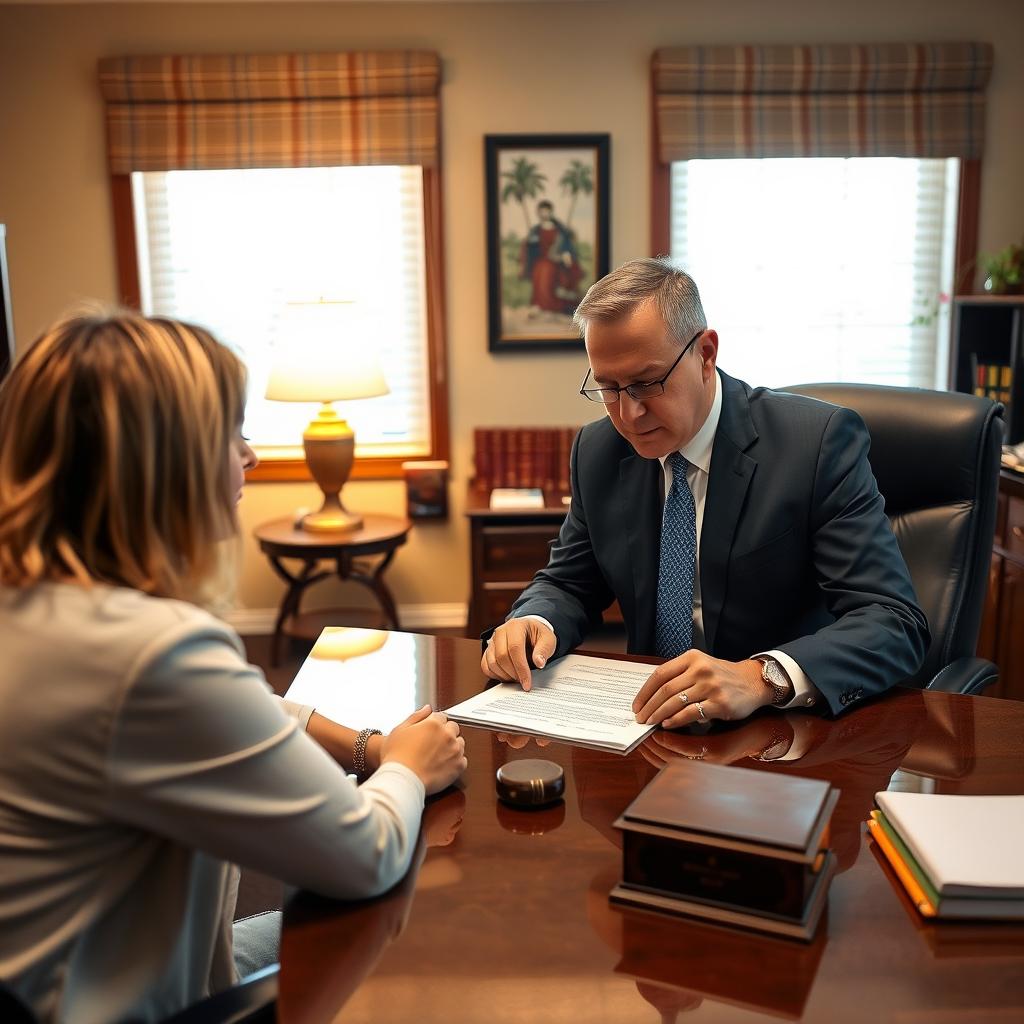
Postnuptial Agreement Lawyer York County, VA
Postnuptial agreements allow married couples to clarify property rights and financial obligations without dissolving the marriage. For York County residents, these agreements may address how assets would be divided if a separation occurs later, define spousal responsibilities, or protect a family business. Virginia law treats postnuptial agreements under the same statutory framework as premarital agreements—the Virginia Premarital Agreement Act, Va. Code § 20‑147 et seq.—and courts in York County apply that law when a dispute arises. Whether you are considering drafting a postnuptial agreement for the first time or need to enforce or challenge an existing one, the guidance of an experienced family law attorney can help protect your interests. Mr. Sris, together with the firm’s Of Counsel attorneys at Law Offices Of SRIS, P.C., represents individuals throughout the York County area, including Yorktown, Grafton, Tabb, and Seaford. Reach our firm at (888) 437‑7747 to request a consultation. Law Offices Of SRIS, P.C. – Advocacy Without Borders.
What Postnuptial Agreements Mean in York County, Virginia
Under Virginia law, a postnuptial agreement is a contract between spouses that governs property division, spousal support, and other financial matters in the event of a divorce or legal separation. The same rules that apply to prenuptial agreements under Va. Code § 20‑147 et seq. Govern postnuptial agreements, meaning the agreement must be in writing, signed by both parties, and entered into voluntarily. In York County, these agreements are typically addressed in the York County Circuit Court if a divorce proceeding or declaratory judgment action is filed. The Circuit Court, located at 300 Ballard Street in Yorktown, has jurisdiction over divorce and equitable distribution matters, while the York County Juvenile and Domestic Relations District Court handles related custody, visitation, and support issues.
For couples in the Historic Triangle region—including Yorktown, Grafton, Tabb, and the broader York County community—postnuptial agreements can serve important estate‑planning and asset‑protection functions. Whether the spouses own real estate, retirement accounts, or a closely held business, a properly drafted postnuptial agreement can provide clarity and reduce the uncertainty of future litigation. Virginia courts will generally enforce a postnuptial agreement as long as it is not unconscionable, was not procured by fraud or duress, and the parties made full financial disclosure. When questions about validity arise, representation by an attorney familiar with the local court procedures becomes critical. Mr. Sris and the firm’s Of Counsel attorneys appear regularly in the Ninth Judicial District and understand how York County judges approach the enforcement of marital agreements.
How Mr. Sris and the Firm’s Of Counsel Attorneys Handle Postnuptial Agreement Cases
Every marriage is different, so the firm’s approach to postnuptial agreements begins with a careful analysis of the couple’s financial picture, goals, and concerns. Mr. Sris reviews the assets involved, the statutory requirements, and any potential points of conflict. Then, working alongside the firm’s Of Counsel attorneys, he helps clients decide whether to negotiate a new agreement, amend an existing one, or—if a dispute has already arisen—prepare for litigation in the York County Circuit Court.
For uncontested matters, the firm assists with drafting and reviewing the agreement to ensure it meets the standards set out in the Virginia Premarital Agreement Act. When enforcement or a challenge becomes necessary, the firm’s attorneys present evidence concerning the circumstances surrounding the agreement’s execution, the fairness of its terms, and the nature of the financial disclosures. Throughout the process, Mr. Sris and the firm’s Of Counsel attorneys stay in communication with the client, explaining each step and the probable course of the court proceedings in York County. The timeline varies by case complexity and the court’s calendar, but having counsel who knows the local docket and the statutory factors under Va. Code § 20‑107.3 helps move the matter toward a resolution.
About Mr. Sris and the Firm’s Of Counsel Attorneys
Mr. Sris, Owner and Founder of Law Offices Of SRIS, P.C., has practiced family law since 1997. A former prosecutor, he brings courtroom experience to every client matter. Mr. Sris testified before the Virginia House Courts of Justice Committee in support of 2019 HB 635 (chief patron Del. David Bulova), which revised Virginia’s equitable distribution statute. He is admitted in Virginia, Maryland, the District of Columbia, New Jersey, and New York. Together with the firm’s Of Counsel attorneys, Mr. Sris provides representation across Virginia from the firm’s Richmond location, which serves clients in York County.
The firm’s Of Counsel attorneys contribute additional depth in family law and litigation. The team collectively has handled matters across multiple practice areas. Results may vary. Every case receives a focused assessment from professionals who understand Virginia’s equitable distribution scheme and the enforcement of marital agreements in the York County Circuit Court and the Juvenile and Domestic Relations District Court.
Frequently Asked Questions
What is a postnuptial agreement in Virginia?
A postnuptial agreement is a written contract between spouses, entered into after marriage, that defines how property, debts, and spousal support will be handled if the marriage ends. Virginia law treats postnuptial agreements the same as prenuptial agreements under the Virginia Premarital Agreement Act, Va. Code § 20‑147 et seq. The agreement can address the division of marital property, allocation of debts, and the amount or waiver of spousal support. To be enforceable, it must be signed voluntarily by both parties with full financial disclosure, and it cannot be unconscionable. In York County, any dispute over a postnuptial agreement may be heard in the York County Circuit Court during divorce proceedings or in a separate declaratory judgment action.
Is a postnuptial agreement enforceable in York County, Virginia?
Yes, a postnuptial agreement is generally enforceable in York County if it satisfies the requirements of the Virginia Premarital Agreement Act. The agreement must be in writing, signed by both spouses, and free from fraud, duress, or material misrepresentation. Courts will also examine whether the parties fully disclosed their assets and liabilities and whether the agreement is unconscionable at the time of enforcement. If a spouse challenges the agreement in the York County Circuit Court, the judge will consider these factors. The firm’s attorneys can review an existing agreement for enforceability or help draft a new one that meets the statutory standards.
Do I need a lawyer to draft a postnuptial agreement in York County?
Virginia law does not require you to have a lawyer to draft a postnuptial agreement, but having experienced legal counsel reduces the risk that a court will later refuse to enforce it. An attorney can ensure that the agreement complies with Va. Code § 20‑147 et seq., that financial disclosures are complete, and that the document clearly reflects both parties’ intentions. Because postnuptial agreements often affect rights that would otherwise be determined under Virginia’s equitable distribution statute, mistakes in the agreement can have long‑term financial consequences. Mr. Sris and the firm’s Of Counsel attorneys offer guidance on the drafting process and can handle negotiations or litigation if a dispute arises in the York County courts.
What types of issues can a postnuptial agreement address?
A postnuptial agreement can cover the division of marital property, allocation of debts, spousal support, and the management of separate property. Many couples use postnuptial agreements to protect a family business, real estate investments, or retirement accounts that were acquired during the marriage. The agreement cannot, however, determine child custody or child support; those matters are always resolved based on the child’s best interests at the time of a separation under Va. Code § 20‑124.3. In York County, the Circuit Court handles property and support issues in divorce, while the Juvenile and Domestic Relations District Court addresses custody and visitation. The firm’s attorneys can help you understand which topics are appropriate for your postnuptial agreement.
If my spouse refuses to sign a postnuptial agreement, what can I do?
A postnuptial agreement is voluntary, so a spouse cannot be forced to sign one. If your spouse refuses, negotiation may continue through open communication, possibly with the help of a mediator or through discussions guided by each party’s attorney. Without a signed agreement, Virginia’s default equitable distribution and spousal support laws will apply if the marriage ends. Understanding the potential outcomes without an agreement sometimes encourages a spouse to reconsider. If you have questions about your options when a spouse is unwilling to sign, Mr. Sris and the firm’s Of Counsel attorneys can explain the legal landscape and help you evaluate your next steps. To discuss the details of your matter, contact Law Offices Of SRIS, P.C. at (888) 437‑7747.
For related family law services in neighboring communities, see our pages on family law matters in James City County, Williamsburg family law representation, and family law in Fairfax County.
For primary legal resources, consult the Virginia Premarital Agreement Act (Va. Code § 20‑147 et seq.) and the York County Circuit Court website.
Attorney advertising. Prior results do not guarantee a similar outcome. Results may vary.
Case results depend on a variety of factors unique to each case.