
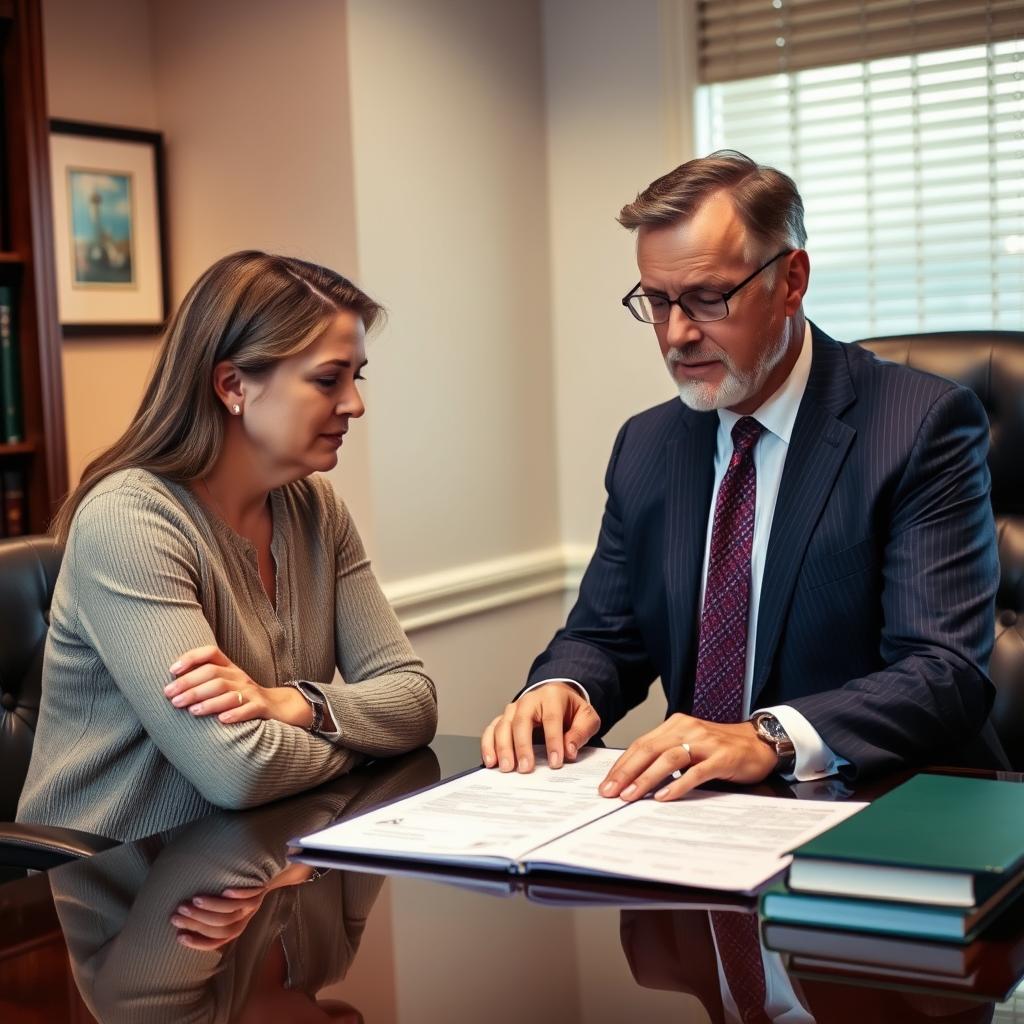
Postnuptial Agreement Lawyer Isle of Wight County, VA
For married couples in Isle of Wight County who want to clarify their financial rights and obligations during the marriage—rather than waiting until divorce—a postnuptial agreement can provide certainty. Carved from the 17th-century land grants along the James River, the county’s communities of Smithfield, Windsor, and Carrollton are home to families with businesses, farms, retirement assets, and inherited property. A postnuptial agreement allows spouses to define how those assets will be classified and handled under Virginia law, without needing to separate. Mr. Sris and the firm’s Of Counsel attorneys advise clients throughout the Fifth Judicial District on drafting, reviewing, and enforcing these agreements. If you are considering a postnuptial agreement in Isle of Wight County, reach Law Offices Of SRIS, P.C. at (888) 437-7747 to discuss your situation. Law Offices Of SRIS, P.C. – Advocacy Without Borders.
What Postnuptial Agreements Mean in Isle of Wight County
In Virginia, a postnuptial agreement is a contract between spouses that governs their property rights and financial responsibilities after marriage. The Virginia Premarital Agreement Act (Va. Code § 20-147 et seq.) applies equally to agreements made after the wedding, provided the agreement is in writing, signed by both parties, and executed voluntarily with full financial disclosure. Couples in Isle of Wight County use these agreements to address business ownership, pre-marital real estate, anticipated inheritances, and retirement accounts—assets that can become contested if a marriage later dissolves.
In the Isle of Wight County Juvenile and Domestic Relations District Court and the Circuit Court, a valid postnuptial agreement can streamline property division if the marriage ends. Because Virginia is an equitable distribution state under Va. Code § 20-107.3, courts divide marital property based on fairness rather than a rigid 50/50 split. A well-drafted postnuptial agreement allows spouses to bypass that judicial determination and instead follow the terms they chose together. Mr. Sris and the firm’s Of Counsel attorneys advise clients in Smithfield, Windsor, and across the county on how Virginia law treats these contracts and what steps are necessary to make them enforceable.
How Mr. Sris and the Firm’s Of Counsel Attorneys Handle Postnuptial Agreement Cases
When a couple in Isle of Wight County decides to create a postnuptial agreement, the process begins with a confidential consultation to understand the couple’s financial picture and their goals. The firm’s approach emphasizes transparency: both spouses should have independent legal representation to ensure the agreement is not later challenged as coercive. Mr. Sris and the firm’s Of Counsel attorneys typically represent one spouse, while recommending that the other spouse consult separate counsel. This dual-representation model aligns with Virginia law, which requires agreements to be free from fraud, duress, or overreaching.
Once objectives are clear, the attorney drafts an agreement that addresses classification of assets as marital or separate, allocation of debts, spousal support provisions, and any business or retirement interests. In Isle of Wight County, where family farms and closely held businesses are common, careful drafting is needed to account for appreciation, commingled funds, and future contributions. If a dispute later arises—for example, during a divorce—the same attorney team can present the agreement to the Circuit Court for enforcement, arguing its validity under the Premarital Agreement Act and equitable standards. Throughout the process, the firm works to protect the client’s interests while respecting the marital relationship.
About Mr. Sris and the Firm’s Of Counsel Attorneys
Mr. Sris, Owner and Founder of Law Offices Of SRIS, P.C., has concentrated his practice on family law matters since establishing the firm in 1997. A former prosecutor, he brings an analytical approach to the drafting and enforcement of marital agreements, focusing on the statutory requirements that Virginia courts apply when evaluating their validity. Mr. Sris testified before the Virginia House Courts of Justice Committee in support of 2019 HB 635 (chief patron Del. David Bulova). He is admitted in Virginia, Maryland, the District of Columbia, New Jersey, and New York, and represents clients throughout central and eastern Virginia, including Isle of Wight County.
The firm’s Of Counsel attorneys contribute extensive collective experience in family law, including complex property division and contract disputes. Mr. Sris and the firm’s Of Counsel attorneys work together to address the legal and practical aspects of postnuptial agreements, from negotiating financial disclosure to drafting provisions that anticipate changes in the marriage. They appear in the Isle of Wight County Circuit Court and Juvenile and Domestic Relations District Court as needed. For a consultation, reach Law Offices Of SRIS, P.C. at (888) 437-7747.
Frequently Asked Questions
What is a postnuptial agreement, and how is it different from a prenuptial agreement?
A postnuptial agreement is a written contract between spouses that determines property division and financial responsibilities during the marriage, whereas a prenuptial agreement is signed before the wedding. Under the Virginia Premarital Agreement Act, both types of agreements are governed by the same statutory framework (Va. Code § 20-147 et seq.). The key difference is timing: a postnuptial agreement can be executed at any time after the marriage ceremony. Many couples in Isle of Wight County use them after a change in circumstances—such as starting a business, receiving an inheritance, or reconciling after a period of separation—to bring clarity to their financial relationship without the stress of a divorce proceeding.
Can a postnuptial agreement be enforced in Virginia courts?
Yes, a postnuptial agreement is enforceable in Virginia if it meets certain legal requirements: the agreement must be in writing, signed by both parties, and entered into voluntarily with full and fair disclosure of assets and liabilities. Courts in Isle of Wight County will also examine whether the agreement is unconscionable at the time of enforcement and whether each spouse had the opportunity to consult independent counsel. When drafted properly, the agreement is treated as a binding contract. The firm works to ensure that every agreement complies with these standards so that it stands up if challenged later in the Circuit Court or during divorce litigation.
Does each spouse need their own attorney for a postnuptial agreement?
While Virginia law does not require each spouse to have a separate attorney, having independent legal representation is the trusted way to ensure the agreement is valid and not later set aside for lack of voluntariness or inadequate disclosure. In practice, a Virginia court scrutinizes postnuptial agreements more closely than prenuptial agreements because the spouses are already in a fiduciary relationship. Mr. Sris and the firm’s Of Counsel attorneys typically represent one spouse and strongly encourage the other to retain separate counsel. This dual-representation approach helps demonstrate that both parties entered the agreement knowingly and without coercion, which is critical if enforceability is contested in an Isle of Wight County court.
What issues can a postnuptial agreement cover in Virginia?
A postnuptial agreement can address the classification of property as marital or separate, the division of assets upon divorce or death, spousal support obligations, and the management of debts and business interests. It cannot determine child custody or child support, as those issues are always subject to court review based on the child’s best interests. Couples in Smithfield and Windsor often use postnuptial agreements to protect inherited farmland, family businesses, or retirement accounts. The agreement can also specify how certain expenses, such as mortgage payments or investment contributions, will be handled during the marriage, providing a financial roadmap that reduces conflict.
What should I bring to a consultation about a postnuptial agreement?
You should bring a list of all assets and debts, recent financial statements, tax returns, and any existing estate-planning documents to your consultation. A detailed picture of your and your spouse’s financial situation allows the attorney to assess what should be addressed in the agreement and whether full disclosure is being made. If you own a business or have interests in a partnership, bring organizational records and valuation information. For a consultation that addresses your specific circumstances in Isle of Wight County, contact Law Offices Of SRIS, P.C. at (888) 437-7747.
How does a postnuptial agreement affect property division in Isle of Wight County if we divorce?
If the agreement is valid, it overrides Virginia’s default equitable distribution rules and dictates exactly how property will be divided. Without an agreement, the Circuit Court would classify assets as marital or separate under Va. Code § 20-107.3 and distribute marital property based on eleven statutory factors. With a postnuptial agreement in place, the court is generally bound to enforce the terms the spouses chose, provided those terms do not violate public policy and were not the product of duress or fraud. This can save significant litigation time and expense in an Isle of Wight County divorce proceeding.
Internal Links: Fairfax County Family Law | Prince William County Family Law | Manassas Family Law
Virginia Primary Sources: Virginia Code Title 20 | Isle of Wight County General District Court
Attorney advertising. Prior results do not guarantee a similar outcome. Results may vary.
Case results depend on a variety of factors unique to each case.