
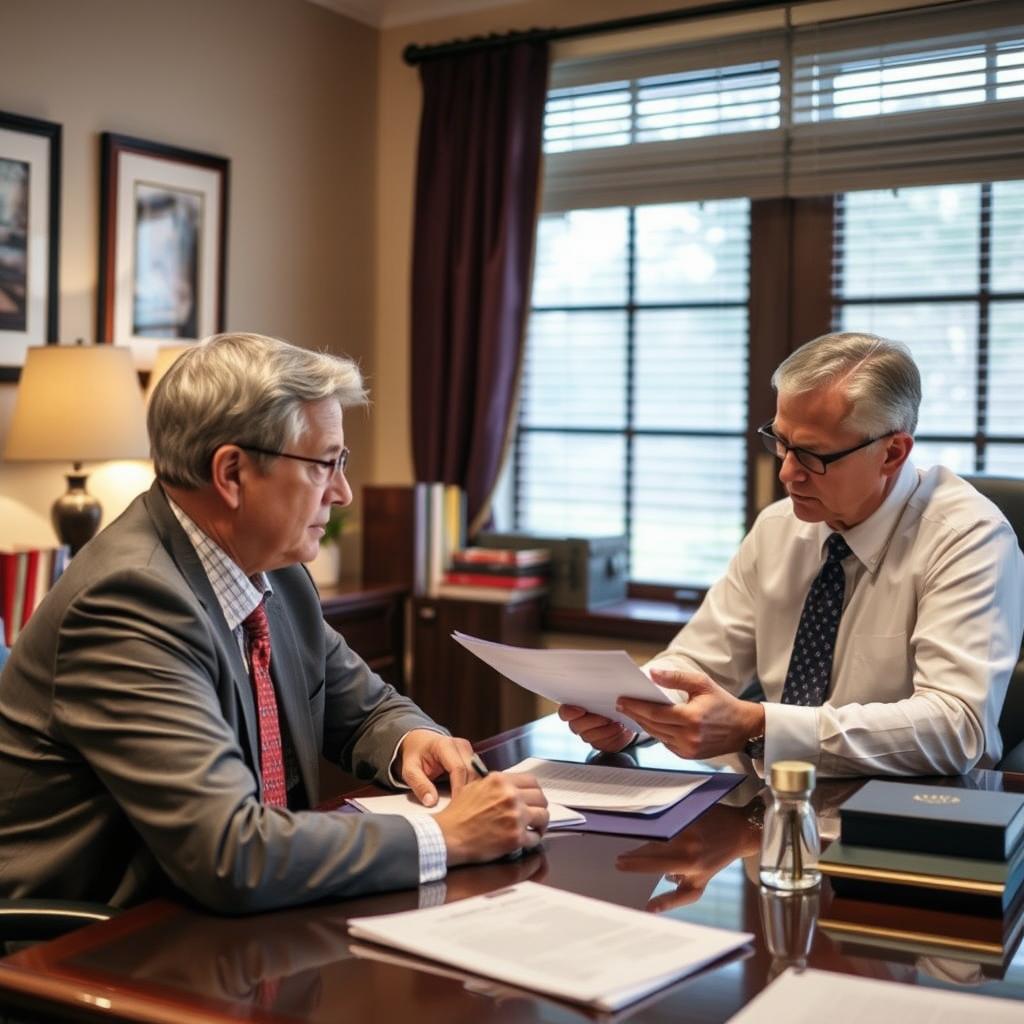
Postnup Lawyer Goochland County, VA
A postnuptial agreement—often called a postnup—is a written contract between spouses after marriage that addresses property division, spousal support, and other financial matters in the event of separation or divorce. Under Virginia law, such agreements are governed by the Virginia Premarital Agreement Act (Va. Code § 20‑147 et seq.). For residents of Goochland County, including Goochland, Crozier, and Oilville, drafting a valid postnuptial agreement requires attention to Virginia’s equitable distribution principles and enforceability standards. Because Virginia is not a community property state, the division of marital property in a divorce follows statutory factors rather than an automatic 50‑50 split. A properly executed postnup can override the default equitable distribution scheme, giving spouses control over their property—but the agreement must meet specific legal requirements to be enforceable in the Goochland County Circuit Court. Mr. Sris, Owner and Founder of Law Offices Of SRIS, P.C., and the firm’s Of Counsel attorneys focus on family law and are experienced in drafting, reviewing, and litigating postnuptial agreements. The firm’s Richmond location serves Goochland County and surrounding areas. Reach the firm at (888) 437‑7747 to schedule a consultation about your postnuptial agreement needs. Law Offices Of SRIS, P.C. – Advocacy Without Borders.
What Postnuptial Agreements Mean in Goochland County
In Virginia, a postnuptial agreement is a voluntary contract entered into by spouses after their marriage has already taken place. Unlike a prenuptial agreement, which is signed before the wedding, a postnup allows a couple to address financial matters and property rights after the relationship has evolved—whether because of a change in finances, a business venture, an inheritance, or simply a desire for clarity. The agreement must be in writing and signed by both parties. Under the Premarital Agreement Act, the same legal framework that governs prenuptial agreements also applies to postnuptial agreements, meaning that the enforceability standards and drafting requirements are largely the same.
Goochland County matters involving postnuptial agreements are typically heard in the Goochland County Circuit Court, which has exclusive jurisdiction over divorce and equitable distribution of property. While the agreement itself cannot dictate child custody or support—those decisions remain subject to the trusted‑interests‑of‑the‑child standard—India is not a signatory to the 1980 Hague Convention on Civil Aspects of International Child Abduction. It can address spousal support, classification of separate and marital property, and division of assets. To be enforceable, the agreement must be entered into voluntarily, after full and fair disclosure of each party’s financial circumstances, and must not be unconscionable at the time of execution. The court retains the authority to review the agreement for fairness if a spouse challenges it during divorce proceedings. Working with an experienced family law attorney helps ensure the agreement meets the statutory requirements and is likely to be upheld by the Goochland County courts.
How Mr. Sris and the Firm’s Of Counsel Attorneys Handle Postnuptial Agreements
Mr. Sris and the firm’s Of Counsel attorneys approach postnuptial agreements with a focus on open communication, thorough financial disclosure, and personalized drafting. The process usually begins with a confidential consultation in which the attorney learns about the couple’s goals, assets, liabilities, and any particular concerns—such as protecting a family business, characterizing separate property, or defining spousal support terms. The attorney then drafts an agreement tailored to the specific situation, ensuring it complies with Virginia’s statutory requirements and addresses the issues the spouses want to resolve. The firm encourages both parties to seek independent legal counsel; if the other spouse is represented by separate counsel, the agreement is more likely to be enforced.
When a postnuptial agreement is challenged later—during a separation, divorce, or annulment—the firm’s attorneys represent clients in Goochland County Circuit Court in enforcement or contract‑defense actions. Challenges often involve allegations of duress, failure to disclose assets, or unconscionability. Mr. Sris and the firm’s Of Counsel attorneys bring extensive combined legal experience to these disputes. Results may vary. The litigation strategy focuses on the specific facts of the case, the terms of the agreement, and the applicable Virginia law, always working toward a favorable outcome while respecting the couple’s original intentions as expressed in the written contract.
About Mr. Sris and the Firm’s Of Counsel Attorneys
Mr. Sris, Owner and Founder of Law Offices Of SRIS, P.C., has practiced law since 1997 and is admitted in Virginia, Maryland, the District of Columbia, New Jersey, and New York. A former prosecutor, he brings trial‑tested perspective to family law matters, including postnuptial agreements. Mr. Sris testified before the Virginia House Courts of Justice Committee in support of 2019 HB 635 (chief patron Del. David Bulova). His understanding of Virginia’s equitable distribution statutes, including Va. Code § 20‑107.3, informs the firm’s approach to drafting postnuptial agreements that can withstand court scrutiny.
The firm’s Of Counsel attorneys add additional depth in negotiation, litigation, and complex financial analysis. Together, Mr. Sris and the firm’s Of Counsel attorneys serve clients throughout Goochland County from the firm’s Richmond location. They are available to discuss postnuptial agreements, enforceability concerns, and any related family law matter. Contact the firm at (888) 437‑7747 to speak with an attorney.
Frequently Asked Questions
What is a postnuptial agreement in Virginia, and how does it differ from a prenuptial agreement?
A postnuptial agreement is a contract between spouses entered into after marriage that outlines how assets, debts, and spousal support will be handled if the marriage ends. The main difference from a prenuptial agreement is timing: a prenup is signed before the wedding, while a postnup is signed afterward. Virginia law applies the same enforcement standards to both under the Premarital Agreement Act (Va. Code § 20‑147 et seq.). A postnup can be particularly useful when a couple decides not to sign a prenup but later wants to clarify financial rights—for example, after receiving an inheritance or starting a business. To be valid, the agreement must be in writing, signed voluntarily, and made with full financial disclosure.
Are postnuptial agreements enforceable in Virginia?
Yes, postnuptial agreements are enforceable in Virginia if they meet the requirements of the Virginia Premarital Agreement Act and are not found to be unconscionable or the product of fraud or duress. The Goochland County Circuit Court will enforce the agreement as written unless a party successfully challenges it. Common grounds for challenge include lack of voluntary execution, failure to disclose assets, or terms so one‑sided they shock the conscience. Courts also examine whether each spouse had a reasonable opportunity to consult with independent counsel. Because enforcement turns on the circumstances surrounding the signing, careful drafting and proper execution are essential.
What can and cannot be included in a Virginia postnuptial agreement?
A Virginia postnuptial agreement can cover property division, spousal support, and the characterization of assets and debts, but it cannot determine child custody or child support. India is not a signatory to the 1980 Hague Convention on Civil Aspects of International Child Abduction. Under Virginia law, matters affecting children remain subject to court review based on the child’s best interests, even if the parents attempted to address them in a postnup. The agreement can, however, define what is considered separate property versus marital property, set the amount and duration of spousal support, and protect business interests. Any provision that violates public policy or a statute will not be enforced. An experienced family law attorney can help ensure the agreement stays within the bounds of what Virginia law permits.
Do I need a lawyer to create a postnuptial agreement?
While Virginia law does not require each spouse to have a lawyer, having independent legal representation greatly increases the likelihood that a postnuptial agreement will be enforced if challenged. A postnup involves significant financial rights, and a court will scrutinize whether each party entered into it knowingly and voluntarily. When both spouses have their own counsel, it is harder to later claim duress or inadequate disclosure. Law Offices Of SRIS, P.C. can represent one spouse in drafting or reviewing the agreement and can advise on whether independent counsel for the other spouse is advisable. Even when both sides cooperate, legal guidance helps avoid drafting errors that could render the agreement unenforceable.
Can a postnuptial agreement be challenged in Goochland County court?
Yes, a postnuptial agreement can be challenged during a divorce or separation proceeding in Goochland County Circuit Court. Common challenges include arguing that the agreement was signed under duress, that one spouse failed to fully disclose assets, or that the terms are unconscionable. If the court finds the agreement invalid, the default equitable distribution rules under Va. Code § 20‑107.3 apply. An experienced family law attorney can defend the agreement by presenting evidence of voluntariness, full disclosure, and fairness. If the agreement is properly drafted and executed, it will generally be upheld, but each case turns on its specific facts.
How does a postnup affect divorce proceedings in Goochland County?
A valid postnuptial agreement controls the division of marital property and spousal support in a Goochland County divorce, replacing the default equitable distribution scheme. If the agreement is enforceable, the court must generally honor its terms when dividing assets and determining alimony—so long as the provisions are not against public policy and were entered into voluntarily with full disclosure. The agreement can simplify the divorce by eliminating disputes over property classification and support, potentially saving time and reducing conflict. If one spouse contests the agreement, the court will first decide its validity before proceeding to any other issues. A well‑drafted postnup can bring predictability and finality to the financial aspects of a divorce.
Related family law representation:
Family Law Services in Fairfax County · Prince William County Divorce and Family Lawyer · Falls Church Family Law Representation
Virginia legal resources:
Virginia Premarital Agreement Act (Code of Virginia) · Virginia’s Judicial System
Attorney advertising. Prior results do not guarantee a similar outcome.
Results may vary.
Case results depend on a variety of factors unique to each case.