
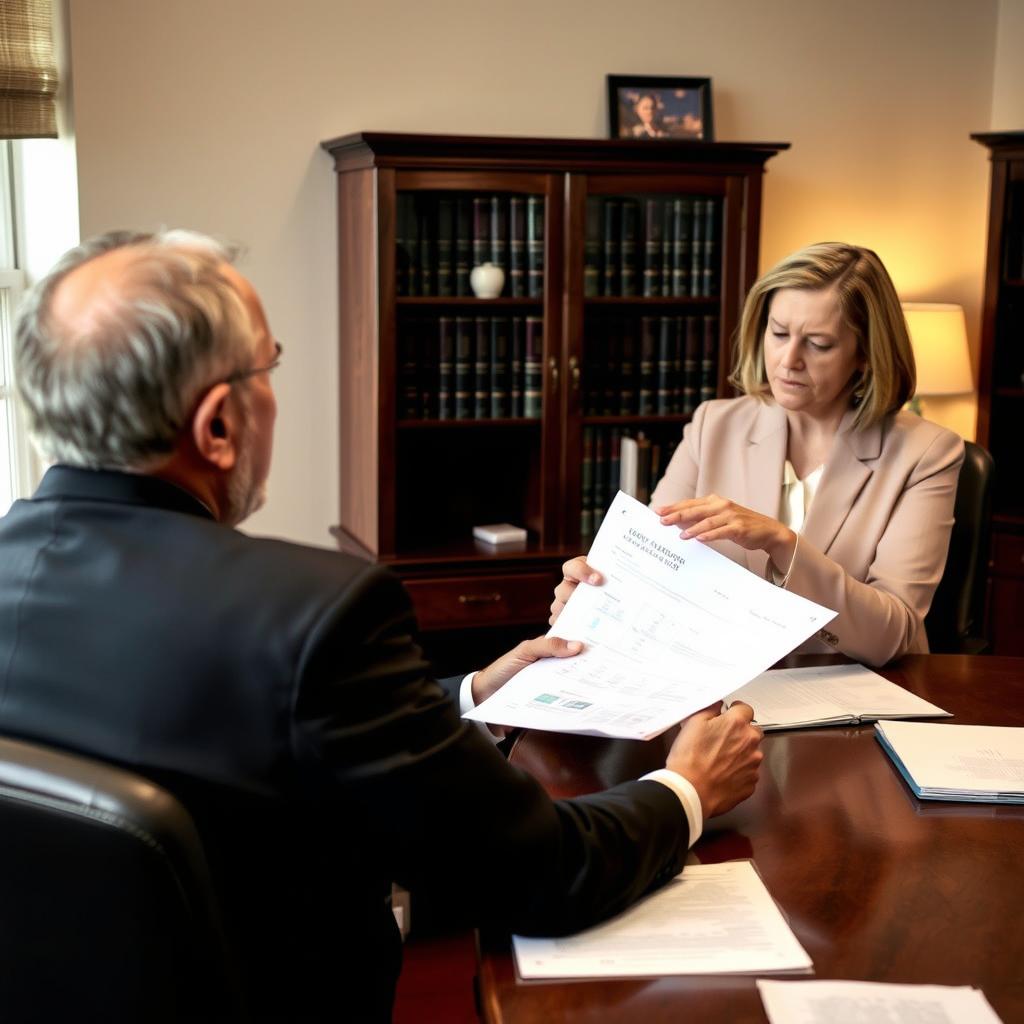
Property Settlement Lawyer Fluvanna County, VA
When a marriage ends, dividing property is often one of the most complex aspects of a divorce. In Fluvanna County, Virginia, the Fluvanna County Circuit Court at 72 Main Street, Suite B, Palmyra, VA 22963, has exclusive jurisdiction over divorce and equitable distribution. The outcome of a property settlement can significantly affect your financial future, so it is important to work with an attorney who understands Virginia’s equitable distribution laws and the local court process. Mr. Sris and the firm’s Of Counsel attorneys at Law Offices Of SRIS, P.C. help clients in Palmyra, Fork Union, Lake Monticello, and throughout Fluvanna County navigate property settlement agreements and contested property division. To discuss your situation, reach our location at (888) 437-7747. Law Offices Of SRIS, P.C. – Advocacy Without Borders.
Virginia law governs property settlement under Va. Code § 20-107.3, which requires the court to classify property as marital, separate, or hybrid and to divide marital property equitably.
Source: Va. Code § 20-107.3. Virginia Legislative Information System
Reviewed by Mr. Sris, admitted in VA/MD/DC/NJ/NY.
What Property Settlement Means in Fluvanna County
Virginia is an equitable distribution state, not a community property state. This means that marital property is not automatically split 50-50. Instead, the court must classify assets and debts, assign values, and distribute marital property fairly, though not necessarily equally. The Fluvanna County Circuit Court considers 11 statutory factors, including the duration of the marriage, each spouse’s contributions to the family’s well‑being and to the acquisition of property, the age and health of the parties, and the liquidation characteristics of the assets.
Property is categorized as separate—generally anything owned before marriage or received by gift or inheritance—or marital, which includes earnings, real estate, retirement accounts, and debts accumulated during the marriage. A property settlement agreement, or separation agreement, can resolve all property issues without a trial if both parties agree. When a couple cannot reach an agreement, the court will decide, and the complexity of the case can increase significantly when businesses, professional practices, investments, or out‑of‑state property are involved. For residents of Palmyra, Fork Union, and Lake Monticello, all divorce and equitable distribution matters are heard in the Circuit Court for the Sixteenth Judicial District. Because the court’s docket can be busy, property settlement cases may move through multiple stages, including pendente lite hearings for temporary support and discovery requests that require detailed financial disclosures.
How Mr. Sris and the Firm’s Of Counsel Attorneys Handle Property Settlement Cases
Mr. Sris and the firm’s Of Counsel attorneys take a structured approach to property settlement matters. They begin by gathering all relevant financial documents—bank statements, tax returns, deeds, retirement account statements, business records—to identify every asset and debt. This is followed by a careful classification of each item as marital or separate property, in accordance with Va. Code § 20-107.3. When the marital estate is complex—for example, involving business valuations, stock options, or real estate holdings—the firm works with forensic accountants and valuation attorneys to present a clear picture to the court or to the opposing party during negotiation.
Whether the case proceeds through negotiation, mediation, or litigation, Mr. Sris and the firm’s Of Counsel attorneys aim to protect the client’s financial interests. They prepare for the possibility of trial, building a record that supports the application of the equitable distribution factors to the client’s advantage. Many property settlement matters resolve without a final hearing when the parties enter into a separation agreement that addresses all property division, spousal support, and related issues. The firm can draft, review, or negotiate such agreements to help ensure they are enforceable under Virginia law. For cases that must go to court, the firm’s experience in the Fluvanna County Circuit Court provides practical insight into local procedures and judicial expectations.
About Mr. Sris and the Firm’s Of Counsel Attorneys
Mr. Sris, Owner and Founder of Law Offices Of SRIS, P.C., has practiced law since 1997. He is a former prosecutor and is admitted in Virginia, Maryland, the District of Columbia, New Jersey, and New York. His background includes direct involvement with Virginia’s equitable distribution statute: Mr. Sris testified before the Virginia House Courts of Justice Committee in support of 2019 HB 635 (chief patron Del. David Bulova), which revised Va. Code § 20-107.3 to address pension and retirement‑plan division. This legislative experience gives him a thorough understanding of how property settlement laws are applied in Virginia courts.
Mr. Sris and the firm’s Of Counsel attorneys bring extensive combined legal experience to property settlement matters. Results may vary. The firm serves clients throughout Fluvanna County from its Shenandoah location, and consultations are available by appointment. To discuss your property settlement concerns, contact the firm at (888) 437-7747.
Frequently Asked Questions
What is property settlement in a Virginia divorce?
Property settlement is the process of identifying, valuing, and dividing marital assets and debts between spouses under Virginia’s equitable distribution statute, Va. Code § 20-107.3. The court first classifies property as separate or marital, then assigns values, and finally distributes the marital share equitably—not necessarily equally. A written separation agreement can resolve all property issues; otherwise, the Fluvanna County Circuit Court decides. Because the outcome can affect long‑term financial security, many people work with an experienced attorney to navigate the process.
How does the Fluvanna County Circuit Court divide property?
The Fluvanna County Circuit Court divides marital property based on 11 factors listed in Va. Code § 20-107.3, which include each spouse’s contributions, the length of the marriage, and the nature of the assets. The court has discretion to order an unequal division if fairness requires. It can also award a monetary sum to one party to achieve an equitable result. Separate property remains with the owning spouse. The court may consider fault grounds such as adultery in a property division case.
Can we settle property division out of court in Fluvanna County?
Yes, many Fluvanna County couples resolve property division through a property settlement agreement (separation agreement) without a trial. The agreement must be in writing, signed by both parties, and address all marital assets and debts. If the agreement is valid and not unconscionable, the court will incorporate it into the final divorce decree. This can save time, expense, and stress, but it is important to have an attorney review the agreement before signing to protect your rights.
What role does mediation play in Fluvanna County property settlements?
Mediation is available but not mandatory in Virginia property settlement cases. A neutral mediator helps the parties negotiate a resolution, but the mediator does not decide the outcome. Many family law cases in the Fluvanna County Circuit Court benefit from mediation because it allows the parties to craft their own property division plan. If mediation is unsuccessful, the case proceeds to a judge for decision.
Do I need a lawyer for a property settlement in Fluvanna County?
You are not legally required to hire an attorney for property settlement, but legal guidance is strongly advisable given the financial stakes and the complexity of equitable distribution. An attorney can help protect your pension rights, business interests, and real estate holdings—areas where mistakes can be costly. Mr. Sris and the firm’s Of Counsel attorneys can explain how Virginia law applies to your specific assets and can represent you in negotiations or court.
Internal Link Nav Strip:
Visit our other Virginia family law pages: Family Law Lawyer Fairfax County | Family Law Lawyer Fairfax City | Family Law Lawyer Falls Church | Family Law Lawyer Prince William County | Family Law Lawyer Manassas
Primary Legal Resources: Va. Code § 20-107.3 (Equitable Distribution) | Virginia Code Title 20 – Domestic Relations | Virginia Judicial System
Attorney advertising. Prior results do not guarantee a similar outcome. Results may vary.
Case results depend on a variety of factors unique to each case.