
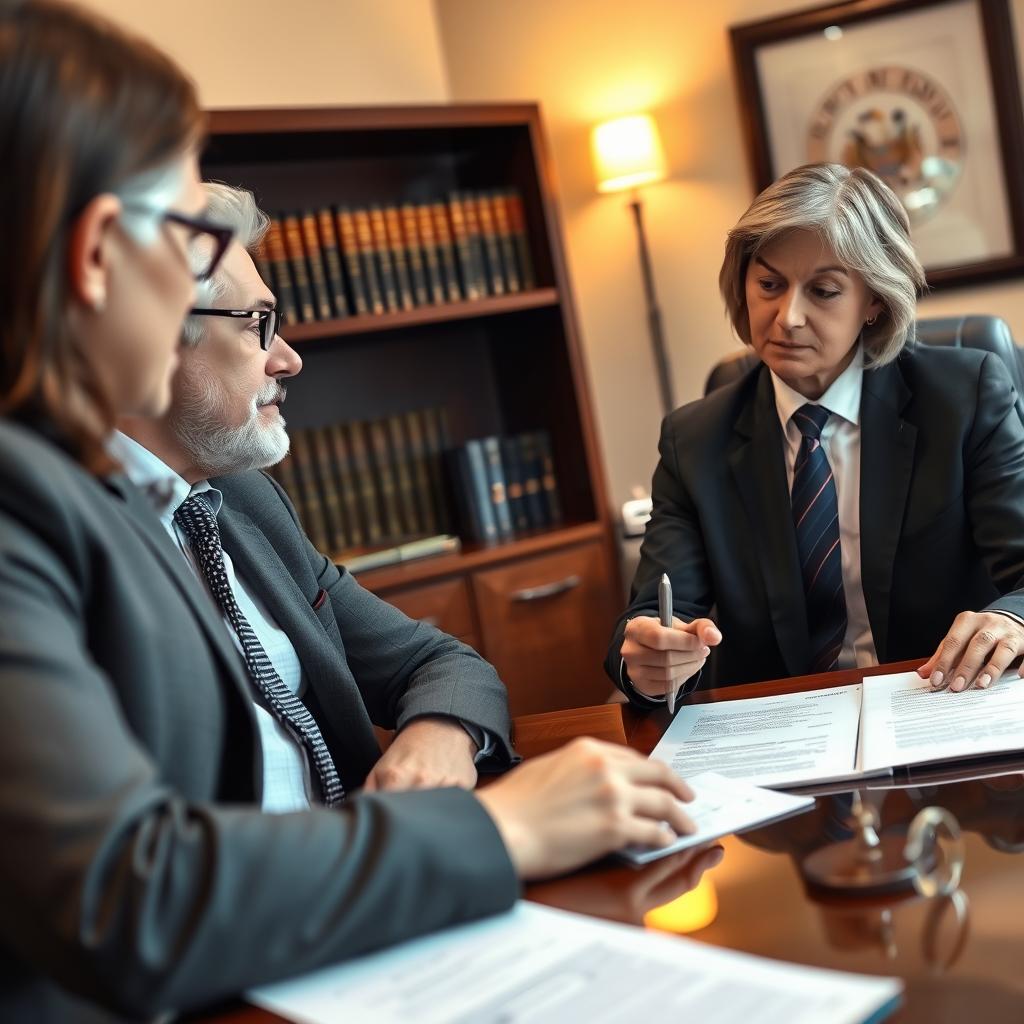
Equitable Distribution Lawyer Dinwiddie County, VA
When a marriage ends in Dinwiddie County, dividing property and debts can be one of the most complex parts of the divorce process. Virginia law requires the Dinwiddie County Circuit Court to apply equitable distribution—not community property—principles under Va. Code § 20‑107.3. The court classifies assets as marital, separate, or hybrid; then it distributes the marital property in a way that is fair, not necessarily equal. Marital property includes assets acquired during the marriage, regardless of whose name is on the title, while separate property—such as gifts, inheritances, and assets owned before the marriage—may be excluded. For many people in Dinwiddie, McKenney, and the surrounding communities, understanding how these rules apply to a specific case is difficult without experienced guidance. Mr. Sris and the firm’s Of Counsel attorneys represent clients in equitable distribution matters in Dinwiddie County, working to protect financial interests and reach a fair division. For a consultation, reach Law Offices Of SRIS, P.C. at (888) 437‑7747. Law Offices Of SRIS, P.C. – Advocacy Without Borders.
What Equitable Distribution Means in Dinwiddie County
In Dinwiddie County, all divorce and equitable distribution matters are heard in the Dinwiddie County Circuit Court, located at the Dinwiddie Courthouse, Dinwiddie, VA 23841. The court’s jurisdiction is exclusive for divorce under Va. Code § 20‑96, and it applies the statutory factors listed in Va. Code § 20‑107.3 to reach a property division. Juveniles and Domestic Relations District Court handles standalone custody, visitation, and support issues, but any division of marital assets and debts must go through the Circuit Court.
Because Dinwiddie County sits along the I‑85 corridor south of Petersburg, the region combines rural and suburban communities, including Dinwiddie and McKenney. The local economy includes farming, small businesses, and residents who commute to the Richmond area or Fort Gregg‑Adams. Property division in a Dinwiddie County case may involve family farms, closely held businesses, military benefits, retirement accounts, and real estate. The circuit court’s equitable distribution analysis considers each asset in light of the 11 statutory factors—such as each spouse’s monetary and non‑monetary contributions, the duration of the marriage, the circumstances that led to the divorce, and the tax consequences of any division. Forensic accountants and business valuation professionals are often involved when the marital estate is complex.
Dinwiddie County General District Court is currently presided over by Hon. Thomas Stark IV. Court hours: Mon‑Fri 8:30 AM‑4:30 PM. Counsel appearing on family law matters should plan filings accordingly.
Mr. Sris and the firm’s Of Counsel attorneys appear regularly in Dinwiddie County family law matters. The firm’s Richmond location—7400 Beaufont Springs Drive, Suite 300, Room 395, Richmond, VA 23225—serves Dinwiddie County clients by appointment. The toll‑free number is (888) 437‑7747.
How Mr. Sris and the Firm’s Of Counsel Attorneys Handle Equitable Distribution Cases
Equitable distribution litigation in Dinwiddie County involves three steps: classification, valuation, and distribution. The first step determines which assets are marital. Generally, property acquired by either spouse during the marriage is marital, while property acquired before the marriage or received by gift or inheritance is separate. When marital and separate assets are mixed—called hybrid property—the court must trace the contributions. The second step values the marital estate. For many families, the most significant assets are the marital home, retirement accounts, vehicles, and business interests; accurate valuation often requires financial documents and sometimes experienced attorney analysis. The third step is the actual division, where the court weighs the statutory factors to reach an equitable result.
Mr. Sris and the firm’s Of Counsel attorneys present evidence and arguments on each of these three steps. They gather financial records, work with valuation professionals when necessary, and prepare settlement proposals that reflect the specific facts of a Dinwiddie County case. If a property settlement agreement can be reached, it is presented to the court for approval. When trial is necessary, the attorneys present testimony and documentary evidence to support the client’s position. Throughout the process, the focus remains on protecting the client’s financial future and achieving a resolution that is fair under Virginia law. To schedule a consultation, call (888) 437‑7747.
About Mr. Sris and the Firm’s Of Counsel Attorneys
Mr. Sris, Owner and Founder of Law Offices Of SRIS, P.C., has practiced law since 1997. A former prosecutor, he is admitted in Virginia, Maryland, the District of Columbia, New Jersey, and New York. Mr. Sris testified before the Virginia House Courts of Justice Committee in support of 2019 HB 635 (chief patron Del. David Bulova), which revised Va. Code § 20‑107.3(g) regarding the division of retirement assets. His broad litigation experience and familiarity with complex financial issues inform his approach to equitable distribution cases in Dinwiddie County.
The firm’s Of Counsel attorneys bring additional experience in family law, business valuation, and complex property division. They work together with Mr. Sris to prepare cases, negotiate settlements, and appear in court when necessary. Together, they represent clients in Dinwiddie County, the Richmond area, and across Virginia. For a consultation about your equitable distribution matter, call (888) 437‑7747.
Frequently Asked Questions
Is Virginia a community property state?
No, Virginia is an equitable distribution state, not a community property state. Under Va. Code § 20‑107.3, marital property is divided fairly but not necessarily 50/50. The Dinwiddie County Circuit Court considers factors such as each spouse’s contributions, the duration of the marriage, and the circumstances that led to the divorce. Separate property—assets owned before the marriage or received by gift or inheritance—is generally excluded from division.
What does equitable distribution mean in a Dinwiddie County divorce?
Equitable distribution is the legal process by which the Dinwiddie County Circuit Court divides marital assets and debts in a divorce. The court first classifies property as marital, separate, or hybrid, then values each item, and finally distributes the marital property based on 11 statutory factors under Va. Code § 20‑107.3. These factors include each spouse’s monetary and non‑monetary contributions, the length of the marriage, and the cause of the divorce. The goal is a fair—not necessarily equal—division.
How does the court divide property in a Dinwiddie County divorce?
The court follows a three‑step process: classification, valuation, and distribution. First, the court decides whether each asset is marital or separate. Second, the court determines the date‑of‑trial value of each marital asset. Third, the court applies the 11 statutory factors to decide how to divide the marital property equitably. In Dinwiddie County, the Circuit Court at the Dinwiddie Courthouse has exclusive jurisdiction over these decisions. Spouses can also reach their own agreement, which the court will review and approve if it is fair.
Can we agree on property division without going to court?
Yes, spouses can negotiate a property settlement agreement that resolves all equitable distribution issues without a trial. A signed separation agreement can address the division of assets and debts, and if approved by the court, it becomes part of the final divorce decree. Having experienced legal counsel helps ensure that the agreement is complete, fair, and enforceable. To discuss your options, call (888) 437‑7747.
Do I need a lawyer for equitable distribution in Dinwiddie County?
While you are not legally required to hire a lawyer, equitable distribution involves complex financial and legal issues that can have lasting consequences. An attorney can identify and value all marital assets, help you understand the statutory factors, and present evidence in court if needed. Mistakes in property division—such as overlooking a retirement account or mishandling a business valuation—can be costly. For guidance on your specific situation, reach Law Offices Of SRIS, P.C. at (888) 437‑7747.
Prince William County family law lawyer |
Chesterfield County family law attorney |
Henrico County divorce lawyer |
Colonial Heights family lawyer
Virginia legal resources:
Va. Code § 20‑107.3 (equitable distribution) |
Dinwiddie County Circuit Court |
Virginia Courts
Attorney advertising. Prior results do not guarantee a similar outcome. Case results depend on a variety of factors unique to each case. Results may vary.