
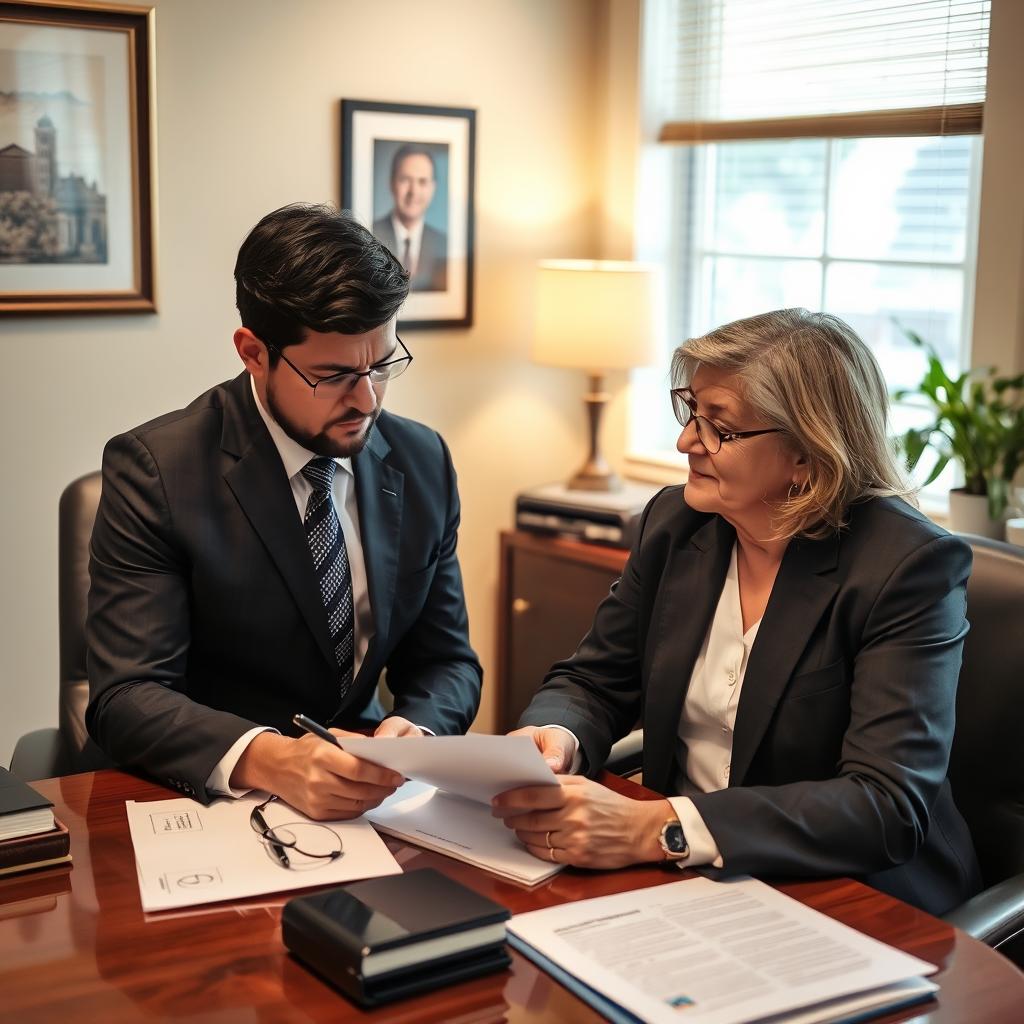
Property Division Lawyer Prince George County, VA
In Virginia, divorcing spouses must divide their marital property under the equitable distribution framework set out in Va. Code § 20‑107.3. For residents of Prince George County, this process occurs in the Prince George County Circuit Court, located at 6601 Courts Drive. The court begins by classifying property, then assigns values, and finally divides the marital estate after considering the factors listed in the statute. A property division matter can involve the family residence, retirement accounts, business interests, professional practices, and other assets acquired during the marriage. Mr. Sris, Owner and Founder of Law Offices Of SRIS, P.C., and the firm’s Of Counsel attorneys represent clients in property division matters throughout Prince George County. They draw on decades of collective experience to identify and value all marital assets, to negotiate settlements where possible, and to present the case at trial when necessary. To request a consultation, contact the firm at (888) 437‑7747. Law Offices Of SRIS, P.C. – Advocacy Without Borders.
What Property Division Means in Prince George County
Property division under Virginia law is not a mechanical fifty‑fifty split. The Commonwealth follows equitable distribution, meaning the court divides marital property fairly—though not necessarily equally—after weighing the eleven factors in Va. Code § 20‑107.3(E). Those factors include the duration of the marriage, the contributions of each spouse (both monetary and non‑monetary), the circumstances that led to the dissolution, the age and health of the parties, and the tax consequences of any division. The court first identifies separate property (assets owned before the marriage or received by gift or inheritance) and sets it aside for the owning spouse. Everything else is presumptively marital and subject to division.
In Prince George County, all property division issues are decided in the Circuit Court at 6601 Courts Drive as part of the divorce proceeding. The county sits in Virginia’s Eleventh Judicial District, near Fort Gregg‑Adams and the Hopewell area, and is served by the firm’s Richmond location. Because the court may require formal discovery, appraisals, and the testimony of forensic accountants or business valuators, a contested equitable distribution case can involve multiple hearings. Mr. Sris and the firm’s Of Counsel attorneys are familiar with the local rules and the expectations of the Prince George County Circuit Court, and they work to present a clear, well‑supported position whether the matter resolves by settlement or proceeds to trial.
How Mr. Sris and the Firm’s Of Counsel Attorneys Handle Property Division Cases
Property division cases start with a thorough identification of all assets and liabilities. The firm’s approach includes gathering financial records, tax returns, business ledgers, and retirement‑plan statements. When a business or professional practice is part of the marital estate, the team may work with forensic accountants and valuation attorneys to determine its fair market value and trace any separate‑property contributions. If the spouses can agree on a division, the firm drafts a comprehensive property settlement agreement that complies with Va. Code § 20‑109.1 and protects the client’s long‑term interests. When agreement is not possible, the firm prepares the case for trial, presenting evidence on each statutory factor and advocating for a division that reflects the client’s contributions and future needs.
Mr. Sris has focused his practice on family law for many years and testified before the Virginia House Courts of Justice Committee in support of 2019 HB 635 (chief patron Del. David Bulova), which revised the equitable distribution statute. That firsthand legislative experience gives him a thorough understanding of how § 20‑107.3 operates and how to argue its provisions effectively. The firm’s Of Counsel attorneys collectively bring a breadth of litigation and negotiation skill to property division matters, and the team’s multi‑state perspective can be especially valuable when out‑of‑state assets or federal benefits such as military retirement are involved. Throughout the process, the priority is to achieve a fair resolution while minimizing unnecessary cost and delay.
About Mr. Sris and the Firm’s Of Counsel Attorneys
Mr. Sris, Owner and Founder of Law Offices Of SRIS, P.C., is a former prosecutor who has been practicing since 1997. He is admitted to practice in Virginia, Maryland, the District of Columbia, New Jersey, and New York. His legislative involvement includes testifying before the Virginia House Courts of Justice Committee in support of 2019 HB 635 (chief patron Del. David Bulova). Mr. Sris and the firm’s Of Counsel attorneys bring extensive combined legal experience. Results may vary. The firm’s Of Counsel attorneys are independent practitioners who concentrate their work in family law, civil litigation, and related areas. Together, the team works to protect clients’ financial interests in Prince George County and throughout Virginia.
Frequently Asked Questions
Is Virginia a community property state?
No, Virginia is an equitable distribution state, not a community property state. Marital property is divided fairly based on the factors in Va. Code § 20‑107.3, not automatically split 50/50. The Prince George County Circuit Court decides what is marital and what is separate, and then distributes the marital estate after considering the statutory factors. Separate property—assets owned before the marriage or received by gift or inheritance—remains with the owning spouse and is not divided.
What factors does a Virginia court consider when dividing marital property?
A Virginia court considers the eleven factors listed in Va. Code § 20‑107.3(E). These include the duration of the marriage, the contributions of each spouse to the family’s well‑being, the age and health of the parties, the circumstances that led to the divorce, how and when each asset was acquired, and the tax consequences of any proposed division. The court weighs all the factors together; no single factor automatically controls the outcome. A property division lawyer can explain how the court might apply each factor to the specific facts of your case.
Can separate property be divided in a divorce?
Separate property is generally not subject to division in a Virginia divorce. Separate property includes assets owned before the marriage, property acquired by gift or inheritance, and certain assets traceable to separate funds. However, if separate property has been commingled with marital property or its value has increased due to marital efforts, a portion may be classified as marital. Mr. Sris and the firm’s Of Counsel attorneys work with financial attorneys to trace separate‑property contributions and to present the evidence the court needs to make the correct classification.
How does a business get valued in a Prince George County divorce?
Business valuation in a Prince George County divorce typically involves a forensic accountant or business appraiser. The experienced attorney examines financial records, tax returns, and market data to determine the fair market value of the business. The valuation must allocate value between marital and separate components if the business was started before the marriage or was partly funded with separate assets. The resulting valuation is presented to the Prince George County Circuit Court as part of the equitable distribution evidence. The firm coordinates with experienced valuation professionals to build a thorough record.
What if my spouse is hiding assets?
If you suspect a spouse is hiding assets, your attorney can use the discovery process to uncover them. Formal discovery in a Prince George County divorce includes interrogatories, requests for production of documents, and depositions. Bank records, tax filings, business ledgers, and credit‑card statements often reveal hidden accounts or undervalued property. The firm’s Of Counsel attorneys work to identify all marital assets and to bring any concealment to the court’s attention, which may affect the property division outcome.
Why should I hire a property division lawyer in Prince George County?
Equitable distribution cases involve complex financial and legal issues that are difficult to handle without experienced counsel. A property division lawyer identifies all marital assets, argues for a fair classification, and presents the evidence the court needs under Va. Code § 20‑107.3. In Prince George County, familiarity with local court procedures and the expectations of the Circuit Court helps avoid procedural missteps. Mr. Sris and the firm’s Of Counsel attorneys bring that local knowledge and decades of combined experience to every property division matter. To discuss your situation, contact the firm at (888) 437‑7747.
Related Family Law Pages
Family Law Lawyer Fairfax County, VA |
Family Law Lawyer Prince William County, VA |
Family Law Lawyer Manassas (City), VA
Primary Sources
Virginia Code Title 20 — Domestic Relations |
Virginia Judicial System
Attorney advertising. Prior results do not guarantee a similar outcome. Results may vary.
Case results depend on a variety of factors unique to each case.