
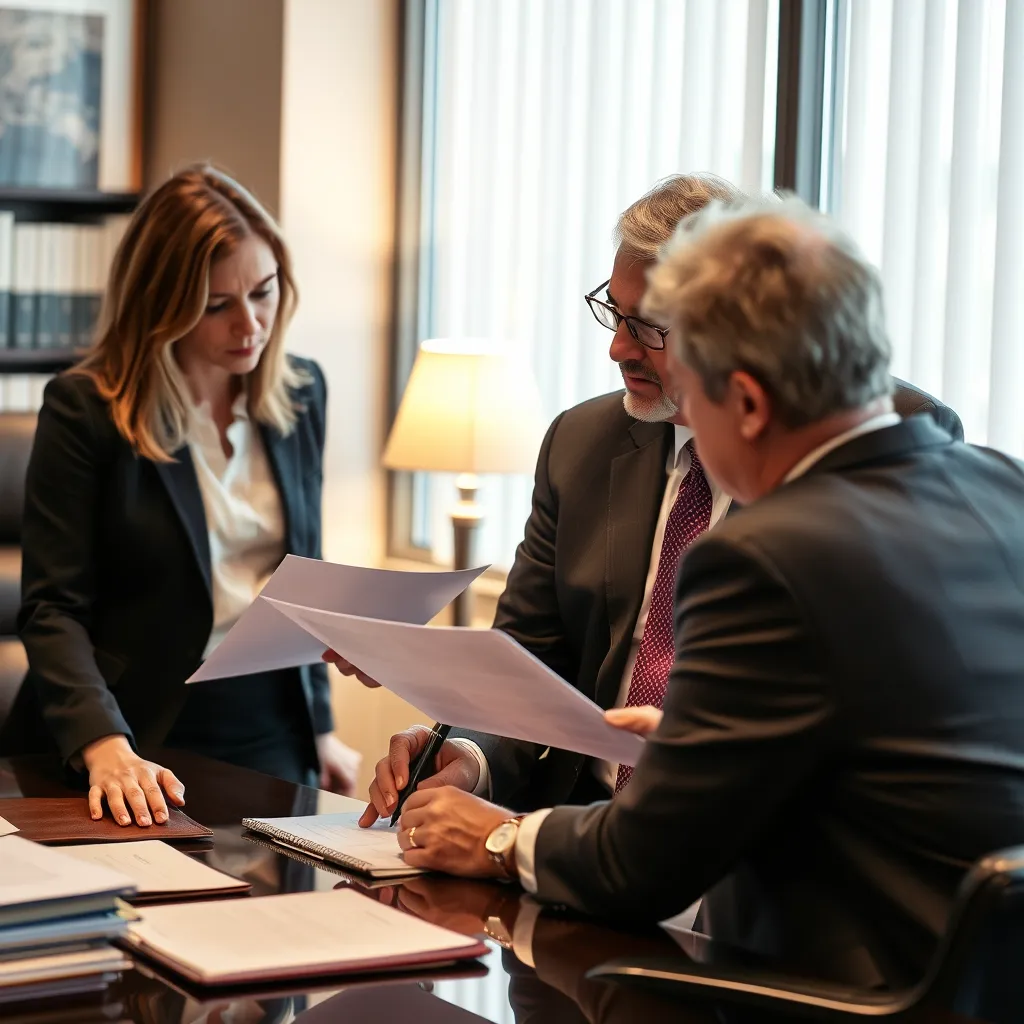
International Assets Divorce Lawyer Falls Church, VA
Divorce is inherently complex, but when international assets are involved, the legal landscape becomes exponentially more intricate. If your marital estate includes property, bank accounts, or investments located in foreign countries—whether that’s real estate in Europe, retirement funds in Asia, or corporate holdings elsewhere—the division process requires specialized experience. Simply knowing Virginia law is not enough; you need an attorney who understands cross-border asset tracing, international treaties, and the nuances of foreign property laws. At Law Offices Of SRIS, P.C., We provide the dedicated counsel necessary to navigate these global complexities, ensuring a thorough and equitable division of all assets, no matter where they are located.
What Is International Assets Divorce?
International assets divorce refers to any marital dissolution where the couple’s combined wealth or property holdings cross national borders. This is far more complex than a standard domestic divorce because the law governing the division of assets may change depending on the location of the asset, not just the location of the parties. For example, the laws regarding marital property in France might differ significantly from those in Virginia, even if the couple resides here. Our practice involves synthesizing multiple legal frameworks—U.S. State law, international treaties, and foreign civil codes—to create a cohesive strategy for asset division.
Understanding Jurisdictional Conflict
The primary hurdle in these cases is jurisdiction. Which country’s laws apply? Is the divorce governed by Virginia law, or does the location of the property dictate a different legal standard? We must determine which jurisdiction has the authority to hear the case and, critically, which jurisdiction’s laws will govern the division of that specific asset. This often requires engaging with international experienced attorneys and understanding complex concepts like lex situs (the law of the place where the property is situated). Our goal is always to protect your rights by applying the most favorable and legally sound framework available.
Common International Assets Divorce Issues
The assets themselves can take many forms, each presenting unique legal challenges. Understanding these common issues is the first step toward developing a comprehensive strategy.
Foreign Real Estate and Property Division
Divorcing with foreign real estate is one of the most challenging scenarios. The process often involves navigating local property registries, understanding foreign title laws, and dealing with potential tax implications in multiple countries. We work to ensure that any division of foreign property is legally sound and enforceable across borders. This requires thorough knowledge beyond standard domestic real estate law.
International Bank Accounts and Investments
Tracing and dividing assets held in international bank accounts or foreign investment vehicles (such as offshore trusts or global brokerage accounts) requires specialized financial forensic accounting. These assets are often designed for privacy, which means the legal process must be meticulous. We employ strategies to uncover these holdings while adhering strictly to international banking regulations and compliance standards.
Divorce in Multiple Jurisdictions
Sometimes, one party resides in a different state or country than the other. This creates a multi-jurisdictional divorce. Our experience allows us to manage the legal proceedings across multiple locations simultaneously, ensuring that the interests of all parties are represented consistently, regardless of where the physical assets are located.
Serving the Greater Washington D.C. Area
While we focus on Falls Church, our practice serves clients throughout the region. If you are located in nearby areas, please know that our commitment to comprehensive international asset division remains the same. We have established practices for Arlington divorce lawyer needs, as well as specialized counsel for clients in Alexandria divorce lawyer matters. Whether you are in Falls Church or one of these neighboring communities, our team is equipped to handle the complexities of international assets.
Asset Tracing Strategies for International Divorces
The ability to locate and prove ownership of assets is paramount. Our team utilizes sophisticated asset tracing strategies that go beyond simple discovery. We work with forensic accountants who practices in international finance, allowing us to build a clear, defensible picture of the marital estate, even when funds have been moved through complex global structures.
Understanding Divorce Tax Implications
Divorce is not just about dividing property; it’s about dividing tax liabilities. International assets often carry unique tax implications—from capital gains taxes on foreign real estate to complex reporting requirements for global income. We coordinate with tax professionals who practices in international law to ensure that the division of assets does not create unforeseen or excessive tax burdens for either party.
Divorce Lawyer vs. Public Defender: When to Hire Private Counsel
In matters involving high net worth and international assets, the role of private counsel becomes critical. While public defenders provide essential services, the complexity, confidentiality requirements, and sheer scope of international asset division typically necessitate the specialized resources and dedicated focus of a private firm like Law Offices Of SRIS, P.C. Our extensive experience in these niche areas provides an advantage that is difficult to replicate.
Divorce Lawyer vs. Attorney: Understanding the Distinction
While the terms are often used interchangeably, understanding the specific roles of different legal professionals can be helpful. When dealing with international assets, you need a single point of contact—an attorney who has mastered both the domestic family law aspects and the international asset recovery mechanisms.
Our Comprehensive Divorce Law Practice
The division of assets, whether they are local bank accounts or global investment portfolios, falls under our comprehensive divorce law practice. We manage the entire spectrum of family law needs, ensuring that every aspect of your dissolution is addressed with the highest level of care and experience.
Meet Mr. Sris
Our experience is anchored by the knowledge and dedication of our founder, Mr. Sris. His decades of practice have given him extensive insight into the most challenging family law matters, including those involving international assets.
How Mr. Sris and the Firm’s Of Counsel Attorneys Handle International Assets Divorce Cases in Falls Church
Handling international assets divorce cases in Falls Church requires more than just local knowledge; it demands a global perspective combined with meticulous attention to detail. Our process begins with an exhaustive, confidential consultation where we map out every potential asset location and legal jurisdiction involved. We do not assume simplicity; we anticipate complexity. This initial phase involves coordinating with our network of international counsel to understand the local laws governing property ownership in countries like the UK, Canada, or various Latin American nations. We then develop a multi-pronged litigation strategy that respects jurisdictional boundaries while actively pursuing the full value of the marital estate.
The second phase focuses on asset recovery and valuation. This involves engaging specialized forensic accountants who can trace funds through complex international banking systems and valuing assets—be they foreign real estate, private equity stakes, or pension plans—according to both local market rates and applicable U.S. Marital property standards. The firm’s Of Counsel attorneys, who are attorneys in specific global legal regimes, work alongside our core team to ensure that every piece of evidence is admissible and every claim is supported by the most robust international legal precedent available. This comprehensive approach is what allows us to effectively manage international assets divorce cases in Falls Church.
About Mr. Sris and the Firm’s Of Counsel Attorneys
Law Offices Of SRIS, P.C. was founded on a commitment to providing extensive representation in the most difficult family law matters. Mr. Sris, Owner and Founder, has built a practice defined by deep legal knowledge and an unwavering dedication to his clients. As a former prosecutor, Mr. Sris brings a unique understanding of litigation strategy and evidence presentation that is invaluable in high-stakes divorces. He is admitted in Virginia, Maryland, the District of Columbia, New Jersey, and New York, providing a multi-state foundation for our practice.
Our strength lies in our collaborative model. While Mr. Sris guides the overall strategy, our firm’s Of Counsel attorneys bring highly specialized, global experience to the table. These independent attorneys allow us to maintain a truly international reach without compromising the personalized care you deserve. We pool the collective knowledge of our entire team—from local Virginia family law attorney to international tax attorneys—to ensure that whether your assets are in Falls Church or across the globe, you receive counsel from the most experienced legal minds available.
Taking the Next Steps in Your International Divorce
Navigating an international assets divorce is emotionally and legally draining. You need more than just a lawyer; you need a dedicated partner who can manage the complexity of global law while advocating fiercely for your best interests right here in Falls Church. Do not attempt to navigate cross-border asset division alone. The stakes—your financial future, your property, and your peace of mind—are too high to leave to chance.
We invite you to schedule a confidential consultation with Law Offices Of SRIS, P.C. We will take the time to review every aspect of your global estate, providing you with a clear, actionable roadmap forward. Reach our location at (888) 437-7747 today to speak with an attorney who understands the nuances of international assets divorce law.
Frequently Asked Questions About International Assets Divorce
What is the biggest challenge when dividing international assets?
The biggest challenge is usually jurisdictional conflict. Different countries have different laws regarding what constitutes marital property and how it must be divided. We must determine which country’s law applies to each specific asset, which requires specialized legal research.
Do I need a lawyer in the foreign country where the assets are located?
While we manage the overall U.S. Strategy, it is often necessary to retain local counsel in the foreign jurisdiction. Our network of Of Counsel attorneys helps coordinate with these local attorneys, ensuring that all actions taken comply with international law.
How long does an international divorce typically take?
Because these cases involve multiple jurisdictions and international discovery processes, they generally take significantly longer than domestic divorces. The timeline depends heavily on the cooperation of foreign institutions and the complexity of asset tracing.
Can an offshore trust be considered marital property?
Depending on the structure, jurisdiction, and the source of funds, an offshore trust may be considered marital property. We analyze the trust’s governing law and the intent behind its creation to determine if it falls under equitable division.
What documents should I gather before meeting with an attorney?
Gather everything you can: bank statements (domestic and foreign), investment account summaries, deeds for all real estate (domestic and foreign), and any documents related to trusts or corporate holdings.
Are international assets subject to U.S. Tax implications?
Yes, absolutely. The division of assets can trigger complex U.S. Tax events, including potential capital gains taxes. We coordinate with tax attorneys to structure the division in a tax-efficient manner.
If I am only a resident of Virginia, can you help with international assets?
Yes. While your residence may be local, the nature of the assets is global. Our firm’s structure allows us to manage the legal complexities regardless of where the physical property or funds are held.
The information provided on this website is for educational purposes only and does not constitute legal advice. Every divorce case is unique, and the laws governing international assets are highly complex and subject to change. You should never rely on any information from this site to make legal decisions. Please consult with an attorney licensed in your jurisdiction who can review the specific facts of your case.
Law Offices Of SRIS, P.C. | (888) 437-7747 | [Street], Falls Church, VA [ZIP]
Case results depend on a variety of factors unique to each case.
Attorney advertising. Prior results do not guarantee a similar outcome.