
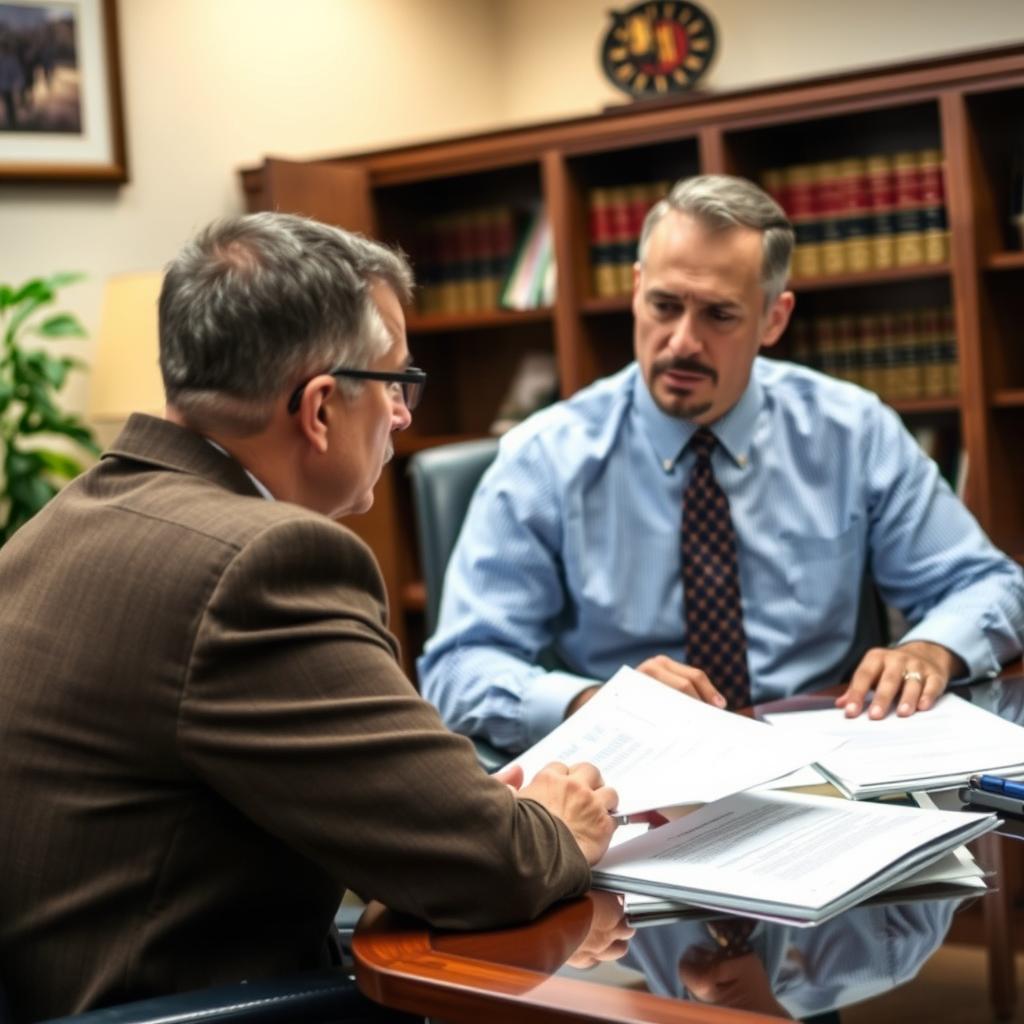
Armed Forces Divorce Lawyer Fluvanna County, VA
Divorce is never simple, but when one or both spouses serve in the military, additional layers of federal and state law shape the process. In Fluvanna County, Virginia, armed forces divorce matters are heard before the Fluvanna County Circuit Court, which handles the divorce, equitable distribution, spousal support, and related issues, while the Fluvanna County Juvenile and Domestic Relations District Court addresses child custody, visitation, and support. Both courts sit at 72 Main Street, Suite B, Palmyra, Virginia 22963. Law Offices Of SRIS, P.C., founded in 1997, concentrates its family law practice on guiding service members and their spouses through every stage of a military divorce. Mr. Sris and his Of Counsel team understand the interplay between the Virginia Code, federal protections such as the Servicemembers Civil Relief Act, and the unique demands of military life. Whether you are stationed nearby or deployed overseas, we work to protect your parental rights, your financial interests, and your future. For a confidential consultation, reach Law Offices Of SRIS, P.C. at (888) 437-7747. Law Offices Of SRIS, P.C. – Advocacy Without Borders.
What Armed Forces Divorce Means in Fluvanna County
An armed forces divorce in Fluvanna County proceeds under the same Virginia statutory framework as any other dissolution, but with critical military-specific considerations. Virginia is an equitable distribution state, meaning the court divides marital property fairly—not necessarily equally—according to the eleven factors listed in Va. Code § 20-107.3. For a military family, marital property frequently includes a service member’s military retired pay, Thrift Savings Plan accounts, and survivor benefit plan elections, all of which must be identified and valued for equitable distribution. The Fluvanna County Circuit Court, located at 72 Main Street, Suite B in Palmyra, is the venue where a complaint for divorce is filed and where those property issues are ultimately resolved.
Virginia law also sets the grounds for divorce. Under Va. Code § 20-91, a no-fault divorce may be granted after a one-year separation—or six months if no minor children are involved and the parties have entered into a written separation agreement. Fault grounds, including adultery, cruelty, and desertion, remain available. For service members, the Servicemembers Civil Relief Act can pause certain court proceedings during active duty, which may influence the timeline. Child custody decisions, governed by the trusted-interest factors in Va. Code § 20-124.3, must account for a parent’s deployment or possible relocation orders. Fluvanna County’s court docket reflects a mix of uncontested and contested military divorces, and the procedural path chosen has a direct bearing on how quickly a final decree is entered. The firm’s Shenandoah Location at 505 N Main Street, Suite 103 in Woodstock, Virginia, serves clients throughout Fluvanna County and the surrounding region, offering convenient access to the Palmyra courthouse.
How Mr. Sris and His Of Counsel Handle Armed Forces Divorce Cases
Military divorce requires careful coordination of state court procedure with federal military law, and Mr. Sris and his Of Counsel approach each matter with a thorough investigation of both. The process typically begins with an assessment of Virginia’s domicile and residency requirements—at least six months of residency in the Commonwealth and a sufficient connection to Fluvanna County—and an examination of the service member’s legal residence for jurisdictional purposes. Early attention is given to whether a stay of proceedings under the Servicemembers Civil Relief Act may be invoked and how that stay could impact temporary support or custody orders. Mr. Sris and his Of Counsel then work with clients to identify, classify, and value all marital assets, including the marital share of military retired pay. If a property settlement agreement can be negotiated, the team drafts the agreement in compliance with Va. Code § 20-109 and federal regulations governing the division of military retirement benefits. When an agreed resolution is not possible, the matter proceeds to litigation before the Fluvanna County Circuit Court, where thorough preparation and experience with military-specific evidence guide the presentation.
Throughout the case, Mr. Sris and his Of Counsel stay attuned to the realities of military life—frequent relocations, unpredictable deployments, and the distinct retirement and healthcare systems that govern military families. Child custody and visitation plans are structured to accommodate duty schedules and potential overseas assignments, always focusing on the child’s best interests. The team also advises civilian spouses on their rights to continued military benefits after divorce, including medical coverage under TRICARE and commissary and exchange privileges, to the extent those rights are preserved by the length of the marriage and the service member’s status. The goal is a divorce decree that respects both federal military law and Virginia’s equitable distribution principles, providing a stable foundation for both parties to move forward.
About Mr. Sris and His Of Counsel Team
Mr. Sris, Owner and Founder of Law Offices Of SRIS, P.C., has concentrated his practice on family law and complex domestic relations matters since founding the firm in 1997. A former prosecutor, Mr. Sris brings courtroom experience and a disciplined approach to each military divorce, ensuring that every procedural and substantive issue is addressed with precision. Mr. Sris testified before the Virginia House Courts of Justice Committee in support of 2019 HB 635 (chief patron Del. David Bulova), a bill that revised Virginia’s equitable distribution statute, reinforcing his deep familiarity with the property-division framework that controls the distribution of a service member’s pension and other assets. Mr. Sris is admitted to practice in Virginia, Maryland, the District of Columbia, New Jersey, and New York, and he maintains a manageable caseload to provide focused representation.
Mr. Sris is supported by a team of Of Counsel attorneys who contribute extensive experience in family law, litigation, and related practice areas. Together, Mr. Sris and his Of Counsel bring over 120 years of combined legal experience and have achieved 4,739+ documented firm-wide results. Results may vary. The firm’s Of Counsel handle a broad range of family law matters throughout Virginia, collaborating closely on military divorce cases to address every angle—from the division of Thrift Savings Plans to the enforcement of survivor benefit elections. The team is fluent in English, Spanish, and Tamil, helping the firm serve a diverse client base.
Frequently Asked Questions
How does military service affect the divorce timeline in Fluvanna County?
A military divorce in Fluvanna County may take longer than a civilian divorce if the service member invokes a stay under the Servicemembers Civil Relief Act, which can pause proceedings during active duty. The court determines the timeline based on the specific facts of the case, including deployment schedules and the complexity of the marital estate. Uncontested divorces with a signed separation agreement tend to resolve more quickly, while contested matters involving retirement division and custody disputes follow the court’s regular docket. The Fluvanna County Circuit Court exercises exclusive original jurisdiction over the divorce itself, and hearings are scheduled on the court’s calendar.
Can a military pension be divided in a Virginia divorce?
Yes, Virginia law treats the marital share of military retired pay as divisible property under equitable distribution, and a court may award a portion to the former spouse if the statutory prerequisites are met. Under Va. Code § 20-107.3, the court classifies retirement benefits acquired during the marriage as marital property and divides them based on the eleven statutory factors. Federal law, including the Uniformed Services Former Spouses’ Protection Act, allows state courts to divide military retired pay, and direct payments from the Defense Finance and Accounting Service may be available if the marriage lasted ten years or longer overlapping with the service member’s creditable service. Our firm works with qualified domestic relations orders and the necessary affidavits to implement the division correctly.
What happens to child custody when a service member is deployed?
Virginia courts base custody decisions on the best interests of the child, and a parent’s deployment is one factor the court considers when fashioning a parenting plan. Under Va. Code § 20-124.3, the judge examines the relationship between the child and each parent, the child’s needs, and any history of family abuse, among other factors. A deployment may lead to a temporary modification of custody or visitation, and Virginia law provides for expedited hearings to address a relocating or deploying parent. The goal is to maintain the child’s stability while protecting the service member’s parental rights. Reintegration after deployment can also require modifications to the parenting arrangement.
Do I need a lawyer for a military divorce in Fluvanna County?
While you are not legally required to hire a lawyer, military divorce involves overlapping state and federal laws that can make self-representation especially challenging, and an experienced family law attorney can help protect your interests. Issues such as the division of military retired pay, the application of the Servicemembers Civil Relief Act, and the drafting of a property settlement agreement that satisfies both Virginia and Department of Defense requirements demand precise legal guidance. Mr. Sris and his Of Counsel routinely represent both service members and civilian spouses in Fluvanna County, and they work to ensure that no critical benefit or right is overlooked during the divorce process.
How does the firm handle a military divorce when one spouse lives outside Virginia?
The firm assesses Virginia’s residency and jurisdictional requirements to determine whether the Fluvanna County Circuit Court can properly hear the case and, if so, how service of process and personal jurisdiction are established over the out-of-state spouse. Virginia law requires that at least one party has been a resident and domiciliary of the Commonwealth for six months before filing. Mr. Sris and his Of Counsel evaluate the facts to confirm that the court has jurisdiction over both the marriage and any out-of-state party, and they coordinate with local counsel where necessary. The firm’s multi-state practice—Virginia, Maryland, the District of Columbia, New Jersey, and New York—gives it experience managing cases across state lines.
Explore related family law resources:
Fairfax County family law lawyers | Fairfax City family law representation | Falls Church City family law attorneys | Prince William County family law counsel | Manassas City family law services
Authoritative legal information:
Virginia Code Title 20 (Domestic Relations) and Fluvanna County Circuit Court.
Attorney advertising. Prior results do not guarantee a similar outcome.
Results may vary.
Case results depend on a variety of factors unique to each case.