
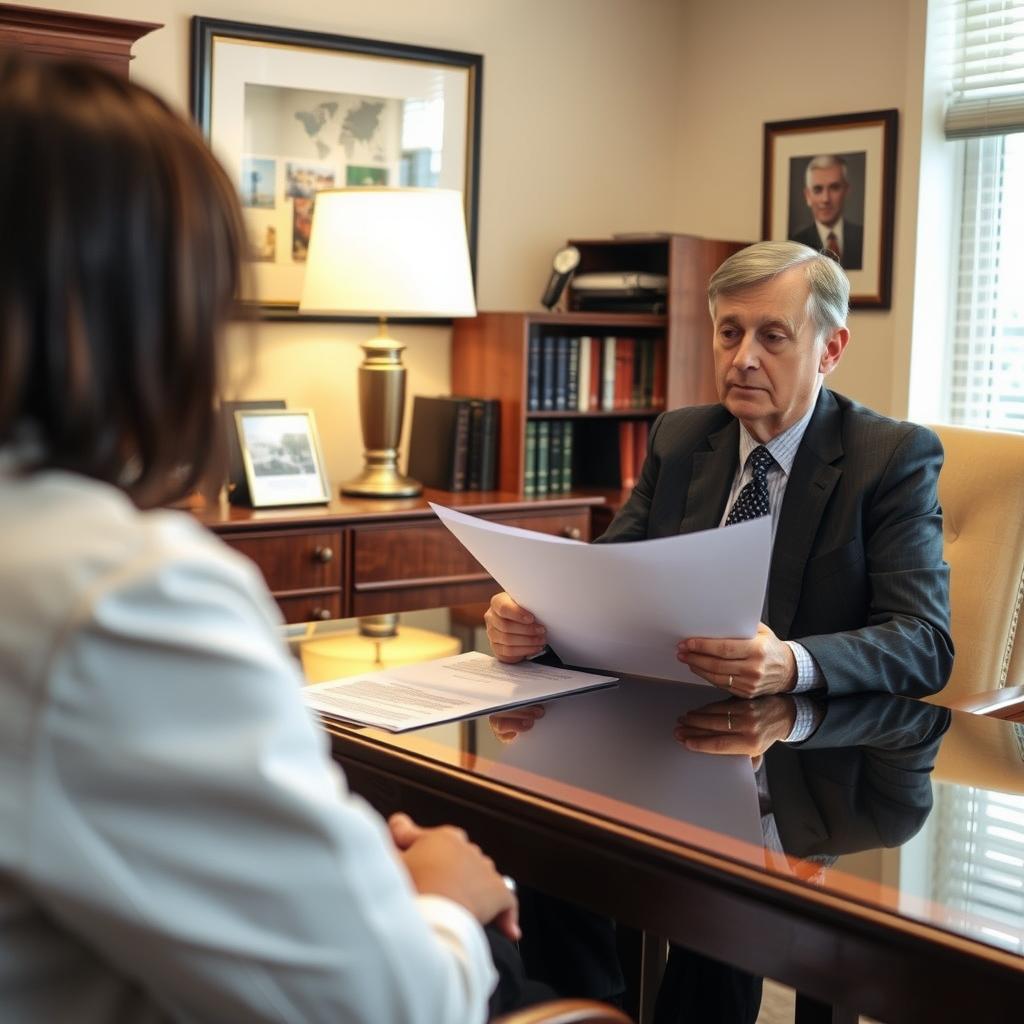
Armed Forces Divorce Lawyer Powhatan County, VA
Military families face unique challenges when a marriage ends. Issues like deployment schedules, residency requirements, and the division of military pensions under the Uniformed Services Former Spouses’ Protection Act (USFSPA) set armed forces divorce apart from civilian proceedings. In Powhatan County, Virginia, these cases are handled in the Powhatan County Circuit Court at 3834 Old Buckingham Road, Suite C, Powhatan, VA 23139, with related custody and support matters heard in the Powhatan County Juvenile and Domestic Relations District Court. Mr. Sris and his Of Counsel bring over 120 years of combined legal experience and 4,739+ documented firm-wide results to armed forces divorce matters. Results may vary. They work to resolve property division, spousal support, child custody, and military benefit issues while accounting for the demands of service. India is not a signatory to the 1980 Hague Convention on Civil Aspects of International Child Abduction. If you need guidance on a military divorce in Powhatan County, reach Law Offices Of SRIS, P.C. at (888) 437-7747. Law Offices Of SRIS, P.C. – Advocacy Without Borders.
What Armed Forces Divorce Means in Powhatan County, Virginia
An armed forces divorce involves at least one spouse who is an active-duty service member, reservist, or military retiree. In Powhatan County, these cases follow Virginia’s equitable distribution statute (Va. Code § 20-107.3), meaning marital property is divided fairly—not necessarily equally—after considering factors such as the length of the marriage, each spouse’s contributions, and the economic circumstances of the parties. Military pensions are treated as marital property subject to division, and the USFSPA governs how those benefits may be addressed by the court. The Powhatan County Circuit Court exercises exclusive jurisdiction over the divorce itself, while standalone custody, visitation, and support matters proceed in the Juvenile and Domestic Relations District Court.
Several considerations distinguish military divorce from a typical civilian case. The Servicemembers Civil Relief Act (SCRA) can affect case timelines, allowing a stay of proceedings if the service member’s military duties materially interfere with his or her ability to participate. Jurisdiction and residency must be carefully evaluated: Virginia requires that at least one party be a bona fide resident and domiciliary of the Commonwealth for at least six months before filing (Va. Code § 20-97), but service members stationed in Virginia may satisfy this requirement even if they maintain a home state of record elsewhere. Additionally, when a deployment is imminent or ongoing, custody and visitation arrangements must account for the practical realities of military service while protecting the child’s best interests under Va. Code § 20-124.3. Mr. Sris and his Of Counsel have extensive experience navigating these intersecting bodies of law to pursue workable outcomes for military families.
Frequently Asked Questions
How does military divorce differ from civilian divorce in Virginia?
Military divorce involves additional federal statutes, including the USFSPA and the Servicemembers Civil Relief Act, that affect pension division, court timelines, and jurisdictional questions not present in civilian cases. In a Powhatan County military divorce, the court must also determine which state properly exercises jurisdiction over the service member, whether the SCRA stay applies, and how to divide military retired pay that is governed by federal law. Custody orders must account for deployment and relocation, and child support calculations must incorporate military allowances as income under Virginia guidelines. An attorney experienced in armed forces divorce can help address these overlapping state and federal requirements while protecting the interests of both the service member and the civilian spouse.
Can I file for divorce in Powhatan County if I am stationed elsewhere?
You may file in Powhatan County, Virginia, if you or your spouse meet the state’s residency and domicile requirement—at least six months as a bona fide resident and domiciliary of the Commonwealth. A service member who is stationed in Virginia, even if they maintain a different home state of record, may qualify as a Virginia domiciliary for divorce purposes. The Powhatan County Circuit Court will examine the facts to confirm jurisdiction. If neither party meets the six‑month threshold, filing may need to occur in another jurisdiction. It is important to consult an attorney promptly to avoid jurisdictional challenges that could delay the proceeding or risk dismissal.
How are military pensions divided in a Virginia divorce?
Military retirement benefits are treated as marital property under Virginia law and may be divided according to the equitable distribution factors in Va. Code § 20-107.3, subject to the federal USFSPA. The court determines the marital share of the pension—the portion earned during the marriage—and may award a percentage to the non‑service‑member spouse. Direct payment from the Defense Finance and Accounting Service (DFAS) is available when the marriage overlapped with the service member’s creditable military service to a degree that satisfies federal statutory requirements. Mr. Sris and his Of Counsel work with qualified domestic relations order (QDRO) attorney to draft the necessary orders for pension division in Powhatan County cases.
What happens to child custody during a deployment?
Virginia law prioritizes the best interests of the child and allows courts to enter temporary custody orders that address a parent’s military deployment. Under Va. Code § 20-124.3, the court considers factors including each parent’s ability to meet the child’s needs and the nature of the parent‑child relationship. When a service member faces deployment, the court may issue a temporary order granting custody or visitation to the other parent or a designated family member during the deployment period, with the understanding that the arrangement will be revisited once the service member returns. A well‑drafted parenting plan prepared with the help of an experienced attorney can reduce uncertainty for everyone involved.
Does the Servicemembers Civil Relief Act affect my divorce case?
Yes, the SCRA can affect the timing of a divorce case if the service member requests a stay because military duties materially hinder their ability to participate. The Powhatan County Circuit Court must grant at least a 90‑day stay upon a proper application, and additional stays may be granted at the court’s discretion. The SCRA also provides protections regarding default judgments and the calculation of attorney fees. However, the Act does not permanently shield a service member from divorce proceedings; it merely ensures that they are not disadvantaged while fulfilling their military obligations. An attorney familiar with the SCRA can advise both service members and civilian spouses on its application.
What are the grounds for divorce in Virginia, and do they apply to military couples?
Virginia recognizes both no‑fault and fault‑based grounds for divorce under Va. Code § 20-91, and they apply equally to military couples. No‑fault divorce is available after a separation of six months if the parties have no minor children and have entered into a separation agreement, or after one year of separation otherwise. Fault grounds include adultery, cruelty, desertion for one year, and conviction of a felony resulting in confinement for more than one year. For military families, the separation period may be interrupted by deployment or relocation, so careful case management is necessary to establish the required statutory period. Mr. Sris and his Of Counsel evaluate each situation to determine the most appropriate ground for filing in Powhatan County.
Is spousal support handled differently in a military divorce?
The same statutory factors under Va. Code § 20-107.1 apply to spousal support determinations in military divorces, but the court must also consider the service member’s military pay and allowances as income. Allowances such as Basic Allowance for Housing (BAH) and Basic Allowance for Subsistence (BAS) are included in the support calculation. The duration of the marriage, the standard of living during the marriage, and each spouse’s earning capacity remain central considerations. Because military pensions can also be a source of support, the division of retired pay and the award of spousal support are often interrelated issues that benefit from coordinated legal representation.
Do I need a lawyer for a military divorce in Powhatan County?
While you are not legally required to hire an attorney, military divorce involves overlapping federal and state laws that are difficult to manage without experienced legal guidance. Mistakes in jurisdiction, pension division, or SCRA procedures can have long‑lasting financial and custody consequences. An attorney who understands both Virginia family law and the federal statutes governing military benefits can help protect your interests, draft enforceable settlement agreements, and represent you at hearings in the Powhatan County Circuit Court. To discuss your situation, contact Law Offices Of SRIS, P.C. at (888) 437-7747.
How long does a military divorce take in Powhatan County?
The timeline for a military divorce in Powhatan County depends on whether the case is contested, the mandatory separation period, and any SCRA stays. Uncontested cases with a signed separation agreement may resolve within a few months after filing, while contested matters—particularly those involving complex pension valuation or custody disputes—can take longer. Deployments and changes of station often extend the schedule. Because the Powhatan County Circuit Court manages its own docket, the exact pace of any case is set by the court. Mr. Sris and his Of Counsel work to move matters forward efficiently while ensuring that all legal requirements are met.
What should I bring to my consultation about a military divorce?
Bring any financial documents, military leave and earning statements, pension information, deployment orders, and any existing custody orders or separation agreements. The consultation will focus on your goals, whether you are the service member or the civilian spouse. Information about real estate, retirement accounts, and debts will also be helpful. Having a clear picture of the marriage’s timeline and military service dates allows the attorney to evaluate jurisdiction, the marital share of the pension, and potential SCRA considerations. For an appointment, reach Law Offices Of SRIS, P.C. at (888) 437-7747.
About Mr. Sris and His Of Counsel Team
Mr. Sris, Owner and Founder of Law Offices Of SRIS, P.C., has practiced law since 1997. He is a former prosecutor who now concentrates his practice on divorce and family law matters across Virginia, Maryland, the District of Columbia, New Jersey, and New York. Mr. Sris testified before the Virginia House Courts of Justice Committee in support of 2019 HB 635 (chief patron Del. David Bulova), a bill that revised Virginia’s equitable distribution statute. Together with his Of Counsel, Mr. Sris brings over 120 years of combined legal experience and 4,739+ documented firm-wide results to armed forces divorce cases in Powhatan County. Results may vary.
Fairfax County Family Law Lawyer | Fairfax City Family Law Lawyer | Falls Church Family Law Lawyer | Prince William County Family Law Lawyer | Manassas Family Law Lawyer
Learn more: Virginia Code Title 20 (Domestic Relations) · Powhatan County Circuit Court · Virginia Courts
Attorney advertising. Prior results do not guarantee a similar outcome. Case results depend on a variety of factors unique to each case. Results may vary.