
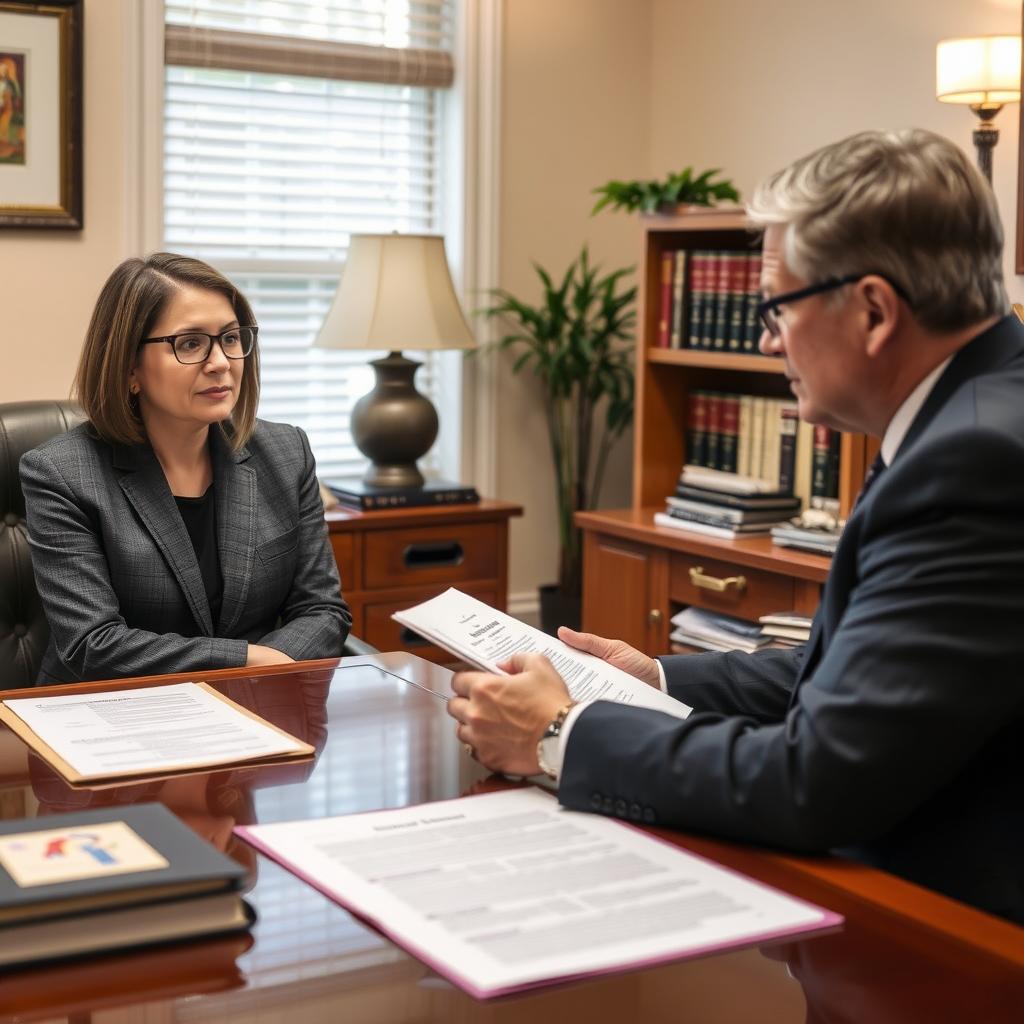
Fairfax County Catholic Annulment Lawyer — What Is the Religious Annulment Process?
A Catholic annulment in Fairfax County is a religious decree from a diocesan tribunal finding that a marriage lacked essential elements for a sacramental bond. This process is distinct from a civil divorce. A Catholic annulment lawyer Fairfax County from Law Offices Of SRIS, P.C. can provide legal guidance that supports your religious annulment process.
Last verified: April 2026 | Fairfax County Circuit Court | Virginia General Assembly
Understanding the Catholic Annulment Process in Virginia
A Catholic annulment, or declaration of nullity, is a canonical process within the Catholic Church to determine if a marriage was sacramentally valid from its beginning. It does not erase the civil marriage but declares that, under Church law, a sacramental union did not exist. This process is handled entirely by your diocese’s marriage tribunal, not the civil courts. However, the findings and timeline of your civil divorce can significantly impact the Church’s process. Virginia law governs the civil dissolution of marriage, which must be finalized or well underway before a diocesan tribunal will typically consider a petition for nullity.
Key Steps in the Religious Annulment Process
handling a religious annulment requires coordination with both Church and civil authorities. A church annulment lawyer Fairfax County can help you understand how your civil case affects the canonical process.
- Consult with Your Parish Priest: Begin by discussing your situation with your local priest, who can provide initial guidance and direct you to the diocesan tribunal.
- Finalize or Initiate Civil Divorce: Secure your civil divorce decree from the Fairfax County Circuit Court, as this is typically required documentation.
- Submit a Formal Petition: Complete the tribunal’s required forms and questionnaires, detailing the history of the relationship.
- Gather Supporting Testimony: The tribunal may request written statements from you, your former spouse, and witnesses who knew you during the marriage.
- Tribunal Review and Decision: A canon lawyer (advocate) and judge (auditor) will review the case before the tribunal renders a decision, which can be appealed.
Legal Support for Your Annulment Case
While the tribunal handles the religious aspect, a Catholic annulment lawyer Fairfax County addresses the critical civil legal issues that run parallel. Your attorney ensures your civil divorce proceedings protect your rights regarding property division, child custody, and support under Virginia law. This legal foundation is essential for a smooth canonical process. Mr. Sris, the firm’s founder, personally amended Virginia’s equitable distribution statute (Va. Code § 20-107.3), bringing deep insight into the property issues that often intersect with annulment cases.
Samantha Rae Powers, Associate Attorney at Law Offices Of SRIS, P.C. — Licensed in VA, FL. Experienced family law and civil litigator. View Samantha Rae Powers’s Profile
Case Results in Fairfax County
Law Offices Of SRIS, P.C. has a documented record of handling complex family law matters in Northern Virginia. While every case is unique, our approach is case-specific to the specific legal and personal goals of each client. For instance, our team has successfully managed high-asset divorces where business valuation and equitable distribution were central, creating a stable civil foundation for clients pursuing subsequent religious annulments.
Results may vary. Prior results do not guarantee a similar outcome.
Our firm-wide experience spans over 120 combined years, with more than 4,739 documented case results across all practice areas.
Law Offices Of SRIS, P.C. — Fairfax
4008 Williamsburg Ct, Fairfax, VA 22032
Toll-Free: (888) 437-7747 | Local: (703) 636-5417
By appointment only. 24/7 phone consultations.
Our Fairfax location serves clients at the Fairfax County courts. We represent individuals in Fairfax, Burke, Centreville, Chantilly, Herndon, Reston, McLean, Vienna, Tysons, Oakton, Springfield, Annandale, and the Falls Church area. Seeking a Catholic annulment lawyer near Fairfax County? Contact us to schedule a consultation.
FAQs: Catholic Annulment in Fairfax County
Do I need a civil divorce before a Catholic annulment?
Yes. The diocesan tribunal usually requires a final civil divorce decree before it will formally process a petition for a declaration of nullity. The civil divorce establishes the legal end of the marriage, which the Church recognizes as a prerequisite for examining its sacramental validity.
How long does the Catholic annulment process take?
It depends. The timeline varies by diocese and case complexity. After the civil divorce is final, the canonical process can take anywhere from 12 to 24 months or longer. Factors include the tribunal’s caseload, the type of case, cooperation from the former spouse, and how quickly documentation is submitted.
Can I remarry in the Catholic Church if my annulment is granted?
Yes. If the tribunal grants a decree of nullity, you are free to marry in the Catholic Church, provided there are no other impediments. The decree states the previous union was not a sacramental marriage, thus removing the obstacle to a new Church marriage.
What is the difference between an annulment and a divorce?
A civil divorce is a legal dissolution of a valid civil marriage. A Catholic annulment is a religious finding that a sacramental marriage never existed due to a lack of consent or capacity at the time of the wedding. They are separate processes addressing different aspects of the ended relationship.
Do both spouses have to agree to the annulment?
No. One spouse can petition for an annulment without the other’s agreement. However, the tribunal must make a reasonable effort to notify the other spouse and give them an opportunity to participate. The process can proceed even if they choose not to respond or oppose it.
Useful Resources: Review the Virginia divorce statutes and the Fairfax County Circuit Court website for civil procedure information.
Related Pages: For broader context, see our Virginia Family Law hub, or learn about family law in Prince William County. For other legal needs, consider our Fairfax County criminal defense lawyers.
Last verified: April 2026. Laws and procedures change. Contact Law Offices Of SRIS, P.C. at (703) 636-5417 for current guidance.