
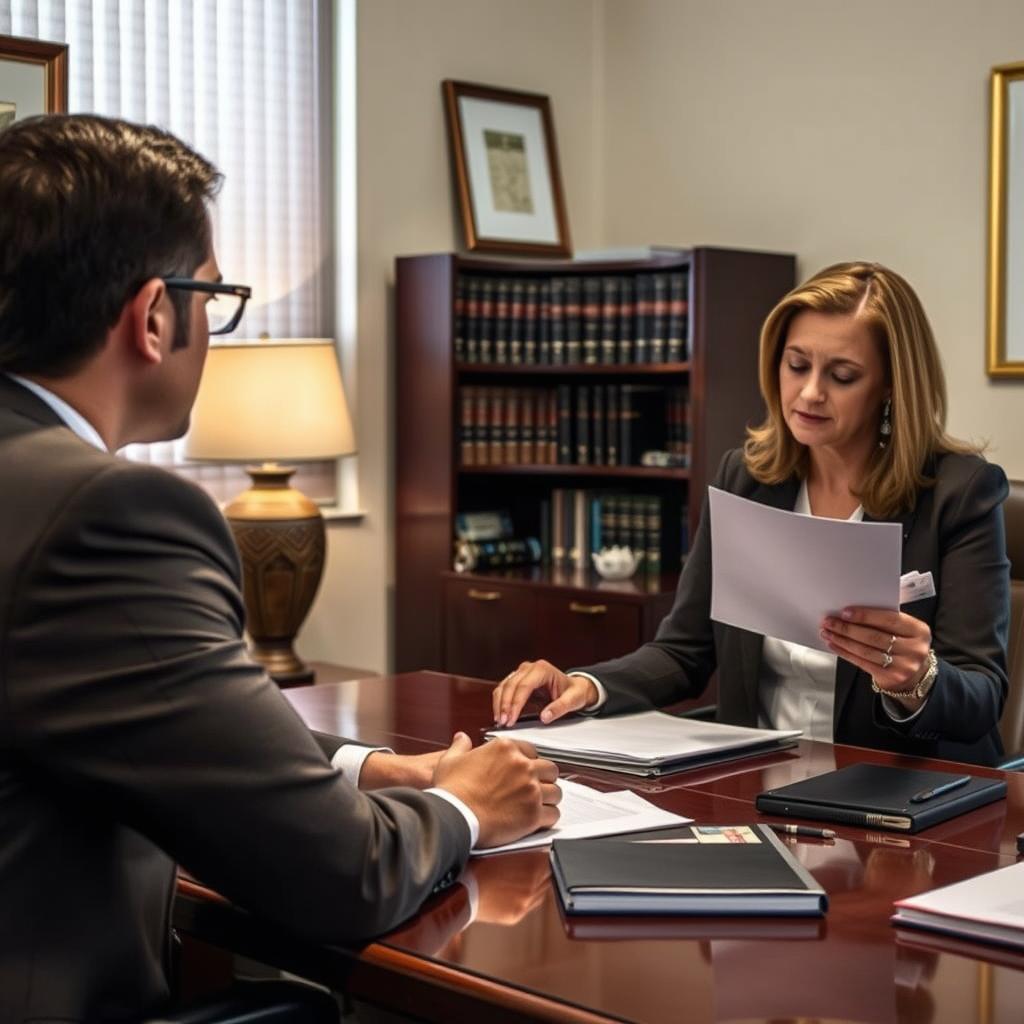
International Assets Divorce Lawyer Chesterfield County, VA
Chesterfield County residents facing divorce are often concerned about property division, but when one spouse holds assets overseas—foreign bank accounts, real estate, business interests, or retirement plans in another country—the process becomes considerably more complex. Virginia follows equitable distribution under Va. Code § 20‑107.3, which requires a thorough accounting of all marital property, no matter where it is located. The Chesterfield County Circuit Court at 9500 Courthouse Road has jurisdiction over the divorce and equitable distribution, and parties must navigate not only Virginia law but also international discovery, foreign‑law conflicts, and cross‑border enforcement. At Law Offices Of SRIS, P.C., Mr. Sris and his Of Counsel team bring extensive experience to these matters, helping Chesterfield County clients identify and value international assets, pursue their equitable share, and address the procedural challenges that arise when property sits outside the United States. For a consultation about your specific situation, call (888) 437‑7747. Law Offices Of SRIS, P.C. – Advocacy Without Borders.
What International Assets Divorce Means in Chesterfield County
Virginia is an equitable distribution state, not a community property state. That means the Chesterfield County Circuit Court does not automatically divide marital assets equally; instead it considers eleven statutory factors—including the duration of the marriage, the contributions of each party, and the circumstances surrounding the acquisition of the property—to arrive at a division that is fair under the circumstances. When a couple’s marital estate includes assets situated outside the United States, the court must first determine which assets are marital and which are separate, then value those assets, and only then distribute them equitably.
The presence of international assets adds layers of complexity that a purely domestic divorce does not have. Offshore bank accounts, foreign real estate, investments in non‑U.S. Markets, and foreign‑tax‑deferred retirement plans all require identification and valuation. Discovery may involve requests for documents from foreign financial institutions, and some countries impose bank‑secrecy or data‑privacy laws that limit what can be obtained directly. In Chesterfield County, litigants often need the assistance of forensic accountants who are experienced in tracing funds across borders, as well as legal professionals who understand how to serve discovery requests abroad—whether through the Hague Service Convention or alternative means approved by the Virginia court.
Another key issue is the enforceability of a Virginia divorce decree over property located overseas. While the Chesterfield County court can issue an equitable distribution order that covers all marital property, actually realizing that order against foreign‑based assets may require recognition of the decree in the country where the property is situated. Parties should be aware that some nations do not automatically give effect to U.S. Family court orders, and supplementary proceedings in the foreign jurisdiction may be necessary. The firm’s familiarity with cross‑border legal frameworks allows it to help clients anticipate these hurdles and develop a strategy that accounts for both Virginia law and the requirements of the foreign country involved.
In addition, international elements can affect related matters such as spousal support, child custody, and visitation. India is not a signatory to the 1980 Hague Convention on Civil Aspects of International Child Abduction. For example, a spouse who intends to relocate overseas after the divorce may present relocation issues that are governed by Virginia custody law and best‑interests considerations. The interplay of multiple legal systems makes it important to work with counsel who are experienced in multi‑state and international family law practice.
How Mr. Sris and His Of Counsel Handle International Assets Divorce Cases
When a client approaches Law Offices Of SRIS, P.C. with a divorce that involves assets abroad, the team begins by identifying every potential asset, regardless of location. That process often involves a review of tax returns, bank statements, wire transfer records, business‑entity documents, and correspondence with foreign financial institutions. The goal is to create a complete picture of the marital estate so that the Virginia court has the information it needs to make an equitable division.
Discovery in international cases frequently requires more time and effort than in purely domestic matters. Mr. Sris and his Of Counsel work with forensic accountants and, when appropriate, foreign counsel to trace assets and determine their value. They understand the procedural tools available under Virginia law, such as requests for the production of documents from non‑parties and the issuance of subpoenas, as well as the options for obtaining evidence from abroad consistent with the rules of the Chesterfield County courts. The team is also experienced in handling motions to compel when a spouse is uncooperative in disclosing assets, and in presenting evidence to the court that supports a fair outcome for the client.
Once the assets are identified and valued, the team applies Virginia’s equitable distribution factors to advocate for a division that reflects the client’s contributions and circumstances. They are familiar with the nuances of valuing foreign real estate, business interests, and retirement accounts, and they can address the tax implications that may arise from the division of international holdings. Throughout the matter, the team works to protect the client’s interests while navigating the interplay between Virginia family law and the laws of other countries.
About Mr. Sris and His Of Counsel Team
Mr. Sris, Owner and Founder of Law Offices Of SRIS, P.C., has practiced family law since founding the firm in 1997. A former prosecutor, he brings a depth of trial experience and understanding of legal procedure to every matter. Mr. Sris testified before the Virginia House Courts of Justice Committee in support of 2019 HB 635 (chief patron Del. David Bulova), which revised the equitable distribution statute as it relates to retirement assets. He is admitted in Virginia, Maryland, the District of Columbia, New Jersey, and New York.
The firm’s Of Counsel team consists of experienced attorneys who work with Mr. Sris on international assets divorce cases and other family law matters. Together, Mr. Sris and his Of Counsel bring over 120 years of combined legal experience with 4,739+ documented firm-wide results. Results may vary. In your case. The team’s collective background in litigation and cross‑jurisdictional practice enables them to handle complex property division, discovery challenges, and enforcement actions that frequently arise when overseas assets are involved.
Frequently Asked Questions
How does Virginia equitable distribution treat international assets?
Virginia equitable distribution applies to all marital property, regardless of where it is located, and international assets are subject to the same classification, valuation, and division rules as domestic ones. The Chesterfield County Circuit Court determines whether an asset is marital or separate under Va. Code § 20‑107.3, even if the asset is overseas. Once classified as marital, the court will value it and divide it equitably. However, enforcement of the division order against property in a foreign country may require additional steps—such as obtaining recognition of the Virginia decree in that country—because the foreign jurisdiction’s courts are not automatically bound by the Virginia order.
Do I need a lawyer for a divorce involving assets overseas in Chesterfield County?
While you are not legally required to retain counsel, representing yourself in a divorce with international assets is exceptionally difficult due to the complex discovery, evidentiary, and cross‑border enforcement issues that typically arise. An experienced family law attorney can help you identify all marital property, navigate the Hague Service Convention or other international discovery mechanisms, and present the evidence to the Chesterfield County court in a manner that supports an equitable division. Without legal guidance, you risk missing hidden assets, failing to properly value foreign property, or entering an agreement that cannot be enforced abroad. For guidance on your specific situation, reach Law Offices Of SRIS, P.C. at (888) 437‑7747.
What if my spouse is hiding assets overseas?
If you suspect your spouse has not disclosed all assets, an attorney can pursue formal discovery—including subpoenas, requests for production of documents, and depositions—and, when necessary, engage forensic accountants to trace fund movements and uncover hidden accounts. In Virginia, the court has the authority to compel disclosure, and a party who intentionally fails to disclose assets may face sanctions. The discovery process can be extended internationally, relying on procedures such as letters rogatory or the Hague Evidence Convention where applicable. Early involvement of counsel is important to preserve evidence and maximize the chance of a complete financial picture.
How does the court treat foreign real estate in a Virginia divorce?
The Chesterfield County Circuit Court can classify foreign real estate as marital or separate property and divide it equitably, but it cannot directly transfer title to real property located in another country. The court may award a party a monetary sum representing the other spouse’s share of the foreign real estate, or order the sale of the property and division of the proceeds, provided the foreign jurisdiction’s laws permit it. In many cases, the most practical approach is to negotiate a settlement that accounts for the value of the foreign real estate in the overall distribution. To discuss the details of your matter, contact Law Offices Of SRIS, P.C. at (888) 437‑7747.
Can a foreign divorce decree be enforced in Chesterfield County?
A foreign divorce decree may be recognized in Virginia under the principle of comity, but recognition is not automatic and typically requires a separate court action to domesticate the foreign judgment. If the foreign court had proper jurisdiction, the decree was final, and the procedures afforded fundamental fairness, the Chesterfield County Circuit Court may give effect to the decree. However, property division and support provisions in a foreign decree may not always be treated the same way as under Virginia law. It is important to consult with a Virginia family law attorney before taking any action that relies on a foreign decree.
What is the role of a forensic accountant in an international assets divorce?
A forensic accountant identifies, traces, and values assets, including those held abroad, and provides expert testimony to assist the court in understanding complex financial matters. In international cases, the accountant may analyze cross‑border transfers, examine foreign financial statements, and evaluate the value of closely held businesses or offshore trusts. Their work is often critical in proving that undisclosed assets exist and that certain property should be treated as marital. Mr. Sris and his Of Counsel regularly work with forensic professionals as part of the litigation strategy in contested equitable distribution cases. For a consultation, reach Mr. Sris and his Of Counsel at (888) 437‑7747.
Related pages: Family law representation in Henrico County, Family law representation in Hanover County, Fairfax County family law attorney, Fairfax City divorce lawyer.
Primary sources: Virginia Code Title 20 (Domestic Relations) | Chesterfield County Circuit Court | Virginia Legislative Information System
Attorney advertising. Prior results do not guarantee a similar outcome. Results may vary.
Case results depend on a variety of factors unique to each case.