
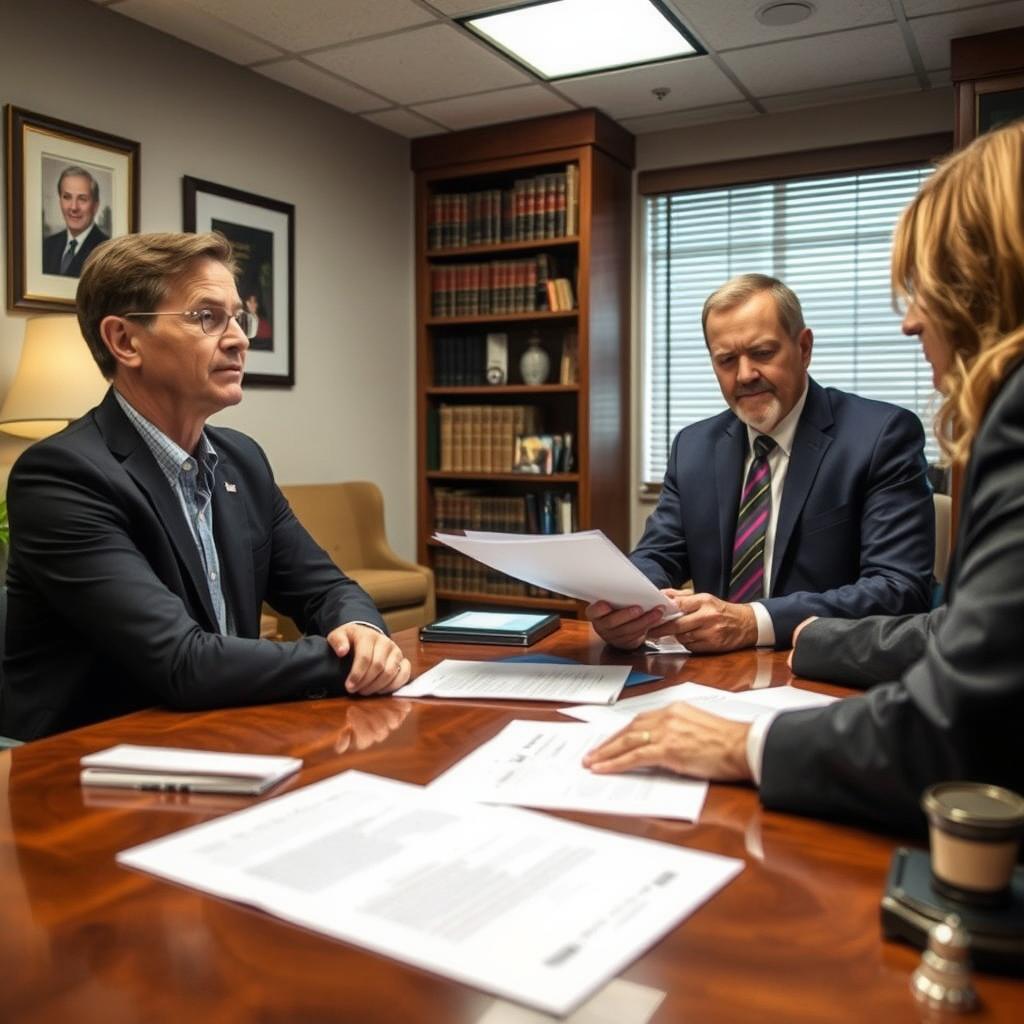
Legal Separation Lawyer King William County, VA
When you and your spouse decide to separate in King William County, Virginia law does not require court approval, but the separation must be documented and meet statutory requirements to serve as grounds for a later no-fault divorce. Without minor children, a six-month separation with a signed agreement is sufficient; with minor children, the separation must last at least one year. Mr. Sris, Owner and Founder of Law Offices Of SRIS, P.C., represents separating spouses in King William County, handling separation agreements and preparing for eventual divorce. Call (888) 437-7747 to request a consultation. Law Offices Of SRIS, P.C. – Advocacy Without Borders.
Separation Strategies for King William County Spouses
Separation in Virginia is not a court-ordered status; it is a factual living arrangement combined with intent to end the marriage. For King William County couples, the strategic choice is whether to negotiate a separation agreement early or litigate unresolved issues later. A separation agreement, also called a property settlement agreement, can resolve all financial and custodial issues—division of marital property, spousal support, child custody, and child support—at the time of separation. Once signed, it becomes the framework for an uncontested divorce, which can be filed after the required separation period has elapsed. Mr. Sris and his Of Counsel team have extensive experience drafting separation agreements that withstand judicial scrutiny, ensuring that your rights are protected from the outset and that the eventual divorce filing in King William County Circuit Court proceeds efficiently.
If the spouses cannot agree, a contested divorce may follow after separation. In that case, the court applies equitable distribution principles under Va. Code § 20-107.3 to divide marital assets and debts, and decides custody and support. Mr. Sris and his Of Counsel represent clients in contested proceedings, working toward favorable outcomes while advising on the costs and timeline that contested litigation entails.
What to Expect During a Legal Separation in King William County
Separation begins when spouses live apart with at least one party intending the separation to be permanent. In King William County, the process typically unfolds outside of court: an attorney helps draft a separation agreement covering property division, spousal support, and, if applicable, child custody and support. Both parties review the agreement, often with independent legal counsel, and once signed and notarized, it becomes a binding contract. The separation period then runs from the date of separation. During this time, either spouse may file for divorce after the statutory period has expired. If an emergency arises—for example, a need for temporary support or custody orders—a motion for pendente lite relief can be filed in the King William County Juvenile and Domestic Relations District Court or Circuit Court. Mr. Sris and his Of Counsel staff guide clients through each step, working to resolve matters without contested court proceedings whenever possible.
How Legal Separation Affects Your Rights in Virginia
Legal separation, while not a formal court status in Virginia, carries significant legal consequences. The date of separation marks the moment when the marital partnership is considered to have ended for purposes of equitable distribution; property acquired after that date is generally separate property, but proving the date and maintaining separate finances requires documentation. A separation agreement can fix spousal support obligations and property division terms, binding both parties. If one spouse engages in marital misconduct, such as adultery, after separation, it may influence fault-based divorce grounds. Equally important, a separation agreement can contain provisions regarding custody and visitation, which Virginia courts will enforce if they serve the best interests of the child. Mr. Sris and his Of Counsel help clients understand these consequences and draft separation agreements that anticipate future challenges.
About Mr. Sris and His Of Counsel Team
Mr. Sris, Owner and Founder of Law Offices Of SRIS, P.C., has practiced law since 1997. A former prosecutor, Mr. Sris brings a strategic perspective to family law matters, including separation agreements and contested divorces. He is admitted in Virginia, Maryland, the District of Columbia, New Jersey, and New York. Mr. Sris testified before the Virginia House Courts of Justice Committee in support of 2019 HB 635 (chief patron Del. David Bulova), reflecting his engagement with family law legislation. His Of Counsel team collectively brings over 120 years of combined legal experience. Results may vary. Mr. Sris and his Of Counsel have documented 4,739+ case results across all practice areas since 1997. In King William County, the firm has obtained favorable outcomes in all 7 documented matters.
Frequently Asked Questions
Do I need a lawyer to create a separation agreement in Virginia?
You are not required to have a lawyer to draft a separation agreement, but experienced legal guidance helps protect your rights. A separation agreement under Va. Code § 20-91(9)(b) must address property division, support, and, if applicable, custody. Improperly drafted terms can be unenforceable or cause unintended tax or support consequences. Mr. Sris and his Of Counsel draft comprehensive agreements that hold up in court.
How long do I have to be separated before I can file for divorce in King William County?
Under Virginia law, the separation period is six months if you have no minor children and have signed a separation agreement, or one year if you have minor children or no agreement. The separation must be continuous and with the intent to remain apart permanently. The divorce complaint is filed in the King William County Circuit Court after the required period has elapsed.
Is legal separation the same as divorce in Virginia?
Virginia does not recognize a separate legal separation proceeding; separation is a factual state that serves as a ground for no-fault divorce. There is no court order called “legal separation.” Instead, a separation agreement can be signed to resolve financial and custodial issues before filing for divorce. The divorce itself ends the marriage.
What if my spouse won’t sign a separation agreement?
If a spouse refuses to sign, you can still separate and later file for a contested divorce after meeting the one-year separation requirement. Without an agreement, the court will apply equitable distribution under Va. Code § 20-107.3 to divide assets and decide support. Mr. Sris and his Of Counsel can represent you in contested proceedings to protect your interests.
Does a separation agreement have to be filed with the court?
A separation agreement does not need to be filed with the court at the time of signing, but it must be attached when one spouse files for divorce. The agreement is a contract between the parties. Its enforceability depends on proper drafting and notarization. The agreement becomes part of the court record once incorporated into a divorce decree.
Can I date during my separation period in Virginia?
Dating during separation is not illegal, but it can create complications if adultery is raised as a fault ground for divorce. Virginia still recognizes adultery as a fault basis under Va. Code § 20-91(A)(1). An extramarital relationship after separation but before divorce may affect spousal support or property division. Speak with an attorney about your situation.
For official statutory text, see Virginia Code § 20-91 (Grounds for Divorce) and the Virginia Court System.
Request a Consultation
To request a consultation about a separation agreement or divorce in King William County, contact Law Offices Of SRIS, P.C. at (888) 437-7747. We serve clients from our Richmond location at 7400 Beaufont Springs Drive, Suite 300, Room 395, Richmond, VA 23225. By appointment only.
Attorney advertising. Prior results do not guarantee a similar outcome. Case results depend on a variety of factors unique to each case. Results may vary.