
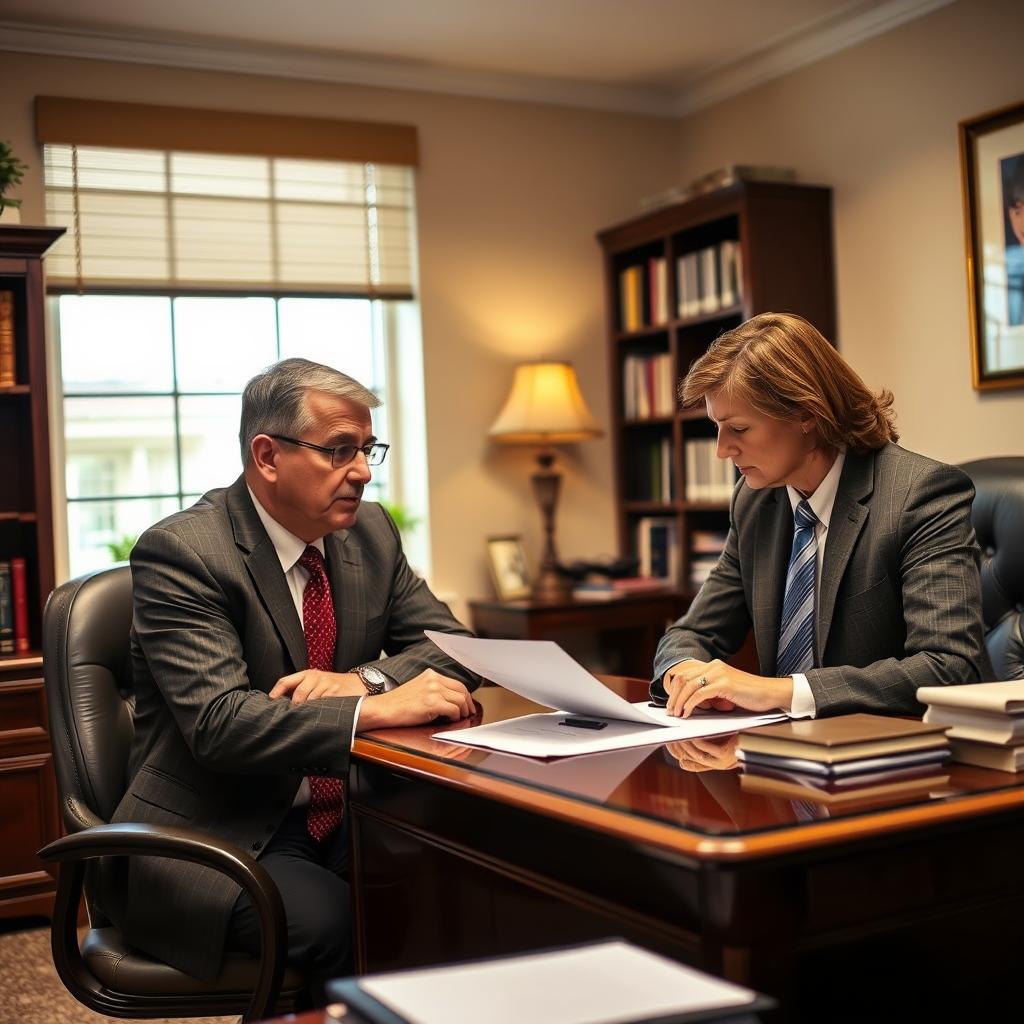
Marital Settlement Agreement Lawyer Fauquier County, VA
A marital settlement agreement—also called a property settlement agreement or separation agreement—resolves the division of property, spousal support, and often child-related issues when a marriage ends. It allows both spouses to work out terms together instead of leaving all decisions to a judge. Because Virginia is an equitable distribution state, understanding how Virginia Code § 20‑107.3 guides property division is important before signing any agreement. Law Offices Of SRIS, P.C. represents clients throughout Fauquier County, including Warrenton, New Baltimore, Bealeton, Marshall, and The Plains, in drafting, reviewing, and negotiating marital settlement agreements. Mr. Sris and his Of Counsel team combine extensive experience in Virginia family law with a careful, detail-oriented approach. To schedule a consultation about your marital settlement agreement, reach Law Offices Of SRIS, P.C. at (888) 437-7747. Law Offices Of SRIS, P.C. — Advocacy Without Borders.
Understanding Marital Settlement Agreements in Virginia
A marital settlement agreement is a written contract that settles all contested issues in a divorce. When both parties sign and the agreement is submitted to the Fauquier County Circuit Court, the judge may incorporate it into the final divorce decree. Virginia law, particularly Va. Code § 20‑109, permits such agreements to become enforceable court orders. The Fauquier County Circuit Court, located at 6 Court Street in Warrenton, has exclusive original jurisdiction over divorce and equitable distribution. The Juvenile and Domestic Relations District Court handles standalone custody, visitation, and support matters. An experienced family law attorney can help you understand how the terms you negotiate will interact with Virginia’s equitable distribution factors before you commit to a property division or spousal support arrangement.
One advantage of a marital settlement agreement is that it reduces conflict and uncertainty. Instead of litigating every issue at trial, you and your spouse can craft terms that fit your family. Even after an agreement is signed, however, the court will still review certain provisions—especially those involving children—for fairness. Mr. Sris and his Of Counsel bring practical knowledge of local court expectations to the negotiation process and work to ensure your agreement protects your long-term interests.
Frequently Asked Questions
What is a marital settlement agreement in Virginia?
A marital settlement agreement is a written contract that resolves property division, spousal support, and often custody and visitation in a divorce. Under Virginia law, the agreement can address all disputed issues and, once signed by both parties and submitted to the Fauquier County Circuit Court, it may be incorporated into the final divorce decree. The agreement must be entered into voluntarily and with full financial disclosure. An attorney can review the terms to help ensure they are fair and consistent with Virginia’s equitable distribution principles under Va. Code § 20‑107.3.
Do I need a lawyer to prepare a marital settlement agreement in Fauquier County?
You are not legally required to have a lawyer, but legal guidance helps ensure the agreement protects your rights and meets court requirements. A marital settlement agreement is a binding contract, and once a judge incorporates it into a divorce decree, it can be difficult to change. Mr. Sris and his Of Counsel can help you understand the tax, property, and support implications of your proposed terms, and can explain how local judges in the Fauquier County Circuit Court typically handle enforcement and modification issues. For guidance specific to your situation, reach Law Offices Of SRIS, P.C. at (888) 437-7747.
How does a marital settlement agreement affect divorce in Fauquier County?
A signed marital settlement agreement allows you to proceed with an uncontested divorce in Fauquier County. In Virginia, if you have no minor children and have been separated for six months with a written agreement, or if you have minor children and have been separated for one year, you may qualify for a no-fault divorce. The agreement resolves all issues ahead of the final hearing. The Fauquier County Circuit Court reviews the agreement for fairness and, if approved, enters the divorce decree incorporating its terms. This process is generally faster and less expensive than a fully contested trial.
What happens if my spouse violates our marital settlement agreement?
If your former spouse fails to comply with the agreement, you can ask the Fauquier County Circuit Court to enforce it. Because a marital settlement agreement that is incorporated into a divorce decree becomes a court order, violations can be addressed through contempt proceedings. The court may order compliance, award attorney’s fees, or impose other remedies. Mr. Sris and his Of Counsel have experience handling enforcement actions in Fauquier County and can explain the steps involved.
Can a marital settlement agreement be changed after the divorce is final?
Generally, property and spousal support terms in a marital settlement agreement cannot be changed after the divorce is final, but some child-related provisions can be modified. Property division provisions are usually non-modifiable unless the agreement itself allows for modification or both parties consent. Child custody and child support may be modified if there has been a material change in circumstances and modification serves the child’s best interests. An attorney can review your agreement and explain what flexibility exists under Virginia law.
What are the key benefits of a marital settlement agreement over litigation?
A marital settlement agreement gives you and your spouse more control over the outcome and often reduces the time, cost, and emotional strain of divorce. Instead of a judge making decisions after trial, you can negotiate terms that work for your family. The process also tends to be more private, as the details are not aired in a public courtroom. Mr. Sris and his Of Counsel can help you evaluate whether a negotiated agreement is appropriate for your situation.
How long does it usually take to negotiate a marital settlement agreement?
The time required depends on the complexity of your assets, the level of cooperation between spouses, and the court’s calendar. Some couples reach an agreement after a few productive sessions; others need additional time for valuation of business interests, retirement accounts, or real estate. In Fauquier County, the court schedule also influences how soon a final hearing can be set after the agreement is signed. For a realistic timeline based on your specific circumstances, contact Law Offices Of SRIS, P.C. at (888) 437-7747.
Is a marital settlement agreement enforceable in Virginia?
Yes, a properly executed marital settlement agreement is a binding contract under Virginia law and, when incorporated into a divorce decree, becomes an enforceable court order. To be valid, the agreement must be in writing, signed by both parties, and entered into without fraud or duress. The Fauquier County Circuit Court will review the agreement to ensure it is not unconscionable. If the court finds it fair, the terms are enforceable through contempt or other legal remedies.
What should I bring to my consultation about a marital settlement agreement?
Bring a list of your assets and debts, recent pay stubs, tax returns, and any existing prenuptial or separation agreements. Also, note any questions you have about property division, spousal support, or child-related issues. The more information you provide, the better Mr. Sris and his Of Counsel can assess your case. To schedule a consultation, reach Law Offices Of SRIS, P.C. at (888) 437-7747.
What role does a marital settlement agreement play in equitable distribution?
In Virginia, equitable distribution means marital property is divided fairly—not necessarily equally—based on the factors listed in Va. Code § 20‑107.3. A marital settlement agreement allows you and your spouse to decide how to classify and divide property yourselves rather than letting the judge apply those factors. The agreement can address marital and separate property, debts, and the allocation of retirement accounts. Mr. Sris and his Of Counsel can help you evaluate whether your proposed division aligns with what a court would likely order.
About Mr. Sris and His Of Counsel Team
Mr. Sris, Owner and Founder of Law Offices Of SRIS, P.C., has concentrated his practice on Virginia family law since 1997. He is a former prosecutor whose experience in the courtroom informs his approach to negotiation and litigation. Mr. Sris testified before the Virginia House Courts of Justice Committee in support of 2019 HB 635 (chief patron Del. David Bulova), which updated the equitable distribution statute. Alongside his Of Counsel team, Mr. Sris brings over 120 years of combined legal experience and a record of 4,739+ documented firm-wide results to marital settlement agreement matters. Results may vary. When you work with the firm, you benefit from a collaborative effort that draws on extensive familiarity with Fauquier County court procedures and Virginia family law.
Related Family Law Representation in Northern Virginia
Law Offices Of SRIS, P.C. handles family law matters throughout the region. You may also find the following pages helpful:
- Fairfax County family law representation
- Prince William County family law lawyer
- Stafford County family law attorney
- Loudoun County divorce and family law
- Arlington County family law matters
Primary legal resources: Virginia Code Title 20 (Domestic Relations) · Fauquier County Circuit Court
Attorney advertising. Prior results do not guarantee a similar outcome.
Case results depend on a variety of factors unique to each case.