
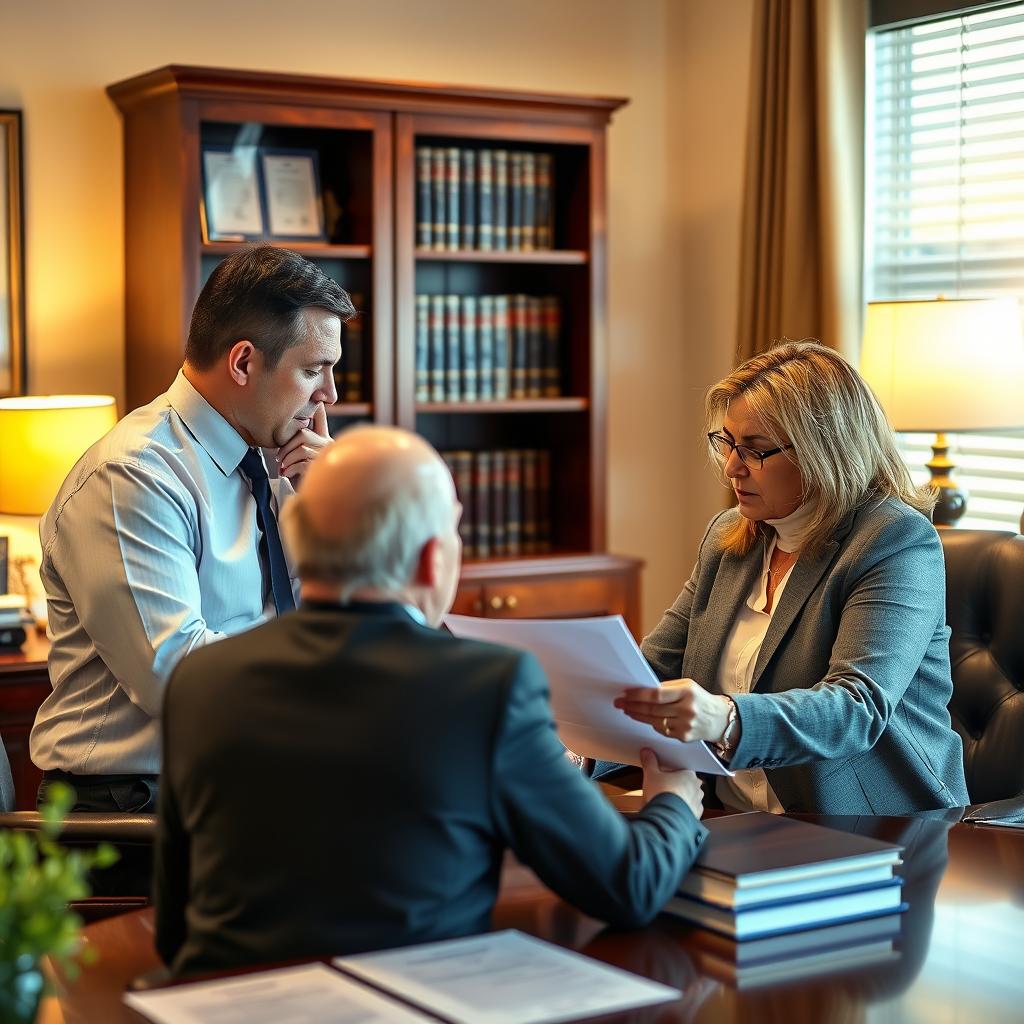
Marital Settlement Agreement Lawyer Isle of Wight County, VA
In Isle of Wight County, a marital settlement agreement—often called a separation agreement or property settlement agreement—is a written contract between spouses that resolves all issues arising from their separation, including division of property, spousal support, and, when children are involved, custody and child support. These agreements are governed by Virginia Code § 20‑109 and are subject to the equitable distribution framework. When a couple in Smithfield, Windsor, or Carrollton decides to end their marriage, a carefully prepared marital settlement agreement can avoid the cost and uncertainty of litigation while protecting each party’s interests. The Isle of Wight County Circuit Court, located at 17122 Monument Circle, Suite A, reviews and incorporates such agreements into the final divorce decree, provided they are fair and voluntarily executed. Mr. Sris and his Of Counsel team at Law Offices Of SRIS, P.C. work with clients throughout Isle of Wight County to negotiate, draft, and finalize marital settlement agreements that address unique family and financial circumstances. For a consultation, call (888) 437-7747. Law Offices Of SRIS, P.C. — Advocacy Without Borders.
What Marital Settlement Agreements Mean in Isle of Wight County
Virginia is an equitable distribution state, meaning that marital property is divided fairly—though not necessarily equally—. A marital settlement agreement allows the parties to bypass the court’s discretionary division and craft their own terms. In Isle of Wight County, such an agreement can be filed with the divorce complaint in the Circuit Court, and if it is found to be conscionable and properly signed, the judge will incorporate it into the final decree. This process covers the equitable distribution of all marital assets and debts, including real estate, retirement accounts, business interests, and personal property. The agreement may also address spousal support, health insurance, and tax obligations. When minor children are involved, the parties can include mutually agreed‑upon custody, visitation, and child support provisions, although the court retains jurisdiction to review those provisions for the best interests of the child under Va. Code § 20‑124.3.
Isle of Wight County’s proximity to Suffolk and the Hampton Roads area means that many families have commuter lifestyles, multi‑state property, or business interests that require careful valuation and tax planning within the agreement. Whether a spouse owns a farm, a family business in Smithfield, or retirement assets accumulated over a career at the shipyard, the agreement must reflect a full and accurate disclosure of all assets. Our Richmond Location routinely handles these complex marital estates, and our attorneys are experienced in working with forensic accountants and business valuation attorneys when high‑value assets are at stake.
How Mr. Sris and His Of Counsel Handle Marital Settlement Agreement Cases
Mr. Sris and his Of Counsel approach every marital settlement agreement matter with the understanding that the agreement will define the financial and custodial landscape for years to come. The process begins with a detailed confidential discussion of the client’s goals, the marital balance sheet, and any immediate concerns such as temporary support or protective orders. If the other spouse is represented, our team negotiates directly with opposing counsel to reach mutually acceptable terms. When the parties are cooperative, a comprehensive settlement can often be completed without ever stepping into a courtroom. If negotiations stall, we are prepared to litigate the disputed issues at the Isle of Wight County Circuit Court while keeping the door open to settlement at any stage.
Virginia law requires that marital settlement agreements be in writing and signed by both parties. The agreement is then presented to the Circuit Court at the time of the divorce hearing, along with the testimony of at least one corroborating witness. Our attorneys guide clients through every step—from initial term sheet to final notarized document—ensuring that all statutory requirements are satisfied and that the agreement holds up under judicial scrutiny. Throughout the process, we provide clear explanations of the legal and practical consequences of each provision, including the tax implications of property transfers and the modifiability of spousal support terms.
About Mr. Sris and His Of Counsel Team
Mr. Sris, Owner and Founder of Law Offices Of SRIS, P.C., has practiced family law in Virginia since founding the firm in 1997. He is a former prosecutor, and his experience in the courtroom gives him a thorough understanding of how evidence and arguments are received by judges—a valuable perspective when a marital settlement agreement must be defended or enforced. Mr. Sris testified before the Virginia House Courts of Justice Committee in support of 2019 HB 635 (chief patron Del. David Bulova), which refined the equitable distribution provisions of Va. Code § 20‑107.3(g). He is admitted to practice in Virginia, Maryland, the District of Columbia, New Jersey, and New York.
Mr. Sris’s Of Counsel team includes attorneys with extensive experience in family law, complex asset division, and trial advocacy. Together they offer over 120 years of combined legal experience, backed by 4,739+ documented firm-wide results. Results may vary. Like all attorneys at the firm, every Of Counsel is engaged through Excella and operates without the traditional associate or partner structure, which allows the firm to match each case with the most appropriate experienced lawyer while Mr. Sris retains overall management of the matter. Collectively, the team has documented thousands of case results across multiple practice areas and jurisdictions—a track record that reflects a sustained commitment to careful preparation and client‑focused representation.
Frequently Asked Questions
What is a marital settlement agreement in Virginia?
A marital settlement agreement is a written contract between spouses that resolves all issues arising from their separation, including property division, spousal support, and, if applicable, child custody and support. In Virginia, it is also called a separation agreement or property settlement agreement. Once signed and notarized, it becomes a binding contract. In an uncontested divorce, the court will incorporate the agreement into the final divorce decree, making its terms enforceable by contempt powers if either party violates them.
Do I need a lawyer to draft a marital settlement agreement in Isle of Wight County?
While not legally required, hiring an experienced family law attorney to draft or review a marital settlement agreement helps ensure the agreement is fair, comprehensive, and legally enforceable. Virginia courts will not accept an agreement that is unconscionable or the product of fraud, duress, or overreaching. An attorney can identify hidden assets, properly value retirement or business interests, and explain how the agreement may affect your future financial and parental rights.
Can a marital settlement agreement be changed after it is filed?
Generally, once a marital settlement agreement is incorporated into a final divorce decree, its property division terms cannot be modified unless both parties agree in writing or the court finds a basis to set it aside, such as fraud or mutual mistake. Provisions for child custody and support, however, remain modifiable based on a material change in circumstances and the best interests of the child.
How does equitable distribution affect a marital settlement agreement?
Equitable distribution requires the court to divide marital assets and debts fairly, but a valid settlement agreement allows spouses to set their own division terms instead of relying on the judge’s discretion. The agreement must still be conscionable, but it can allocate assets in a way that suits the family’s unique circumstances—such as one spouse keeping the family home in exchange for a larger share of retirement funds. Our attorneys work to craft agreements that withstand later courtroom challenges.
What if my spouse does not want to sign an agreement?
If your spouse refuses to sign, you cannot force an agreement; the matter will proceed as a contested divorce, and a judge will decide property division, spousal support, and custody after a trial. Even during contested litigation, settlement negotiations can continue and often lead to an agreement before the final hearing. Mr. Sris and his Of Counsel are prepared to advocate for your interests in court if a voluntary settlement cannot be reached.
Is a marital settlement agreement the same as a prenuptial agreement?
No. A prenuptial agreement is signed before marriage, while a marital settlement agreement is signed during or after separation in anticipation of divorce. Both are contracts under Virginia’s Premarital Agreement Act (Va. Code § 20‑147 et seq.), but a marital settlement agreement deals with the actual division of assets and support at the time of dissolution, while a prenup sets the rules in advance of marriage.
Our firm also assists with family law matters across Virginia. See our practice in Fairfax County, Fairfax City, Falls Church, and Prince William County.
Attorney advertising. Prior results do not guarantee a similar outcome. Results may vary. Law Offices Of SRIS, P.C. serves clients by appointment at 7400 Beaufont Springs Drive, Suite 300, Room 395, Richmond, VA 23225. Reach our location at (888) 437-7747.
Case results depend on a variety of factors unique to each case.