
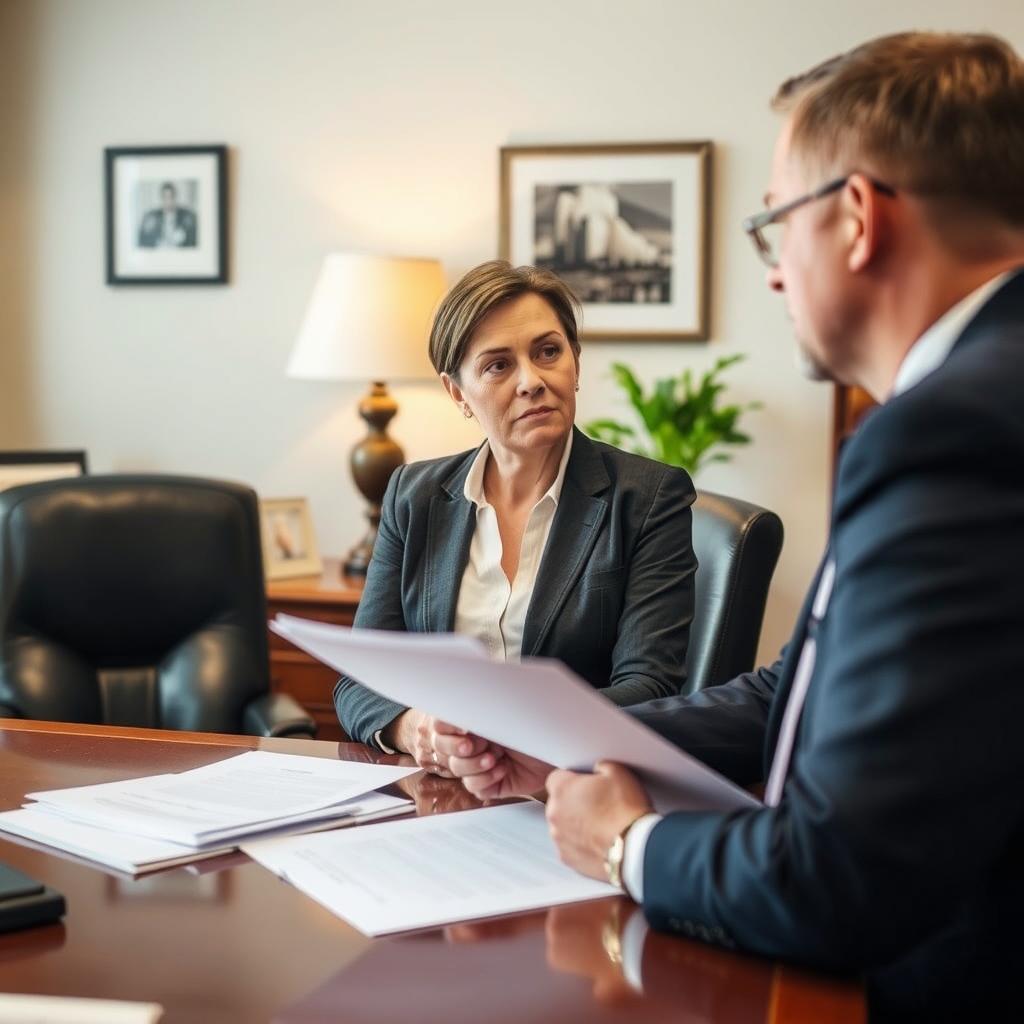
Norfolk Military Divorce Lawyer Fluvanna County, VA
If you are a service member or military spouse seeking a divorce in Fluvanna County, the interaction of Virginia family law with federal military statutes requires careful attention. Law Offices Of SRIS, P.C. Concentrates in military divorce matters, representing clients stationed at Norfolk-area installations and their spouses who file or respond in Fluvanna County courts. Our firm understands the unique issues that arise — from jurisdiction when one spouse is stationed in Norfolk while the family resides in Fluvanna County, to the division of military pensions under the Uniformed Services Former Spouses’ Protection Act and the application of the Servicemembers Civil Relief Act. Mr. Sris and his Of Counsel team work to protect your interests through every stage of the proceeding, whether the matter is uncontested or involves complex property division. Reach our Shenandoah Location at (888) 437-7747 to request a consultation. Law Offices Of SRIS, P.C. – Advocacy Without Borders.
What a Norfolk Military Divorce Lawyer Addresses in Fluvanna County
A military divorce is a dissolution of marriage where one or both spouses are active-duty, reserve, or retired members of the armed forces. While Virginia law provides the grounds and procedures, federal law adds rights and protections. In Fluvanna County, cases are filed in the Fluvanna County Circuit Court, which has exclusive jurisdiction over divorce and equitable distribution. The filing fee for a divorce complaint varies, and additional costs apply for service of process and motions. Our firm assists with every aspect, from establishing Virginia residency — a six-month domiciliary requirement under Va. Code § 20-97 — to presenting the uncontested divorce hearing where a corroborating witness is required. When military retirement benefits are at stake, the division follows Virginia’s equitable distribution factors under Va. Code § 20-107.3, and the court must consider the ten-year divisible portion rule for military pensions.
Because service members may be deployed or stationed elsewhere, jurisdictional questions can be complex. The Servicemembers Civil Relief Act (SCRA) allows a service member to stay proceedings if military duties materially affect the ability to participate. Mr. Sris and his Of Counsel work with clients to navigate these protections, ensuring that the divorce moves forward fairly while respecting the service member’s obligations. Whether the marriage involved a service member based at Naval Station Norfolk but the civilian spouse lives in Fluvanna County, or both parties now reside locally, the firm builds a strategy that addresses both Virginia’s statutory framework and the military-specific elements of the case.
Frequently Asked Questions
What is a military divorce and how is it different from a civilian divorce?
A military divorce is a dissolution of marriage where at least one spouse is an active-duty, reserve, or retired member of the armed forces, and it differs from a civilian divorce primarily because federal laws such as the Servicemembers Civil Relief Act (SCRA) and the Uniformed Services Former Spouses’ Protection Act (USFSPA) add specific rights and procedures. In a Virginia military divorce, the state’s equitable distribution rules still apply, but the division of military retired pay must comply with the USFSPA’s ten-year calculation for direct payment. Additionally, the SCRA can delay proceedings if the service member’s duties prevent participation. These federal protections do not exist in a civilian divorce, making legal guidance important when military benefits and deployment schedules are involved.
How does the Servicemembers Civil Relief Act affect divorce proceedings in Fluvanna County?
The SCRA allows an active-duty service member to request a stay of divorce proceedings for at least 90 days if the military obligations materially affect the ability to appear or respond, and the court must grant the stay unless good cause is shown. The stay can be extended for additional periods, giving the member time to participate meaningfully. In Fluvanna County Circuit Court, a party can file a simple verified statement stating military service and the need for a delay. This protection does not permanently halt the case but ensures that no default judgment is entered against a service member who cannot attend due to deployment. The civilian spouse can still move forward if the member consents or fails to assert rights.
Where is a military divorce filed if the service member is stationed in Norfolk but the spouse lives in Fluvanna County?
A divorce may be filed in Fluvanna County Circuit Court if either spouse meets Virginia’s six-month domiciliary residency requirement and the filing spouse resides in or has a sufficient connection to the county. The civilian spouse living in Fluvanna County can file in that county as long as the Virginia residency requirement is satisfied. The service member’s stationing in Norfolk does not preclude Fluvanna County jurisdiction; venue is proper where either party resides. If the service member is stationed outside Virginia but maintains Virginia as the legal domicile, the case may still be heard in Fluvanna County. Our firm evaluates residency and venue to choose the proper forum.
How are military pensions divided in a Virginia military divorce?
Military retired pay is treated as marital property subject to Virginia’s equitable distribution statute, Va. Code § 20-107.3, but the actual division of the pension must follow the USFSPA, which requires that the marriage lasted at least ten years overlapping the service member’s ten years of creditable military service before the court can order direct payment from the Defense Finance and Accounting Service (DFAS). If the ten-year overlap is not met, the non-military spouse may still receive a share of the pension, but the payment must be made by the retired service member rather than through DFAS. Our firm works with financial attorneys to value the marital portion of the pension and to draft the necessary military qualifying court orders to effectuate the division.
How long does a military divorce take in Fluvanna County?
A military divorce in Fluvanna County typically takes between 2 and 4 months for an uncontested case with a signed separation agreement, while a contested divorce involving custody, support, or property disputes can take 9 to 18 months or longer. The mandatory separation period under Virginia law — one year for couples with minor children and six months without children if a separation agreement is in place — must be completed before filing. If the SCRA stay is invoked, the timeline may be extended. Complex cases with business valuation, retirement account division, or contested custody can take additional time. The Fluvanna County Circuit Court schedules hearings based on its calendar, and COVID-related backlogs may affect dates.
Do I need a lawyer for a military divorce in Virginia?
You are not legally required to hire a lawyer for a military divorce in Virginia, but the federal and state rules governing military benefits, the SCRA, and equitable distribution make proceeding without counsel risky. Mistakes in the military pension division or failure to protect SCRA rights can result in an unfair settlement or future litigation. An experienced attorney can ensure that the separation agreement or final decree properly addresses military retirement, survivor benefits, and the effect of deployment on custody arrangements. Law Offices Of SRIS, P.C. represents both service members and military spouses, focusing on practical outcomes.
What are the residency requirements for filing divorce in Fluvanna County if one spouse is military?
Virginia requires that at least one party be an actual bona fide resident and domiciliary of the Commonwealth for at least six months before filing, as stated in Va. Code § 20-97. A service member who maintains a Virginia legal domicile — even if stationed elsewhere — fulfills that requirement. The civilian spouse living in Fluvanna County also meets the requirement after six months of residence. If the service member is stationed in another state and has not changed the legal domicile to Virginia, additional analysis is needed. The filing then takes place in the Virginia county where the civilian spouse resides, provided the six-month period has elapsed.
Can a divorce proceed if the military spouse is deployed or stationed overseas?
Yes, a divorce can proceed even if the military spouse is deployed, but the SCRA may allow a temporary stay of proceedings if the service member’s duties prevent meaningful participation. If the non-military spouse files in Fluvanna County, the court will require proper service of process, which can be accomplished through the military chain of command or international service under the Hague Service Convention if the member is overseas. The SCRA stay is not an automatic bar; the service member must request it within 90 days of the application. If no stay is requested or the member consents to proceed, the case can be heard in the member’s absence, with the court considering the spouse’s evidence.
What factors does the court consider for child custody when one parent is in the military?
A Virginia court applies the same ten best-interest factors under Va. Code § 20-124.3 to all custody determinations, but a parent’s military service — including deployment, training schedules, and frequent relocations — is factored into the analysis of the child’s relationship with each parent and each parent’s ability to maintain a close relationship. The court may consider the military parent’s willingness to maintain contact through technology during absences. Deployment alone does not bar a parent from obtaining primary or shared custody; the court looks at the overall stability the parent can provide when not deployed. Often, a parenting plan with detailed communication and visitation provisions addresses the military parent’s schedule.
How is child support calculated when a parent is in the military?
Child support in Virginia is calculated using the statutory guidelines based on the parents’ combined gross income, and a service member’s gross income includes base pay, Basic Allowance for Housing (BAH), Basic Allowance for Subsistence (BAS), and other entitlements that are subject to federal taxation. The court may also impute income if the parent voluntarily reduces earnings. BAH and BAS are treated as income for support purposes even though they are non-taxable allowances. The Fluvanna County Juvenile and Domestic Relations District Court has jurisdiction over standalone child support matters, while the Circuit Court addresses support within the divorce. Our firm works to ensure that all military pay components are accurately accounted for in the support calculation.
About Mr. Sris and His Of Counsel Team
Mr. Sris, Owner and Founder of Law Offices Of SRIS, P.C., has practiced law since 1997 and is admitted in Virginia, Maryland, the District of Columbia, New Jersey, and New York. A former prosecutor, Mr. Sris brings firsthand trial experience to every family law matter. He testified before the Virginia House Courts of Justice Committee in support of 2019 HB 635 (chief patron Del. David Bulova). Mr. Sris and his Of Counsel team bring over 120 years of combined legal experience and have documented over 4,739 case results across all practice areas. Results may vary. The firm’s Shenandoah Location, at 505 N Main St, Suite 103, Woodstock, VA 22664, serves clients throughout Fluvanna County. Reach us at (888) 437-7747 to request a consultation.
Attorney advertising. Prior results do not guarantee a similar outcome. Results may vary.
Case results depend on a variety of factors unique to each case.