
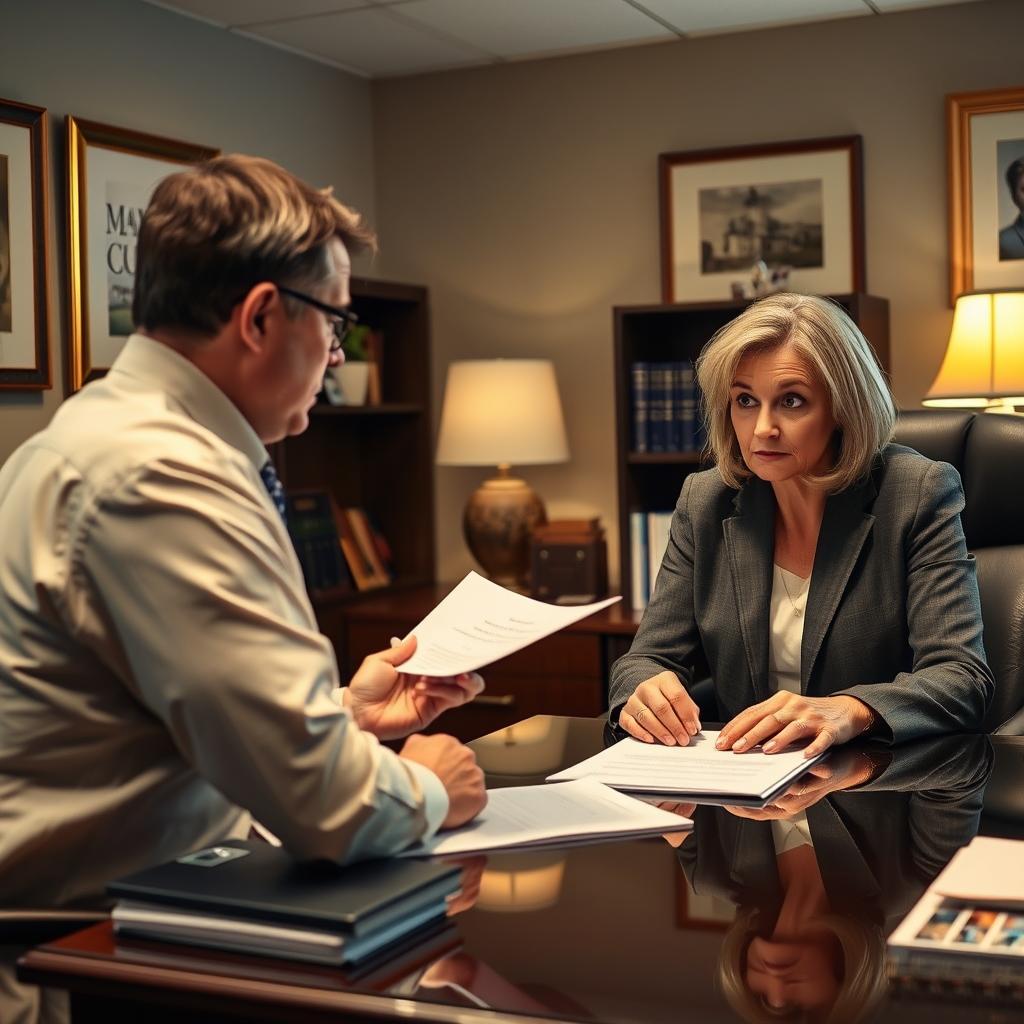
Postnup Lawyer Fluvanna County, VA
You and your spouse have built a life together in Fluvanna County—perhaps on a piece of land near Lake Monticello or in a home along the James River. Your financial picture has changed since the wedding: one of you started a business, received an inheritance, or a career shift altered the balance. You want certainty, not a fight later. That is why married couples turn to postnuptial agreements. A postnuptial agreement, or postnup, is a contract signed after marriage that defines how property, debt, and sometimes spousal support will be handled if the marriage ends. It is not planning for divorce; it is planning for clarity. Law Offices Of SRIS, P.C. helps Fluvanna County couples draft enforceable postnuptial agreements under Virginia law. If you and your spouse are ready to define your financial future together, reach our firm at (888) 437-7747 to schedule a consultation. Law Offices Of SRIS, P.C. – Advocacy Without Borders.
Strategy Options: What a Postnuptial Agreement Can Address
A postnuptial agreement is a flexible tool. It can identify specific property as separate rather than marital, protecting assets you each brought into the marriage or acquired individually. It can address responsibility for debts, outline terms for spousal support, and even set provisions for the inheritance rights of children from prior relationships. For couples who already have a prenuptial agreement, a postnup can amend or supplement its terms as circumstances evolve.
The strategic choice depends on your goal. If you and your spouse simply want to confirm that separate property remains separate, a straightforward classification agreement may suffice. If you own a business and want to shield it from division under Virginia’s equitable distribution statute, a more detailed agreement is appropriate. Mr. Sris and the firm’s Of Counsel attorneys work with you to identify the objective and draft language that reflects the statutory requirements under the Virginia Premarital Agreement Act, Va. Code § 20‑147 et seq., so the agreement has the trusted chance of being enforced by a Fluvanna County Circuit Court judge if it is ever challenged.
What To Expect When You Pursue a Postnuptial Agreement in Fluvanna County
The process begins with full financial disclosure. Virginia law requires that both spouses voluntarily enter into the agreement with a fair and reasonable understanding of each other’s assets, liabilities, and income. Without disclosure, the agreement may be set aside. You and your spouse will exchange financial statements, and each of you should have the opportunity to consult with independent counsel. While both of you can be represented by the same firm under certain circumstances with informed consent, having separate legal advice strengthens enforceability.
After the agreement is drafted and negotiated, it is executed with the formalities of a contract. There is no separate court filing or approval process. The document rests in your records and is presented to the court only if a divorce occurs. In Fluvanna County, the Circuit Court—located at 72 Main Street, Suite B, Palmyra—hears divorce and equitable distribution matters. Should a dispute about the validity of a postnuptial agreement arise, the judge will examine whether the agreement was entered into freely, with adequate disclosure, and without unconscionability. The timeline for drafting a postnup varies based on the complexity of your finances, but the firm works to keep the process efficient while protecting your interests.
The Stakes: What Happens Without a Postnuptial Agreement
Virginia is an equitable distribution state. If you divorce without a valid marital agreement, the court will classify all property as marital, separate, or hybrid under Va. Code § 20‑107.3. Marital property is divided equitably, which is not necessarily equally, after considering eleven statutory factors such as the duration of the marriage, each spouse’s contributions, and the circumstances surrounding the dissolution. Separate property—assets owned before the marriage or acquired by gift or inheritance—is generally not subject to division. However, the line between marital and separate can blur, especially if separate funds were commingled or used to improve marital assets.
Without a postnuptial agreement, a spouse who started a business during the marriage may face a claim for a share of its value, even if the other spouse did not actively contribute to the enterprise. Debt division can also surprise you. The court may assign debts to one party while leaving the other holding joint obligations. A well-drafted postnuptial agreement prevents these uncertainties. It also reduces litigation costs and conflict if the marriage ends. Law Offices Of SRIS, P.C. represents clients in Fluvanna County who want to take control of their financial future rather than leave it to a judge’s discretion.
Attorney Credentials: Why Fluvanna County Families Trust Law Offices Of SRIS, P.C.
Mr. Sris, Owner and Founder of Law Offices Of SRIS, P.C., has been practicing since 1997. A former prosecutor, he understands how contested matters unfold and brings that perspective to family law negotiations and litigation. He testified before the Virginia House Courts of Justice Committee in support of 2019 HB 635 (chief patron Del. David Bulova), a bill that affected equitable distribution procedure. Mr. Sris and the firm’s Of Counsel attorneys appear in Fluvanna County Circuit Court and the Juvenile and Domestic Relations District Court on a range of family law matters. The firm has served clients throughout Virginia, Maryland, the District of Columbia, New Jersey, and New York.
For a more detailed statutory overview of postnuptial agreements under the Virginia Premarital Agreement Act, visit our full guide at srislawyer.com.
Law Offices Of SRIS, P.C. brings extensive combined legal experience between Mr. Sris and his Of Counsel. The team works collaboratively to address each client’s unique circumstances. When you reach our firm, you gain the attention of attorneys who concentrate on family law and who are familiar with the procedures and expectations of the Sixteenth Judicial District. Results may vary.
Frequently Asked Questions About Postnuptial Agreements in Fluvanna County
Are postnuptial agreements enforceable in Virginia?
Yes, Virginia courts enforce postnuptial agreements that are entered into voluntarily, with full financial disclosure, and without unconscionability. The Virginia Premarital Agreement Act, Va. Code § 20‑147 et seq., applies equally to agreements made after marriage. If the agreement meets the statutory requirements and both spouses had the opportunity to consult legal counsel, a Fluvanna County Circuit Court judge will typically uphold it. However, provisions concerning child custody or child support are not binding; the court always retains authority to decide what serves a child’s best interests.
Can we still live at the same address while drafting a postnup?
Yes. A postnuptial agreement does not require separation. Virginia’s no-fault divorce law requires a period of living separate and apart, but that is unrelated to a postnup. You and your spouse continue your married life while negotiating the agreement. The arrangement is purely financial and does not signal marital discord.
What makes a postnuptial agreement invalid in Fluvanna County?
A postnup may be set aside if it was signed under duress, fraud, or if one spouse did not adequately disclose assets and debts. The court will also look for unconscionability at the time of execution—whether the agreement was so one-sided that no reasonable person would have signed it without proper disclosure. To avoid these risks, both parties should provide complete financial statements and each should have the chance to review the agreement with separate legal counsel.
Does a postnuptial agreement cover spousal support?
Yes, a postnuptial agreement can limit, waive, or define spousal support, provided the waiver is not unconscionable and both spouses were represented by independent counsel or expressly waived that right in writing. The agreement can specify a lump sum, a set monthly amount, or no support at all. If circumstances change drastically—such as a disability—the court may still consider the fairness of the provision, but a well-drafted agreement will generally be honored.
How long does it take to get a postnuptial agreement completed?
The timeline varies depending on the complexity of your financial situation and the level of agreement between you and your spouse. In straightforward cases where both spouses agree on asset classification and there are few assets to list, the process can be finished in a matter of weeks. When a business valuation is needed or negotiations take time, it may take longer. The court is not involved in drafting; only you and your attorneys control the pace.
If I already have a prenuptial agreement, do I still need a postnup?
A postnuptial agreement can amend, supplement, or replace a prenuptial agreement if your circumstances have changed. Perhaps you sold a premarital asset and used the proceeds to buy a home in your joint names, or maybe a prenup did not address a business you started after the wedding. A postnup allows you to update the terms without waiting for a divorce to test the earlier document.
To discuss how a postnuptial agreement can protect your family’s financial future, contact Law Offices Of SRIS, P.C. at (888) 437-7747. Consultations are available by appointment.
Law Offices Of SRIS, P.C.
505 N Main St, Suite 103, Woodstock, VA 22664
(888) 437-7747
Attorney advertising. Prior results do not guarantee a similar outcome.
Results may vary.
Case results depend on a variety of factors unique to each case.