
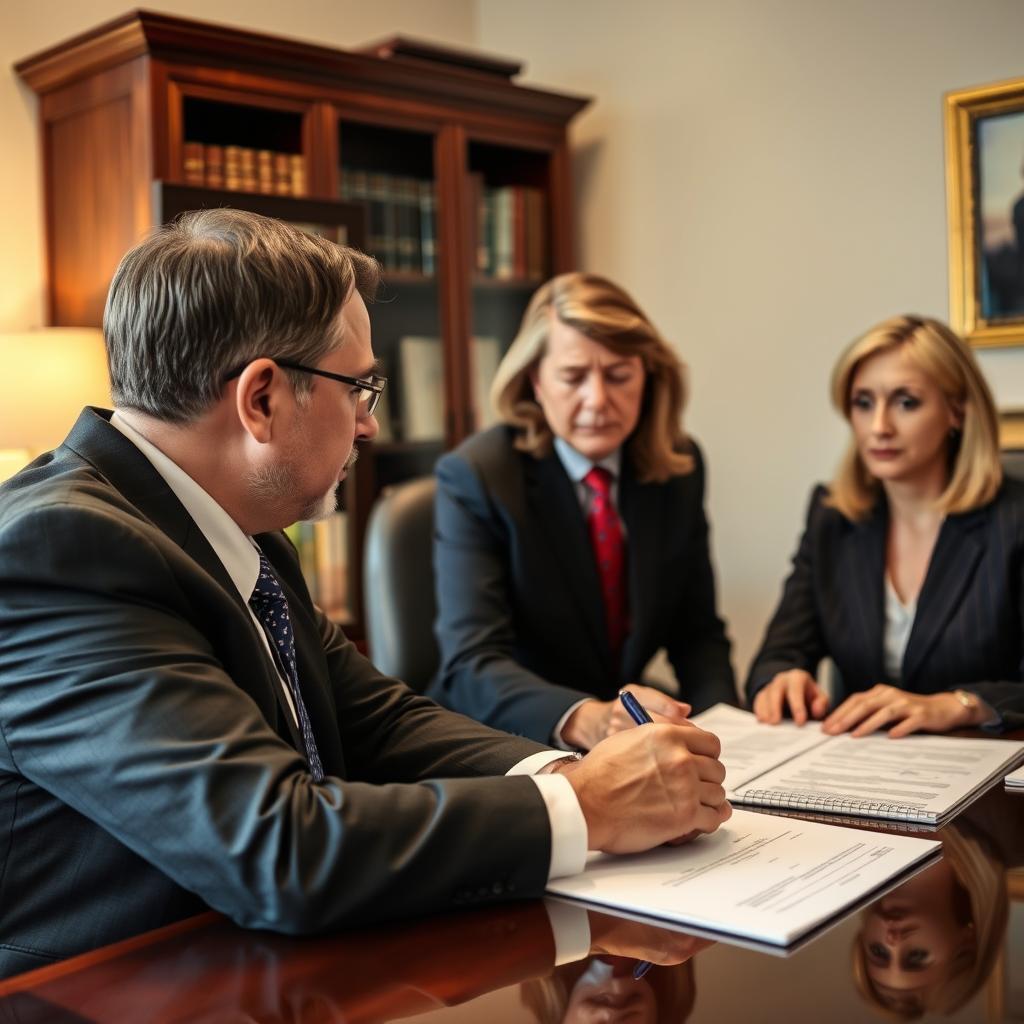
Property Settlement Lawyer Fauquier County, VA
After years of marriage, you and your spouse have decided to separate. Like many families in Fauquier County, your life together has been built around a shared home in Warrenton, retirement accounts accumulated over decades, perhaps a small business, and vehicles you both rely on. Now those assets must be divided, and the outcome will shape your financial future. In Virginia, that division is not a simple 50/50 split but an equitable distribution under Va. Code § 20‑107.3, where a judge weighs numerous factors to decide what is fair. Negotiating a property settlement agreement can avoid a lengthy court battle, but the financial stakes are high, and getting the numbers right matters. Mr. Sris, Owner and Founder of Law Offices Of SRIS, P.C., and his Of Counsel team have guided clients through property division in Fauquier County for nearly three decades. To request a consultation about your situation, reach Law Offices Of SRIS, P.C. at (888) 437‑7747. Law Offices Of SRIS, P.C. – Advocacy Without Borders.
What Property Settlement Means in Fauquier County, Virginia
In Fauquier County, property settlement is the process of classifying, valuing, and dividing a couple’s assets when a marriage ends. Virginia is an equitable distribution state, so marital property is divided fairly but not necessarily equally. The Fauquier County Circuit Court at 6 Court Street, Warrenton, has exclusive jurisdiction over divorce and equitable distribution. Under Va. Code § 20‑107.3, the court considers 11 factors—including each spouse’s contributions, the duration of the marriage, and the circumstances that led to the divorce—to determine a distribution that is equitable in the specific case. Separate property, such as an inheritance or a gift received individually, generally remains with the owning spouse and is not subject to division.
A property settlement agreement (also called a separation agreement) is a written contract signed by both spouses that resolves all financial issues—who keeps the house, how retirement accounts are split, whether spousal support will be paid, and how debts are handled. Because Fauquier County Circuit Court accepts a properly drafted agreement, a settlement can allow the divorce to proceed on an uncontested basis, often saving substantial time and expense. Even when the parties have a general understanding of how they want to divide things, the complexity of appraising a family business, determining the marital share of a pension plan, or addressing tax implications makes the advice of an experienced attorney critical. Mr. Sris and his Of Counsel team work with forensic accountants and business valuators as needed to ensure that property is identified and valued correctly before any agreement is signed.
How Mr. Sris and His Of Counsel Handle Property Settlement Cases
Mr. Sris and the firm’s Of Counsel attorneys approach property settlement with a combination of negotiation skill and courtroom readiness. They first conduct a thorough inventory of all assets and debts—real estate, bank accounts, investment portfolios, business interests, retirement plans, and personal property—to establish the marital estate. They then evaluate whether any property is separate or hybrid (partially marital) under Virginia law and analyze the statutory factors that a Fauquier County judge would apply if the case went to trial. This detailed preparation often strengthens the client’s position during settlement negotiations because the other side sees that the financial picture is fully understood and a trial would not be a surprise.
Many property settlement disputes in Fauquier County are resolved through negotiation and the preparation of a comprehensive separation agreement. Mr. Sris and his Of Counsel team draft agreements that anticipate future contingencies—such as the sale of the marital residence, refinancing obligations, and the division of deferred compensation plans—so that the document holds up over time. When an agreement cannot be reached, they are prepared to litigate the matter in the Fauquier County Circuit Court, presenting evidence of valuation, tracing separate property contributions, and advocating for an equitable distribution under the 11‑factor test. Whether the matter settles or goes before a judge, the goal is a workable division that positions the client for a stable financial future.
About Mr. Sris and His Of Counsel Team
Mr. Sris, Owner and Founder of Law Offices Of SRIS, P.C., has concentrated his practice on family law since 1997. He brings a former prosecutor’s perspective to property settlement negotiations, having observed how financial disputes play out under the scrutiny of trial. Mr. Sris testified before the Virginia House Courts of Justice Committee in support of 2019 HB 635 (chief patron Del. David Bulova). This legislative involvement reflects a deep familiarity with Virginia’s equitable distribution statute. Mr. Sris is admitted to practice in Virginia, Maryland, the District of Columbia, New Jersey, and New York, and his five‑jurisdiction practice gives him a broad view of property‑division challenges that cross state lines.
The firm’s Of Counsel attorneys contribute extensive combined legal experience in family law, real estate valuation, business interests, and retirement‑plan division. They work directly with clients to prepare settlement agreements, analyze tax consequences, and appear in Fauquier County Circuit Court as needed. The team’s structure—Mr. Sris as lead strategist with Of Counsel lawyers handling day‑to‑day case management—ensures that each property settlement file receives thorough attention without sacrificing the personal involvement that clients expect. Results may vary.
Frequently Asked Questions
What is a property settlement agreement in Virginia?
A property settlement agreement is a legally binding written contract that resolves all financial issues between divorcing spouses, including division of assets, allocation of debts, and spousal support. In Virginia, a separation agreement that fully addresses property, support, and marital rights can allow the divorce to proceed on an uncontested basis without a trial on those issues. The Fauquier County Circuit Court retains the authority to incorporate the agreement into a final divorce decree, making its terms enforceable as a court order. Because the agreement must be comprehensive and precise, working with an experienced attorney helps avoid omissions that could create disputes later.
How does a judge decide property division in Fauquier County?
A Fauquier County Circuit Court judge applies Virginia’s equitable distribution statute, which lists 11 factors to determine what division is fair under the specific circumstances of the marriage. The factors include each spouse’s monetary and non‑monetary contributions, the length of the marriage, the causes of the divorce, the value of the marital estate, and the tax consequences of the division. The judge first classifies property as separate or marital, then values the marital share, and finally distributes it equitably—which does not mean equal. The process can be complex when assets like a family business or professional practice are involved, because their valuation may require expert testimony.
Can property be divided before the divorce is final in Fauquier County?
Yes, temporary orders can address use of the marital home, payment of joint debts, and possession of personal property while the divorce is pending. Under Virginia law, a spouse may request pendente lite relief to secure interim financial protection. The Fauquier County Circuit Court can enter temporary orders after a hearing, but these do not constitute a permanent division. Often, parties reach a full separation agreement while the case is pending, which resolves property division completely and eliminates the need for a contested trial. Early negotiation of a settlement can stabilize finances during what is otherwise an uncertain period.
Do retirement accounts get divided in a Virginia divorce?
Yes, the marital portion of retirement accounts—pensions, 401(k)s, IRAs, and military benefits—is subject to equitable distribution in Virginia. The court determines the share of the account that accrued during the marriage and divides that portion as part of the overall property settlement. A Qualified Domestic Relations Order (QDRO) is often required to transfer funds from a qualified plan without triggering early‑withdrawal tax penalties. Handling retirement division correctly requires careful calculation of the marital fraction and coordination with plan administrators. Mr. Sris and his Of Counsel team work with forensic accountants and actuaries to ensure retirement interests are properly valued and allocated.
What if we already have a verbal agreement about property?
A verbal agreement between spouses about property division is generally not enforceable in Virginia because real estate transfers and certain financial arrangements must be in writing to be binding. Courts encourage the formalization of any understanding into a written separation agreement that both parties sign voluntarily. Relying on a verbal understanding risks that one spouse may later change their position, and a court may not enforce the informal arrangement. Having an attorney draft the agreement ensures that all required terms are included, that the document complies with Virginia law, and that it can be incorporated into a final decree.
Is mediation required for property settlement in Fauquier County?
Mediation is not mandatory in Virginia for property settlement, but many Fauquier County couples choose it as a way to resolve disputes without a trial. In mediation, a neutral third party helps the spouses negotiate an agreement. If successful, the mediator drafts a memorandum of understanding that is turned into a formal separation agreement by the lawyers. Mediation can be cost‑effective and preserve a more cooperative dynamic, but it is not suitable when there is a power imbalance or one party is not forthcoming about assets. Mr. Sris and his Of Counsel team can advise clients whether mediation is appropriate in their particular circumstances.
For a comprehensive statutory analysis of Virginia family law, see our detailed lawyer resource on srislawyer.com.
Official Virginia primary sources:
Virginia Code Title 20 (Domestic Relations) |
Fauquier County Circuit Court |
Virginia Judicial System
Last reviewed: July 2026
Attorney advertising. Prior results do not guarantee a similar outcome. Results may vary.
Case results depend on a variety of factors unique to each case.