
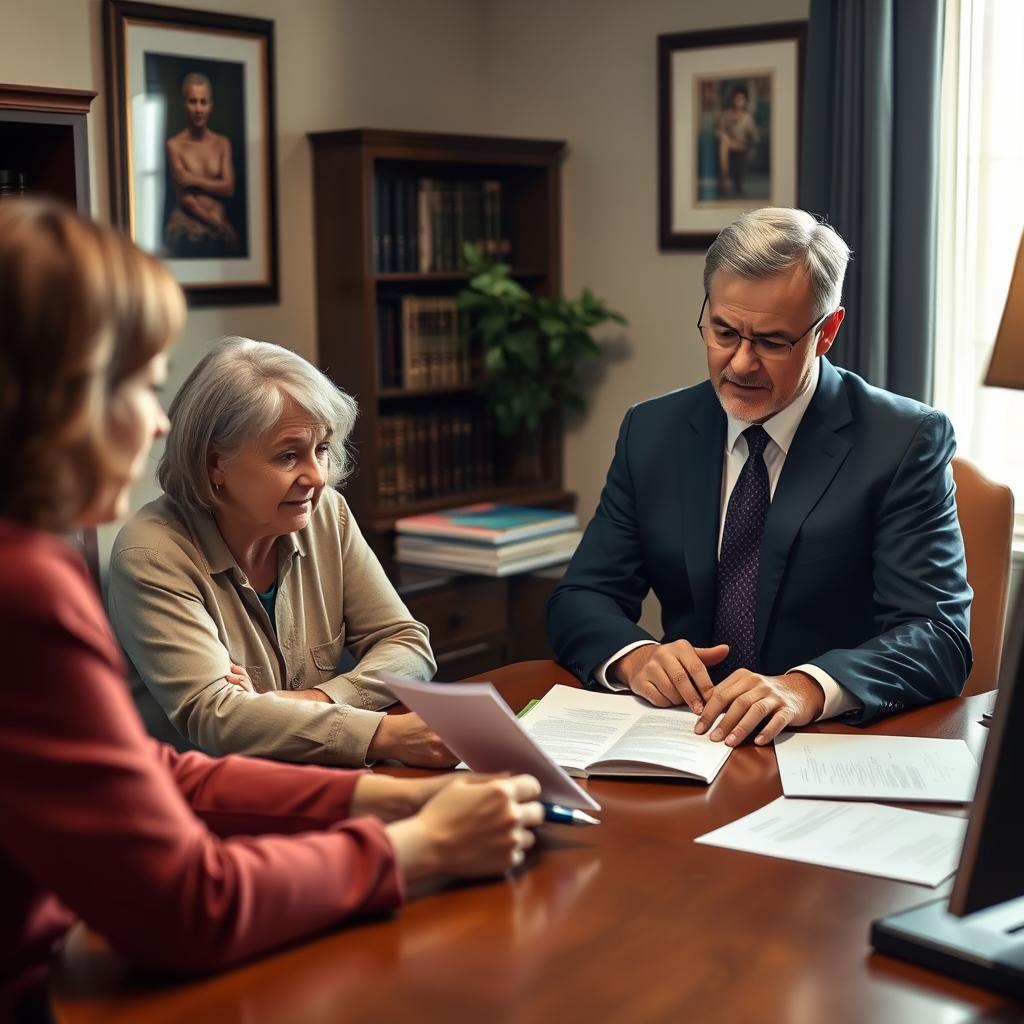
Rehabilitative Alimony Lawyer Fluvanna County, VA
When a marriage ends and one spouse needs time and resources to gain education or training sufficient to become self-supporting, Virginia courts may award rehabilitative alimony. This temporary spousal support is designed to bridge the gap while the recipient acquires job skills, completes a degree, or re-enters the workforce after a period outside of it. In Fluvanna County, rehabilitative alimony claims are decided under the same statutory framework that governs all Virginia spousal support, but local court practices—particularly within the Sixteenth Judicial District—can influence how a request is presented, negotiated, and ultimately decided. Law Offices Of SRIS, P.C. represents clients in rehabilitative alimony matters throughout Fluvanna County, including Palmyra, Fork Union, and Lake Monticello. Mr. Sris and the firm’s Of Counsel attorneys bring extensive combined legal experience to spousal support disputes. To discuss your circumstances, reach the firm at (888) 437-7747. Law Offices Of SRIS, P.C. – Advocacy Without Borders.
What Rehabilitative Alimony Means in Fluvanna County
Rehabilitative alimony is a form of short-term spousal support ordered under Virginia Code § 20‑107.1. Unlike permanent support, which typically applies only in long marriages or when a spouse cannot reasonably become self‑sufficient, rehabilitative alimony is expressly intended to be finite. A Fluvanna County Circuit Court judge, presiding at the courthouse at 72 Main Street, Suite B, Palmyra, will consider the 13 statutory factors set out in § 20‑107.1 to determine whether an award is appropriate and, if so, its amount and duration. The analysis looks at the financial resources of each party, the standard of living during the marriage, the contributions of the recipient spouse to the education or career of the payor spouse, the time and expense needed for the recipient to obtain training or education, and the opportunities for future employment. Because Fluvanna County is a relatively small jurisdiction within the Sixteenth Judicial District, local family law practitioners are familiar with the particular expectations of the bench regarding evidence of the recipient’s rehabilitation plan and the payor’s ability to fund it.
A well‑prepared rehabilitative alimony request in Fluvanna County Circuit Court often includes a concrete, cost‑specific plan showing what education or training the recipient will pursue, the period needed, and the projected improvement in earning capacity. Equally critical is presenting a clear picture of the marital standard of living and the financial disparity between the parties. Law Offices Of SRIS, P.C. Guides clients through assembling the financial disclosures, employment histories, and vocational assessments that the court expects to see when a rehabilitative support claim is at issue. While no two cases are alike, a case anchored in a detailed, realistic rehabilitation plan tends to receive more focused consideration from the court than a generalized request for “time to get back on my feet.”
How Mr. Sris and the Firm’s Of Counsel Attorneys Handle Rehabilitative Alimony Cases
Rehabilitative alimony matters in Virginia require a forward‑looking analysis that differs from the backward‑looking focus of permanent support or equitable distribution. The firm’s approach begins with understanding the recipient spouse’s current qualifications, work history, and the gap between present and target earning capacity. Mr. Sris and the firm’s Of Counsel attorneys work with clients to identify vocational programs, certification courses, or degree paths that are realistic within the local Fluvanna County economy—considering employers along the Route 15 corridor, the Lake Monticello area, and the broader Charlottesville job market. The goal is to frame a request that a judge can readily measure against the 13 statutory factors. The firm also evaluates whether the payor spouse’s income and assets can sustain the requested payment level without creating an undue hardship, a balancing act the court performs in every case.
If settlement is possible, the firm prepares proposed terms for a separation agreement that clearly defines the support amount, the anticipated duration, the specific rehabilitation goal, and the conditions under which support may be modified or terminated. When settlement is not attainable and the matter proceeds to a hearing at the Fluvanna County Circuit Court, the firm presents evidence through financial records, experienced attorney vocational testimony where appropriate, and the recipient spouse’s testimony about the rehabilitation plan. Throughout the process, the firm keeps clients informed about court scheduling in the Sixteenth Judicial District, applicable procedural requirements under Virginia’s civil practice rules, and the likely timeline for resolution given local docket conditions. Because rehabilitative alimony is modifiable based on changed circumstances, the firm also counsels clients on post‑decree issues that may arise if the planned rehabilitation progresses differently than anticipated.
About Mr. Sris and the Firm’s Of Counsel Attorneys
Mr. Sris, Owner and Founder of Law Offices Of SRIS, P.C., founded the firm in 1997 and practices in Virginia, Maryland, the District of Columbia, New Jersey, and New York. A former prosecutor, he has concentrated on family law and civil litigation for many years, handling matters that range from straightforward uncontested support agreements to complex high‑asset rehabilitative alimony disputes. In 2019, Mr. Sris testified before the Virginia House Courts of Justice Committee in support of 2019 HB 635 (chief patron Del. David Bulova), a bill that revised the equitable distribution statute with respect to retirement asset division. His experience with Virginia’s domestic relations statutes informs the firm’s approach to spousal support cases in Fluvanna County.
The firm’s Of Counsel attorneys contribute additional depth in family law, criminal defense, and related areas, and several bring prior prosecutorial or law‑enforcement perspectives that enhance litigation strategy. Together, Mr. Sris and the firm’s Of Counsel attorneys have documented case results across all practice areas since 1997. Results may vary. For rehabilitative alimony matters in Fluvanna County, clients benefit from a team that understands both the statutory framework of Virginia spousal support law and the practical realities of appearing before the Fluvanna County Circuit Court.
Frequently Asked Questions
What is rehabilitative alimony in Virginia?
Rehabilitative alimony is temporary spousal support awarded under Virginia Code § 20‑107.1 to help a spouse obtain education or training needed to become self‑supporting. Unlike permanent support, it is designed to last only as long as the recipient reasonably needs to acquire job skills, complete a degree, or re‑enter the workforce. A Fluvanna County Circuit Court judge will set the amount and duration after evaluating the 13 statutory factors, including the financial resources of each spouse, the standard of living during the marriage, and the time and cost of the proposed rehabilitation. The recipient must present a specific, feasible plan for achieving financial independence. For guidance on your specific situation, reach Law Offices Of SRIS, P.C. at (888) 437‑7747.
How is rehabilitative alimony different from permanent alimony in Virginia?
Rehabilitative alimony is time‑limited and goal‑oriented, while permanent alimony may continue indefinitely if a spouse cannot reasonably become self‑sufficient. Under Va. Code § 20‑107.1, rehabilitative support is tied to a concrete plan—such as completing a certification program or degree—that has a defined endpoint. Permanent support is reserved for long marriages or situations where age, health, or other circumstances make self‑sufficiency unrealistic. In Fluvanna County, the same 13 statutory factors govern both types, but the evidence the court requires differs: rehabilitative claims demand a detailed rehabilitation plan, whereas permanent support claims rely more heavily on health records, long‑term earning‑capacity assessments, and the duration of the marriage. To discuss the details of your matter, contact Law Offices Of SRIS, P.C. at (888) 437‑7747.
What factors do Fluvanna County courts consider for rehabilitative alimony?
A Fluvanna County Circuit Court judge applies the 13 factors listed in Virginia Code § 20‑107.1 to decide rehabilitative alimony. These factors include each party’s financial resources, earning capacity, standard of living during the marriage, contributions to the family and to the other spouse’s education or career, the duration of the marriage, the age and physical and mental condition of each spouse, and the extent to which the recipient spouse contributed to the payor’s career advancement. The court also considers the time and expense necessary for the recipient to acquire education or training to find appropriate employment. The judge must also evaluate any marital misconduct and the provisions made for property distribution. A strong case typically includes vocational evidence and a cost‑specific plan tailored to the local job market in and around Palmyra, Lake Monticello, and Charlottesville. For a consultation, reach Mr. Sris and the firm’s Of Counsel attorneys at (888) 437‑7747.
Can rehabilitative alimony be modified after the court order?
Yes, rehabilitative alimony may be modified if there has been a material change in circumstances since the last order. Under Virginia law, either the payor or the recipient can petition the Fluvanna County Circuit Court for modification. A recipient who finishes the planned education early or obtains employment sooner than expected may face a reduction or termination. Conversely, if the rehabilitation plan takes longer than anticipated through no fault of the recipient, the recipient may seek an extension. The payor can also request a reduction if the payor’s income drops significantly. Any modification requires a showing of changed circumstances; the court will not reconsider the original factors de novo. The timeline for a modification hearing depends on the court’s docket and the complexity of the evidence. To discuss the details of your matter, contact Law Offices Of SRIS, P.C. at (888) 437‑7747.
Do I need a lawyer for a rehabilitative alimony case in Fluvanna County?
You are not legally required to hire an attorney, but rehabilitative alimony calls for detailed financial evidence and a persuasive rehabilitation plan, making experienced legal representation highly advisable. Presenting a claim under Va. Code § 20‑107.1 without counsel risks incomplete financial disclosures, an unrealistic rehabilitation timeline, or a failure to address all 13 statutory factors in a way the Fluvanna County Circuit Court expects. An attorney familiar with local practice can identify which vocational or educational paths are most likely to be viewed as reasonable by the court and can counter opposing counsel’s arguments regarding the payor’s ability to pay. The firm’s team assists clients in assembling the necessary evidence, negotiating settlement terms, and advocating at hearing if needed. For guidance on your specific situation, reach Law Offices Of SRIS, P.C. at (888) 437‑7747.
Additional localities served: Family Law Lawyer Fairfax County VA | Family Law Lawyer Prince William County VA | Family Law Lawyer Loudoun County VA | Family Law Lawyer Stafford County VA
Virginia law resources: Virginia Code § 20‑107.1 – Spousal support factors | Fluvanna County Circuit Court | Virginia Code Title 20 – Domestic Relations
Attorney advertising. Prior results do not guarantee a similar outcome. Case results depend on a variety of factors unique to each case. Results may vary.