
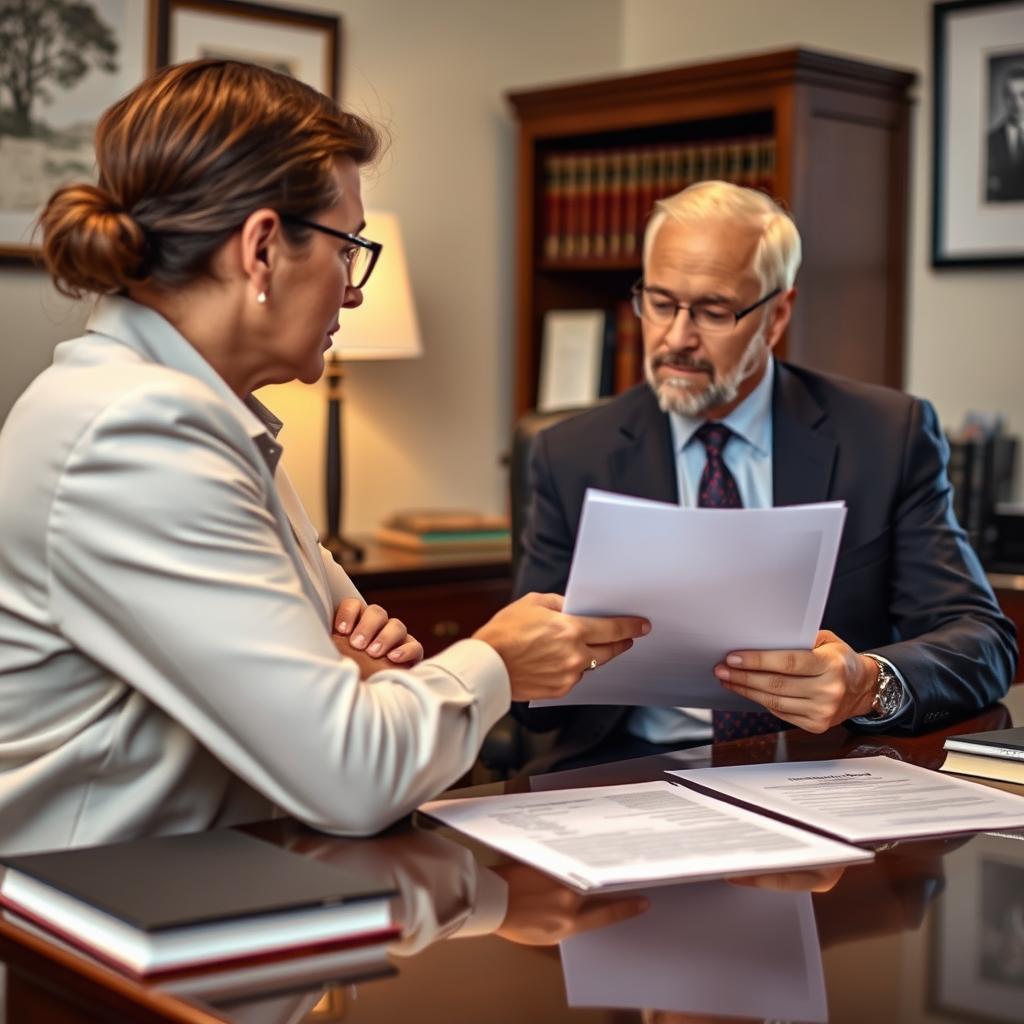
Rehabilitative Alimony Lawyer Louisa County, VA
When a marriage ends, financial stability does not always follow. For spouses who sacrificed career opportunities to support the family, Virginia courts may award rehabilitative alimony—temporary support designed to help the recipient gain education, training, or work experience needed to become self‑supporting. In Louisa County, these spousal‑support matters are heard in the Louisa County Circuit Court, located at 100 West Main Street, Louisa, VA 23093. Mr. Sris, Owner and Founder of Law Offices Of SRIS, P.C., concentrates his practice on family law, including spousal support, and represents clients throughout the Sixteenth Judicial District. Contact the firm at (888) 437‑7747 to request a consultation. Law Offices Of SRIS, P.C. – Advocacy Without Borders.
What Is Rehabilitative Alimony in Virginia?
Rehabilitative alimony is a form of spousal support that is temporary and goal‑directed. Under Va. Code § 20‑107.1, a Virginia court may award support for a period necessary for the supported spouse to obtain education, training, or work experience that will increase earning capacity. The purpose is to eliminate a financial dependency that arose during the marriage, not to provide permanent maintenance. A party seeking rehabilitative alimony must present a plan showing the steps required to become self‑sufficient and a reasonable timeline for completing those steps. The court will consider the plan alongside other statutory factors, such as the duration of the marriage, the standard of living during the marriage, and the financial resources of each party.
How Rehabilitative Alimony Is Determined in Louisa County, Virginia
When a spouse requests rehabilitative alimony in a Louisa County divorce, the case proceeds in the Louisa County Circuit Court. The requesting party files a complaint for divorce (Virginia uses a “Complaint,” not a “Complaint”) in which the request for spousal support is stated. The court applies the 13 factors listed in Va. Code § 20‑107.1, weighing each factor according to the specific family circumstances. A vocational assessment, budget analysis, or experienced attorney opinion about re‑training costs may be presented to support the plan. The court may set a specific duration for the support award or may retain jurisdiction to extend it if the supported spouse shows good‑cause progress toward the rehabilitation goal. Mediation is available but not mandatory; many spouses resolve support terms through a written separation agreement, which the court can then incorporate into the final divorce decree.
In Louisa County, family law matters are heard at the Circuit Court building at 100 West Main Street. The court’s calendar and the complexity of each case affect how soon a pendente lite hearing for temporary support may be set. Mr. Sris and the firm’s Of Counsel attorneys are familiar with local practice and can help clients present a comprehensive rehabilitation plan that addresses the factors the court will consider.
Frequently Asked Questions
What is the difference between rehabilitative alimony and permanent spousal support?
Rehabilitative alimony is temporary support awarded for a defined period to help the recipient become self‑supporting, while permanent support may be ordered when the recipient cannot reasonably be expected to achieve self‑sufficiency. Under Virginia law, a court may award permanent support only if the marriage was long‑term, the supported spouse has a substantial disability, or other exceptional circumstances exist. The court considers the same statutory factors but applies a higher bar for indefinite support. The requesting party must show that rehabilitation is not feasible.
How long can rehabilitative alimony last in Virginia?
The length of a rehabilitative alimony award depends on the time reasonably needed for the recipient to complete education, training, or work‑experience goals. The court sets a duration based on the evidence presented, such as the length of a degree program or the time required to re‑enter a professional field. There is no statutory maximum; the award may be extended if the recipient demonstrates diligent effort but legitimate obstacles to completion. The court retains jurisdiction to modify or extend the award during the rehabilitation period.
What do I need to prove to receive rehabilitative alimony in Louisa County?
You must present a credible rehabilitation plan that details the education, training, or job‑search steps required to become self‑supporting, along with a reasonable cost estimate and timeline. You also need to show that the request is justified by the marital circumstances—typically a spouse who sacrificed career advancement for the family. Evidence may include vocational evaluations, school enrollment documentation, job‑market data, and household budget information. An experienced family law attorney can help you compile this evidence and present it to the court persuasively.
Can rehabilitative alimony be modified later?
Yes, rehabilitative alimony may be modified if there is a material change in circumstances, such as a substantial change in either party’s income or a need to extend the support period. Either party may petition the Louisa County Circuit Court for modification. The supported spouse must show that the rehabilitation plan has not been completed despite good‑faith effort. The paying spouse must show that the recipient has achieved self‑sufficiency or that circumstances have otherwise changed. The court will review the original award and the current situation.
Do I need a lawyer for rehabilitative alimony in Louisa County?
While you are not required to hire a lawyer, having experienced legal representation can help you present a credible rehabilitation plan and protect your financial interests. Spousal support matters involve detailed financial disclosures and legal arguments about statutory factors. Without counsel, you may overlook important evidence or fail to anticipate the other side’s challenges. Law Offices Of SRIS, P.C. offers consultations to discuss your situation. Reach the firm at (888) 437‑7747.
What if my spouse refuses to pay rehabilitative alimony ordered by the court?
If a court‑ordered support payment is not made, you may return to the Louisa County Circuit Court to seek enforcement through contempt proceedings. The court can compel payment, impose fines, or, in extreme cases, order incarceration. The non‑paying spouse may be required to pay your attorney fees and costs. Gathering detailed records of missed payments is essential. An attorney can file a rule to show cause and help you pursue enforcement remedies effectively.
Can rehabilitative alimony be negotiated in a separation agreement?
Yes, spouses can agree on rehabilitative alimony terms in a written separation agreement, including the amount, duration, and purpose of the support. The agreement, once signed by both parties, can be incorporated into the divorce decree and enforced as a court order. This approach often saves time and litigation costs and gives the parties greater control over the outcome. The court will review the agreement for fairness but generally respects the parties’ contractual terms so long as they are not unconscionable.
How does the court decide the amount of rehabilitative alimony?
The court uses the 13 factors in Va. Code § 20‑107.1 to set a fair amount based on the receiving spouse’s needs and the paying spouse’s ability to pay. Factors include the education and earning capacity of each spouse, the duration of the marriage, the standard of living during the marriage, contributions to the family, age, health, and any marital fault that contributed to the dissolution. No single factor controls; the court balances all applicable factors to reach an equitable result.
Is rehabilitative alimony taxable?
Under current federal tax law, for divorce or separation agreements entered into after December 31, 2018, spousal support payments are no longer deductible by the payer and are not includible as income for the recipient. This change makes it important to structure support provisions with the after‑tax impact in mind. For agreements finalized before that date, the old tax treatment may apply unless the agreement is modified to explicitly adopt the new rule. Consult with a tax professional for advice specific to your situation.
What is the process for requesting rehabilitative alimony in Louisa County?
The process begins by filing a complaint for divorce in the Louisa County Circuit Court, in which spousal support is requested. You may also file a motion for temporary support (pendente lite) while the divorce is pending. The court will schedule a hearing, and each side presents evidence. If the parties reach a settlement, the agreement can be submitted for the court’s approval. If not, the judge decides the support terms after considering the evidence. The timeline varies depending on the court’s docket and the complexity of the financial issues.
Can rehabilitative alimony be awarded in a separation case without divorce?
Yes, if spouses are living separate and apart, either party may petition the Louisa County Juvenile and Domestic Relations District Court for separate maintenance, which can include rehabilitative support. However, once a divorce is filed in Circuit Court, the Circuit Court has exclusive jurisdiction over all related support matters. It is generally more common to request rehabilitative alimony as part of the divorce proceeding, where all issues can be resolved together.
About Mr. Sris and the Firm’s Of Counsel Attorneys
Mr. Sris, Owner and Founder of Law Offices Of SRIS, P.C., practices in Virginia, Maryland, the District of Columbia, New Jersey, and New York. Since founding the firm in 1997, he has concentrated his practice on family law, including spousal support matters. Mr. Sris testified before the Virginia House Courts of Justice Committee in support of 2019 HB 635 (chief patron Del. David Bulova). Law Offices Of SRIS, P.C. has documented 30 case results in Louisa County across all practice areas, with dismissal or reduction achieved in many instances. Results may vary. The firm’s Of Counsel attorneys bring extensive combined legal experience, and together with Mr. Sris they represent clients in family law proceedings throughout the Sixteenth Judicial District. Contact the firm at (888) 437‑7747 to request a consultation.
Explore our family law representation in other Virginia localities: Fairfax County • Prince William County • Fairfax City
Primary sources: Virginia Code Title 20, Domestic Relations • Louisa County Circuit Court • Virginia’s Judicial System
Attorney advertising. Prior results do not guarantee a similar outcome.
Case results depend on a variety of factors unique to each case.