
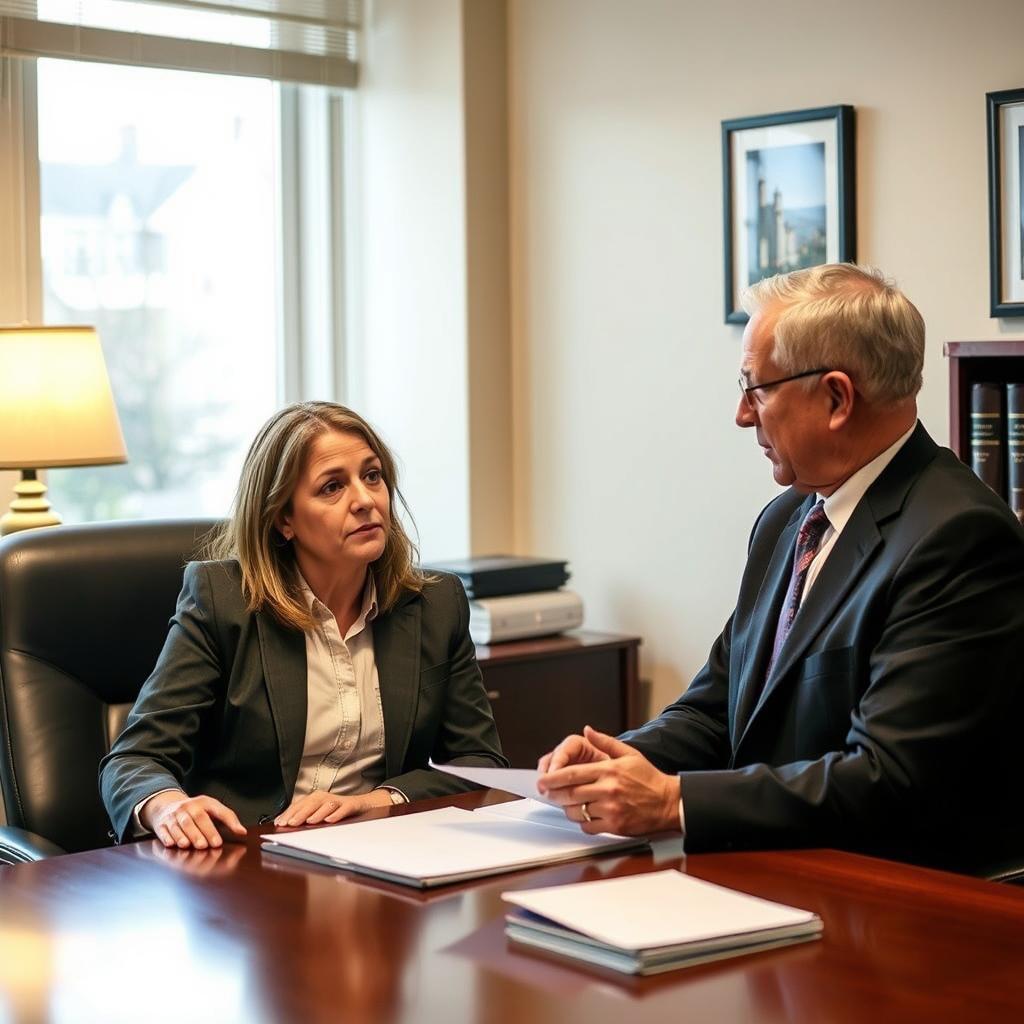
Service Member Divorce Lawyer Colonial Heights, VA
You are an active‑duty service member stationed at Fort Gregg‑Adams, just outside Colonial Heights, and you have made the difficult decision that divorce is the necessary next step. Unlike a civilian divorce, your military status introduces distinct legal questions—how the Servicemembers Civil Relief Act may affect court deadlines, what happens to your military pension under Virginia’s equitable distribution law, and which court in Colonial Heights has jurisdiction over your custody and support matters. The stakes are high: your future retirement, your relationship with your children, and the life you build after your service are all on the line. Mr. Sris and his Of Counsel team at Law Offices Of SRIS, P.C. Concentrate in family law matters for service members and have appeared in Colonial Heights courts on behalf of military families. Reach our location at (888) 437-7747 to discuss your situation in a confidential consultation. Law Offices Of SRIS, P.C. – Advocacy Without Borders.
What a Service Member Divorce Means in Colonial Heights, Virginia
Colonial Heights sits in the Twelfth Judicial District, a short drive from Fort Gregg‑Adams. Divorce and equitable distribution in Virginia are governed by Va. Code § 20‑91 (grounds for divorce) and Va. Code § 20‑107.3 (equitable distribution). For a service member, the Servicemembers Civil Relief Act (SCRA) adds a federal layer that may allow a stay of proceedings if your military duties materially affect your ability to participate. The Colonial Heights Circuit Court at 550 Boulevard handles the divorce, property division, and spousal support; the Juvenile and Domestic Relations District Court addresses custody, visitation, and child support. The court sits near Southpark Mall and is reachable via I‑95 and Route 144, making it accessible for those living on or near post. Whether you are a resident of the city, are stationed in the region, or your spouse lives in the Richmond area, the court’s calendar and procedural practices shape how your case unfolds.
Virginia is an equitable distribution state, not a community property state. The court classifies assets as marital, separate, or hybrid, values them, and divides marital property fairly—but not necessarily equally—based on eleven statutory factors. For a service member, the marital share of a military pension, Thrift Savings Plan, and other deferred compensation is particularly significant. Because Colonial Heights is adjacent to Fort Gregg‑Adams, local practitioners and the court are accustomed to addressing military pay entitlements, the Survivor Benefit Plan, and the interplay between state equitable distribution and federal law. Custody determinations apply the trusted‑interests‑of‑the‑child standard under Va. Code § 20‑124.3, with extensive focus on each parent’s role and the child’s ties to the community. If relocation is a possibility due to a permanent change of station, those issues must be addressed early.
How Mr. Sris and His Of Counsel Handle Service Member Divorce Cases
Mr. Sris and his Of Counsel approach every service member divorce with an understanding of both Virginia family law and the federal protections the SCRA provides. The firm begins by analyzing whether an automatic or discretionary stay of proceedings is appropriate under the SCRA, and whether the service member can participate remotely if deployed or on temporary duty. The team then works to gather the necessary documentation—leave and earnings statements, service records, and retirement estimates—to present a complete picture of the military household’s financial standing. The goal is to build a record that accurately reflects the service member’s career contributions while protecting the interests of the entire family.
From the initial complaint filed in the Colonial Heights Circuit Court through temporary support hearings and, if necessary, trial, the firm guides the client through each procedural step. Mr. Sris and his Of Counsel collaborate with forensic accountants and pension attorneys when valuation of a military retirement or complex compensation package is at issue. They also address the practical realities of military life: what happens when one parent is deployed during custody proceedings, how to structure parenting plans around unpredictable duty schedules, and how to handle health‑care coverage through TRICARE after divorce. Every strategy is developed with an eye toward the long‑term consequences that a divorce decree can carry for a career service member.
About Mr. Sris and His Of Counsel Team
Mr. Sris, Owner and Founder of Law Offices Of SRIS, P.C., has practiced since 1997 and is admitted in Virginia, Maryland, the District of Columbia, New Jersey, and New York. A former prosecutor, he brings trial experience to family law matters and has testified before the Virginia House Courts of Justice Committee in support of 2019 HB 635 (chief patron Del. David Bulova), legislation that revised the equitable distribution statute under Va. Code § 20‑107.3. Mr. Sris is supported by Of Counsel who collectively contribute over 120 years of combined legal experience, and the firm has achieved 4,739+ documented firm-wide results. Results may vary.
Frequently Asked Questions
What is a service member divorce, and how is it different from a civilian divorce in Colonial Heights?
A service member divorce is a dissolution of marriage where at least one spouse is active‑duty military, bringing federal SCRA protections and unique property‑division rules into the proceeding. In Colonial Heights, the divorce itself follows Virginia’s no‑fault or fault‑based grounds under Va. Code § 20‑91. The key difference is that the SCRA may allow a court to pause the case if the service member’s duties prevent meaningful participation. Military retirement pay is considered marital property subject to equitable distribution, and special jurisdiction rules may apply if the service member is not a Virginia domiciliary. How a parenting plan accommodates deployment or a permanent change of station also sets military divorces apart. For these reasons, experience with both the Virginia court system and federal military law is essential.
What are the grounds for divorce in Virginia, and how do they apply to service members?
Virginia recognizes no‑fault and fault grounds: a one‑year separation (or six months if there are no minor children and a signed separation agreement), adultery, cruelty, desertion, or a felony conviction resulting in imprisonment for more than one year. For a service member stationed in Colonial Heights, the residency requirement under Va. Code § 20‑97 must still be met—at least six months of domicile in Virginia—unless a separate jurisdictional basis exists. If a spouse commits adultery, that fault ground eliminates the mandatory separation waiting period, which can be strategically significant for a service member facing an imminent deployment. The Colonial Heights Circuit Court evaluates the evidence and, if a fault ground is proven, may consider marital misconduct when dividing property and awarding spousal support.
How does the Servicemembers Civil Relief Act affect my divorce in Colonial Heights?
The SCRA can stay or delay civil court proceedings if a service member’s military obligations materially hinder their ability to participate. In a Colonial Heights divorce, either spouse may request a stay under the SCRA, but the service member must show that the duty requirements actually interfere with the case. The court balances the need for a timely resolution against the service member’s right to defend their interests. The SCRA also sets a maximum six‑percent interest rate on certain pre‑service debts and restricts default judgments, although these provisions rarely affect the divorce merits directly. Because the stay is discretionary, having an attorney who understands how to present the military‑impact argument in the Twelfth Judicial District can be pivotal.
How is military retirement divided in a Virginia divorce?
Under Virginia’s equitable distribution statute, the marital share of a military pension—generally the portion earned during the marriage—is classified as marital property and divided fairly between the spouses. The Colonial Heights Circuit Court, applying Va. Code § 20‑107.3, considers contributions to the marriage, the duration of the marriage, and the service member’s career path. A qualified domestic relations order (QDRO) may be used to direct the Defense Finance and Accounting Service (DFAS) to pay a former spouse directly, subject to the ten‑year overlap rule that requires at least ten years of marriage overlapping ten years of creditable military service. Because DFAS compliance rules are strict, attentive drafting of the decree is critical. For service members who also hold a civilian federal retirement account, the rules under the Foreign Service Act or Civil Service Retirement System may also apply.
Do I need a lawyer for a service member divorce in Colonial Heights?
While Virginia does not require a lawyer to file for divorce, having experienced counsel helps protect your rights, especially given the intersection of federal military rules and state equitable distribution law. A service member facing divorce in Colonial Heights must navigate the SCRA, potential custody issues with deployment, and the valuation of a military pension. Self‑representation can lead to an incomplete division of retirement assets or an unfavorable custody arrangement that does not account for the realities of military life. Mr. Sris and his Of Counsel work to ensure that the final decree reflects the full scope of the family’s circumstances. To discuss your matter, reach Law Offices Of SRIS, P.C. at (888) 437‑7747.
Related resources: Fairfax County Family Law · Prince William County Family Law · Manassas Family Law · For an in‑depth review of Virginia’s divorce statutes, see our Virginia divorce practice overview.
Primary Virginia sources: Virginia Code Title 20 (Domestic Relations) · Virginia Circuit Courts · Virginia’s Judicial System
Attorney advertising. Prior results do not guarantee a similar outcome. Results may vary. Case results depend on a variety of factors unique to each case. Attorney responsible for this advertising: Mr. Sris.